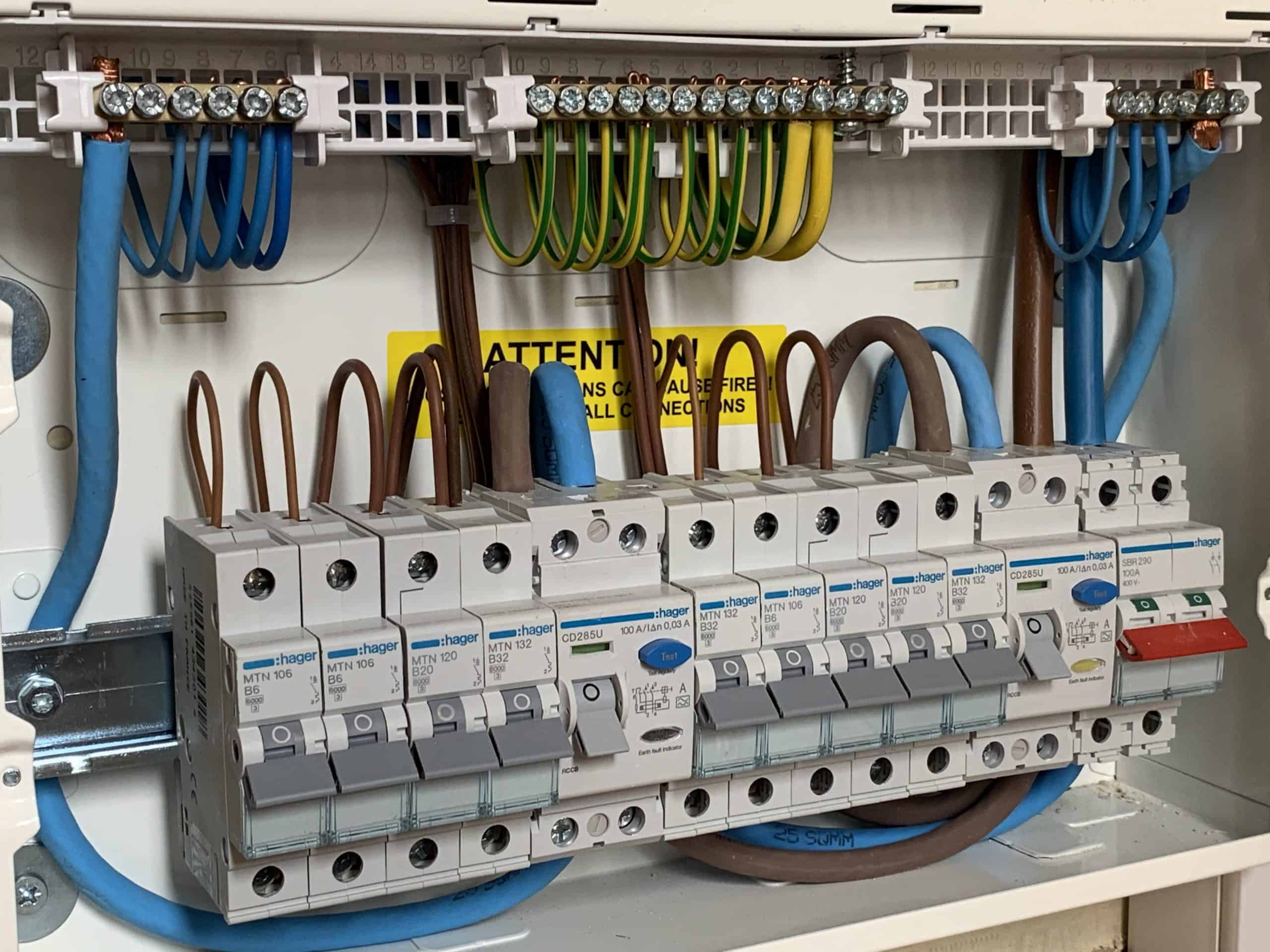
A guide to smart home electrical installations in London — smart sockets, smart lighting controls, security systems, and the Part P compliance requirements for each.
Smart Home Electrical Installations in London: What Requires a Qualified Electrician
Smart home technology has become mainstream in London homes over the past five years. Smart sockets, smart lighting controls, video doorbells, CCTV systems, and EV chargers are now found in properties across every London borough. Understanding which smart home installations require a qualified and registered electrician, and which require Part P certification under the Building Regulations, protects you as a homeowner and ensures your installation is safe, insurable, and certificated correctly.
Smart Sockets: Part P Compliance
Replacing a standard socket with a smart socket — one that can be controlled via an app, voice assistant, or smart home hub — is treated the same as replacing a standard socket for the purposes of Part P. The determining factor is not the type of socket but the location of the work.
In most rooms of a house — living rooms, bedrooms, hallways, and home offices — replacing a socket with a smart socket is classified as minor works and requires a Minor Electrical Installation Works Certificate (MEIWC) rather than a full Part P notification. This work should still be carried out by a qualified electrician to ensure correct wiring and earthing.
In bathrooms and in kitchen zones within 600mm of a sink, socket installation or replacement is notifiable under Part P. An NICEIC or NAPIT registered electrician can self-certify this work and issue an Electrical Installation Certificate. Using an unregistered person to carry out notifiable work means building control notification must be made separately, which involves a fee and an inspection.
Smart Lighting Controls
Smart lighting — replacing a standard lighting switch with a smart dimmer or smart switch that connects to a home network — is one of the most popular smart home upgrades in London. Like smart sockets, the Part P classification depends on location.
Replacing a standard switch with a smart switch in a living room, bedroom, or hallway is minor works in most cases and requires a MEIWC. The key technical consideration with smart dimmers is compatibility: many LED lamps require a dimmer rated for LED loads and may need a neutral wire that older two-wire switch circuits do not provide. A qualified electrician will assess compatibility and advise on whether an additional neutral feed is required.
Smart lighting work in bathrooms is notifiable under Part P, as is any new lighting circuit. If you are adding a new smart lighting circuit — for example, installing under-cabinet LED lighting in a kitchen on a new circuit — this requires full Part P notification and an EIC from a registered electrician.
Smart lighting systems that use extra low voltage (ELV) LED drivers — such as 12V LED strip lighting powered by a plug-in or hardwired driver — operate below the Part P voltage threshold for the low-voltage portion of the circuit. The driver itself is connected to a mains circuit, which is subject to the usual Part P rules, but the ELV portion of the installation is outside the scope of Part P notification. An electrician should still carry out any work connecting the driver to the mains supply.
Smart Security Systems: CCTV, Alarms, and Video Doorbells
CCTV cameras, intruder alarm systems, and smart video doorbells are typically low-voltage or extra low voltage systems that are not subject to Part P notification. A wireless video doorbell that runs on battery or connects to an existing low-voltage doorbell transformer does not require Part P certification. A wired CCTV system using 12V or PoE (Power over Ethernet) cameras is similarly outside Part P scope for the camera circuits themselves.
However, these systems need a mains power supply at some point — for the recorder, the doorbell transformer, or the NVR. Connecting a new mains supply or installing a new socket to power security equipment is subject to the usual Part P rules depending on location. Additionally, for insurance purposes and for reliability in a rental property, having security systems installed by a qualified and insured electrician is strongly advisable even where Part P certification is not legally required.
EV Charger Installation: Always Notifiable
Electric vehicle charger installation is always notifiable under Part P, regardless of location. A home EV charger — also called an EVSE (electric vehicle supply equipment) or wallbox — connects to a dedicated circuit from the consumer unit and typically draws 7kW to 22kW. This is a significant new circuit and must be designed, installed, and certified by a registered electrician. In addition, home EV charger installation in England must be carried out by an OZEV-approved installer if you wish to claim the OZEV Government grant (available for certain eligible properties). Prestige Engineers are OZEV-registered EV charger installers across London.
Rental Properties: Why Certification Matters More
For landlords with rental properties in London, correct certification for smart home electrical work is particularly important. Any electrical work carried out in a rental property must be documented for the purposes of the five-yearly EICR obligation. An EICR that finds uncertificated electrical work — smart sockets, smart lighting circuits, or EV chargers installed without a MEIWC or EIC — will produce a C3 or C2 observation that will require remediation at the landlord cost. Using a registered electrician from the outset and obtaining the correct certificate for every job avoids this problem.
Smart Home Electrical Installation Cost Guide for London
- Smart socket replacement (per socket, including MEIWC): £80 to £140
- Smart switch replacement (per switch, including MEIWC): £70 to £130
- ELV LED strip lighting connection to mains (per circuit, including MEIWC): £80 to £150
- New smart lighting circuit (including EIC): £200 to £400
- EV charger installation (7kW wallbox, including EIC and OZEV registration): £800 to £1,200
- Smart home socket/switch upgrade across a full property (multiple rooms): from £400
Prestige Engineers provides smart home electrical installation services across all London boroughs. All work is carried out by NICEIC registered electricians, and the correct certificate is issued for every job. Contact us for a fixed-price quote for your smart home installation.