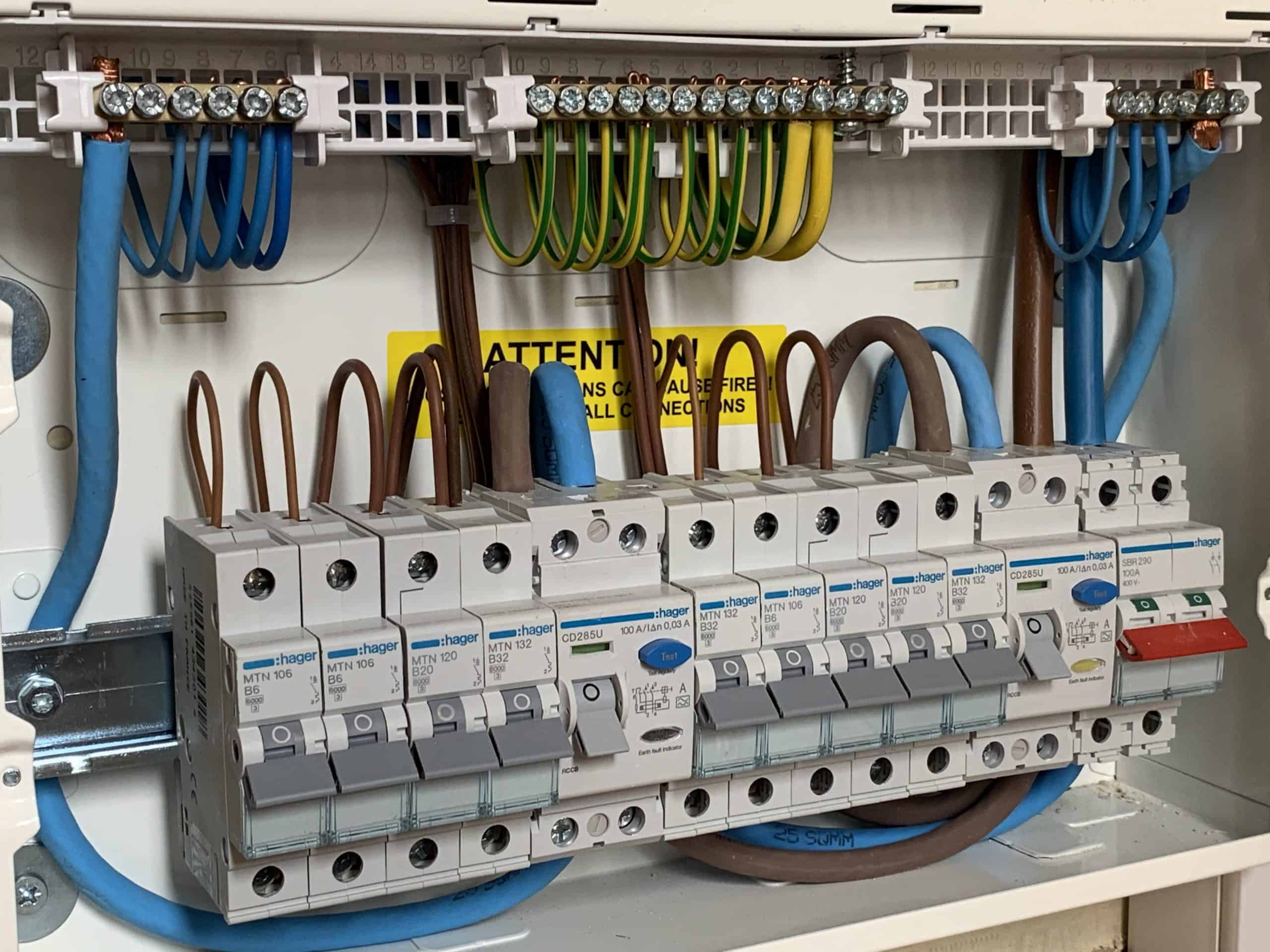
Your property has failed an EICR electrical inspection. What the categories mean (C1, C2, C3, FI), what must be fixed and by when, and how to get a satisfactory certificate.
EICR Observation Categories Explained
When an Electrical Installation Condition Report (EICR) is issued for a London property, any defects found are classified into observation categories:
C1 — Danger Present
Immediate danger to persons. The inspector is required to make the installation safe before leaving — this usually means disconnecting the affected circuit. C1 observations include: exposed live conductors, defective earthing on a socket in a wet room, and cables with severely damaged insulation that could cause electric shock or fire. A C1 automatically means an unsatisfactory EICR.
C2 — Potentially Dangerous
Not immediately dangerous but requires urgent remedial work. A C2 does not mean the inspector disconnects anything, but the installation is not compliant and must be remediated. Common C2 observations include: absence of RCD protection on circuits that require it, insufficient earth bonding on water and gas pipes, and overloaded circuits. A C2 automatically means an unsatisfactory EICR.
C3 — Improvement Recommended
Not dangerous but does not meet the current edition of BS 7671 (the Wiring Regulations). A C3 does NOT automatically mean a fail — a C3-only report can still be satisfactory. However, the improvements are recommended and best practice is to address them.
FI — Further Investigation Required
The inspector cannot determine the condition without further investigation (e.g. concealed wiring that cannot be accessed). An FI means the EICR is unsatisfactory until the investigation is completed and the finding addressed.
What London Landlords Must Do After an Unsatisfactory EICR
Under the Electrical Safety Standards in the Private Rented Sector (England) Regulations 2020, London landlords must carry out remedial work within 28 days of an unsatisfactory EICR (or within any shorter period specified in the report). After remediation, a new satisfactory EICR must be obtained and provided to the tenant.
Frequently asked questions
How long does a London landlord have to fix an EICR fail?
A London landlord has 28 days from the date of the unsatisfactory EICR to complete remedial work — or within a shorter period if the report specifies one (C1 observations may specify immediate action). After the work is complete, a qualified electrician must confirm the remediation in writing, and the landlord must provide this confirmation to the tenant within 28 days of the original report.
How much does it cost to fix an EICR fail in a London property?
Remediation cost after an EICR fail in London depends entirely on what was found. Adding RCD protection to an existing consumer unit: £80–£200. Consumer unit replacement (very common on 1970s–1990s boards): £400–£900. Rewiring a single circuit: £150–£400. Full property rewire (older London properties): £3,000–£8,000. Most London EICR fails involve consumer unit upgrades or RCD additions — full rewires are less common on properties that have been maintained.
Can a tenant refuse access for EICR remediation work in London?
As with gas safety access, a tenant cannot unreasonably refuse access for EICR remediation. The landlord must give at least 24 hours written notice. The Electrical Safety Standards Regulations 2020 place the obligation on the landlord to ensure the work is done — if a tenant refuses access despite reasonable attempts, the landlord should document this and may apply to court for an order permitting access. Local authorities can take enforcement action against landlords who fail to remediate, so documenting access attempts is critical.