Landlord legal requirement
EICR certificates for London landlords
Prestige Engineers provides Electrical Installation Condition Reports (EICR) for landlords across all London boroughs. The Electrical Safety Standards in the Private Rented Sector (England) Regulations 2020 require all private landlords to hold a valid EICR — inspected by a qualified electrician at least every 5 years.
About this service
EICR certificate London — what every landlord needs to know
The legal requirement for London landlords
Since 1 April 2021, every London landlord renting a property in the private sector has been legally required to hold a valid Electrical Installation Condition Report (EICR). This obligation was introduced by the Electrical Safety Standards in the Private Rented Sector (England) Regulations 2020 and applies to all new and existing tenancies. The EICR must be renewed at least every 5 years, or at every change of tenancy if the previous certificate would expire before the next five-year cycle.
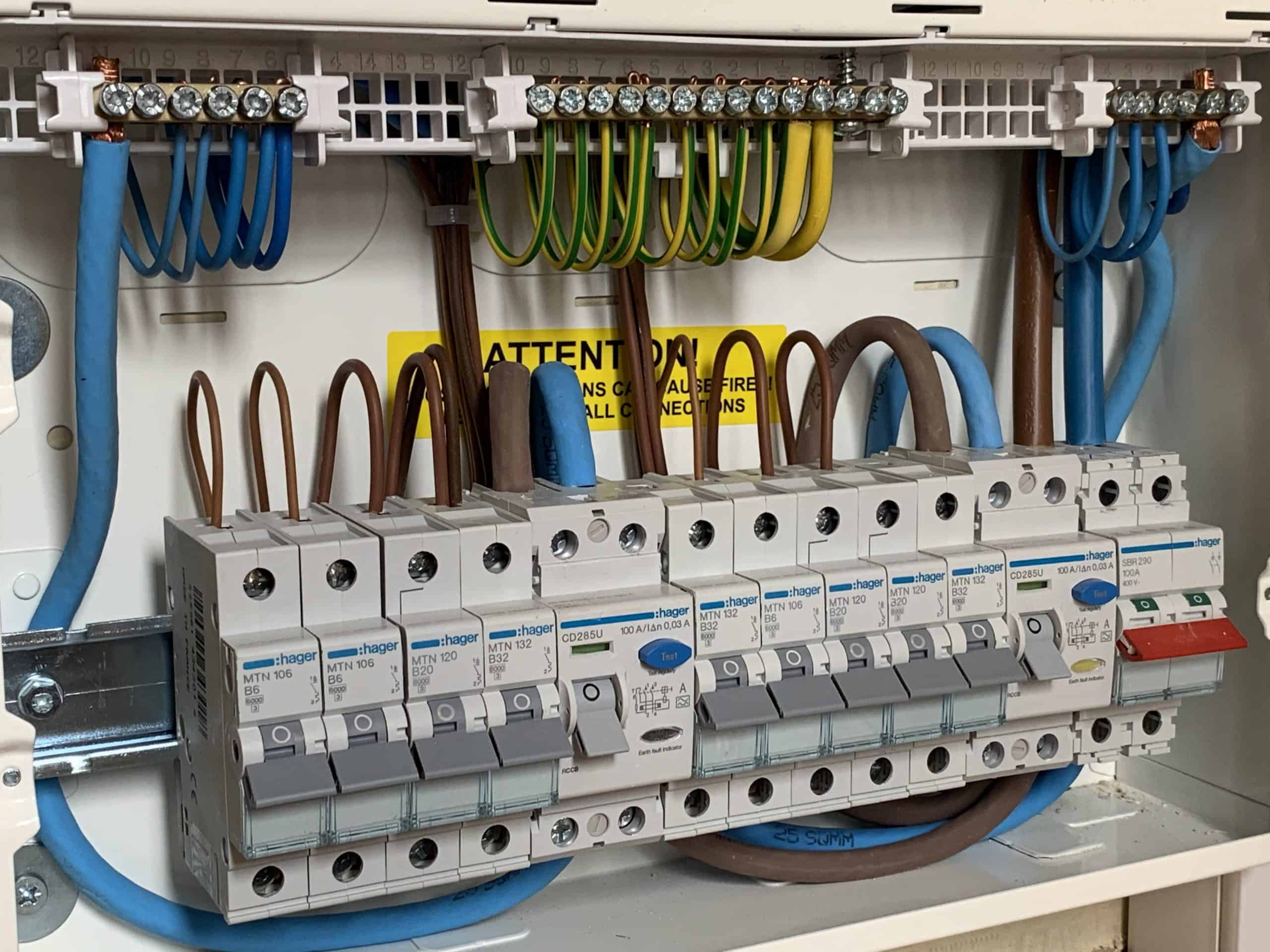
An EICR inspection is a thorough assessment of the fixed electrical installation in a property — not to be confused with a portable appliance test (PAT), which covers movable equipment. During the inspection, our qualified electricians assess the condition of the fuse board and consumer unit, examining whether it meets current standards and whether RCD (residual current device) protection is adequately in place. They test earthing and bonding across the installation, verify circuit protection is functioning, and check the condition of accessible wiring throughout the property.
The inspection also covers sockets, switches and lighting circuits, confirming these are safe and correctly installed. At the end of the visit, the electrician produces a formal EICR report categorising any issues found using the industry-standard coding system. A C1 code indicates danger is present and immediate action is required before the property is occupied. A C2 code means the installation is potentially dangerous and requires urgent attention within 28 days. A C3 code indicates an improvement is recommended — this alone does not make the report Unsatisfactory. An FI code (Further Investigation) is raised when a definitive conclusion cannot be reached without destructive investigation.
Prestige Engineers carries out EICR inspections across all 33 London boroughs — from Hackney and Tower Hamlets to Richmond and Kingston. With 60 verified Checkatrade reviews and 120 MyBuilder reviews (180+ total), our electricians are consistently rated by London landlords for their punctuality, clear reporting and fair pricing.
Penalties, remedial work and HMO compliance
Non-compliance with the EICR regulations carries serious financial consequences. Since the enforcement provisions came into force in June 2020, London local councils have been actively pursuing landlords who fail to produce a valid certificate. A local housing authority can impose a financial penalty of up to £30,000 per breach — and each property without a valid EICR constitutes a separate breach. In practice, councils have begun issuing remedial notices requiring landlords to remedy the breach within a set timeframe; failure to comply can result in the council arranging the work itself and recovering the cost from the landlord.
When an EICR comes back with C1 or C2 coded items, the landlord must arrange remedial electrical work and provide the tenant with written confirmation that the work has been completed within 28 days of the original inspection. Prestige Engineers can carry out remedial work immediately after an EICR where the scope is straightforward — fuse board upgrades, additional RCD protection, re-routing of deteriorated wiring — and we provide a completion certificate the same day where possible. We provide clear pricing before any work starts so you are never left with unexpected costs.
HMO (House in Multiple Occupation) properties have their own compliance pressures. An HMO EICR is required every 5 years or at change of tenancy, but HMO licence conditions also require landlords to demonstrate that the electrical installation is adequate for the number of occupants and load placed on it. We specialise in HMO electrical compliance across London and work with managing agents, portfolio landlords and letting agencies who need reliable, documented certification across multiple addresses. Our same-day attendance for urgent situations means a failed or expiring certificate does not have to delay a tenancy.
2020 Regulations requirements
What landlords must do under the EICR regulations
Understanding EICR codes
What C1, C2 and C3 codes mean
C1
Danger present
Immediate action required. The installation presents a risk of injury or fire. The EICR outcome is Unsatisfactory. Remedial action should be taken before the property is occupied.
C2
Potentially dangerous
Urgent remedial action required within 28 days. The installation has a condition that could become dangerous. EICR outcome is Unsatisfactory.
C3
Improvement recommended
The installation does not meet current standards but is not dangerous. A C3 alone does not make the EICR Unsatisfactory, but landlords should consider remedying it over time.
Read more: EICR codes explained — C1, C2, C3 and FI
180+ verified reviews
60 Checkatrade reviews
Verified by Checkatrade from London landlords and homeowners.
120 MyBuilder reviews
Verified by MyBuilder from London property owners.
Common questions
EICR for landlords: FAQs
How often does a landlord need an EICR?
At least every 5 years under the Electrical Safety Standards in the Private Rented Sector (England) Regulations 2020, or at the start of a new tenancy if the existing certificate has expired. Some HMO licences require more frequent inspections.
What does a C1 code mean on an EICR?
C1 means danger is present in the electrical installation and immediate action is required. A C1 finding makes the EICR Unsatisfactory and the issue must be remedied urgently before the property is occupied.
How long does an EICR take?
A residential EICR typically takes 2–4 hours depending on the property size and number of circuits. HMO properties with more circuits take longer.
What fine can a landlord get for no EICR?
Local authorities can impose a financial penalty of up to £30,000 per breach of the EICR regulations. They can also serve remedial notices and carry out works themselves, recovering costs from the landlord.
Read more: EICR requirements for landlords in England — full guide