Drain ownership in London is complex. Private drains, shared private sewers, and public sewers have different ownership and repair responsibilities. Here is how to work out who is liable.
Private Drain, Shared Private Sewer, or Public Sewer: the Three Categories
Understanding drain ownership in London requires distinguishing between three categories of drain that all look identical when you lift a manhole cover but carry completely different responsibilities for repair and maintenance.
A private drain is a drain that serves only one property and runs entirely within that property boundary. It begins at the first fixture (or at the external wall of the building where the drain exits) and ends at the first inspection chamber that is shared with a neighbouring property or at the connection to the public sewer. The private drain is the sole responsibility of the property owner it serves.
A shared private sewer (sometimes called a private lateral drain) is a drain or sewer that serves two or more properties. In many London Victorian terraces, the drains from individual properties join at a shared inspection chamber and then run as a single pipe to the public sewer. Before 2011, this shared section was the joint responsibility of all the property owners it served. Since October 2011, under the Water Industry (Schemes for Adoption of Private Sewers) Regulations 2011, most shared private sewers in England have been transferred to the ownership and maintenance responsibility of Thames Water (or the relevant statutory water and sewerage company). This means Thames Water is now responsible for maintaining, repairing, and if necessary, replacing former shared private sewers.
A public sewer is a sewer maintained by Thames Water (in London) and shown on Thames Water records as a public sewer. Thames Water is wholly responsible for the public sewer network.
What Changed in October 2011
Before 2011, the legal position was that a sewer serving more than one property but not yet adopted by the water company was a shared private sewer. All the property owners connecting to it were jointly responsible for its maintenance and repair costs — a source of significant dispute and hardship, particularly in older London terraces where a blockage or collapse in a shared run could leave all adjoining owners fighting over cost liability.
The 2011 regulations transferred most of these shared private sewers to Thames Water. Thames Water carried out a survey of the former private sewer network it inherited and took over responsibility for maintenance. For most London residential properties, this means the section of drain beyond the boundary of your property — where your drain joins the shared run that serves neighbouring properties — is now Thames Water infrastructure.
How to Find Out Who Is Responsible for a Specific Drain
Thames Water provides a mapping service that allows property owners to check whether a particular drain or sewer in or near their property is a public or private asset. The map is accessible via the Thames Water website by entering a postcode or address. The map shows adopted public sewers in blue. Drains shown in grey are likely to be private. If a drain run runs under your garden and is shown in grey on the Thames Water map, it is likely to be your responsibility for the section within your boundary.
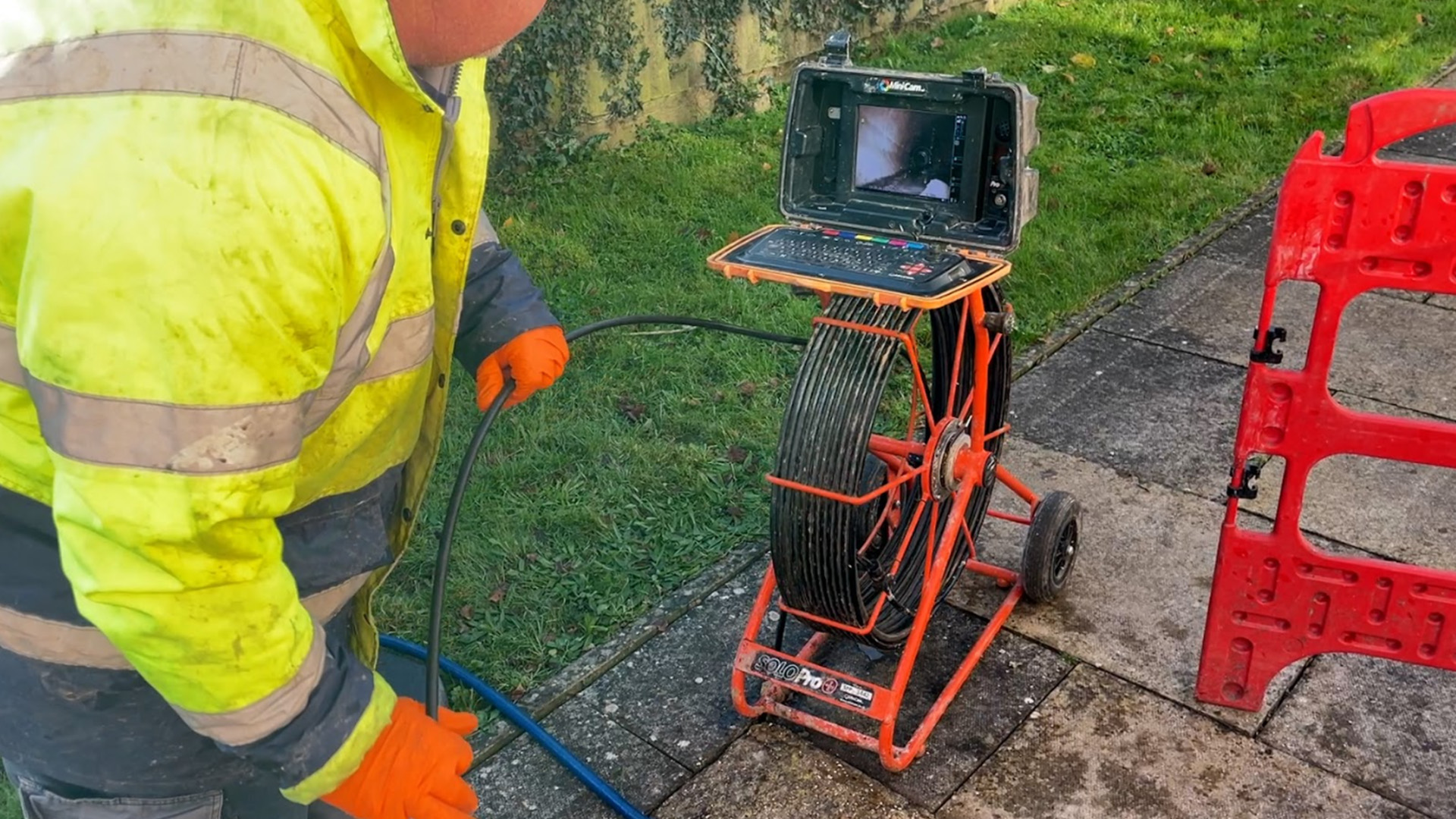
In practice, the boundary between private and public responsibility is sometimes unclear, particularly in older London terraces where the drainage layout was never formally recorded. A CCTV drain survey report that includes a plan of the drain runs surveyed can be submitted to Thames Water for clarification of their adoption position on a specific drain.
Practical Implications for London Property Owners
For a blocked drain where the blockage is within your property boundary, you are responsible for clearance and repair. For a blockage or collapse in a former shared private sewer that has been adopted by Thames Water, you should report it to Thames Water who are obliged to attend and carry out the repair at their cost.
Where you are unsure whether a drain is private or adopted, a CCTV survey report that clearly locates the defect on a plan of the drain runs will help clarify the issue. If the defect is in an adopted Thames Water sewer, Thames Water will arrange and fund the repair. If it is in your private drain, you are responsible.
Prestige Engineers carries out CCTV drain surveys and drain repairs across all London boroughs. We provide a detailed plan of all drain runs surveyed with ownership classification guidance, and we can advise on Thames Water reporting and adoption enquiries. Contact us for a same-day or next-day survey across all London boroughs.