A complete guide to what happens during a CCTV drain survey in London, from booking through to the written report and next steps for any defects found.
What Happens During a CCTV Drain Survey in London
A CCTV drain survey is the most accurate way to understand the condition of the underground drainage beneath a London property. Whether you are buying a house, dealing with recurring blockages, or investigating a slow-draining system, knowing what to expect from the process helps you get the most from the visit. This guide walks through every stage from booking to receiving your written report.
Booking the Survey
When you call to book a CCTV drain survey in London, the drainage company will ask you for the property address and access details. They will also ask what has prompted the survey — whether it is a pre-purchase inspection, a recurring blockage, or a specific concern such as subsidence near a drain run. This information helps the engineer prioritise what to look at first when they arrive.
Access to the Drain
The engineer arrives on site and locates the access point for the drainage system. In most London properties, this is either a manhole cover in the garden or a rodding eye — a smaller capped access point — near the house. The engineer removes the cover, checks the condition of the inspection chamber beneath, and assesses which direction the main drain run travels. In terraced properties, the main drain often runs under the rear garden and exits through a boundary manhole shared with the neighbouring property.
Camera Insertion and Live Footage
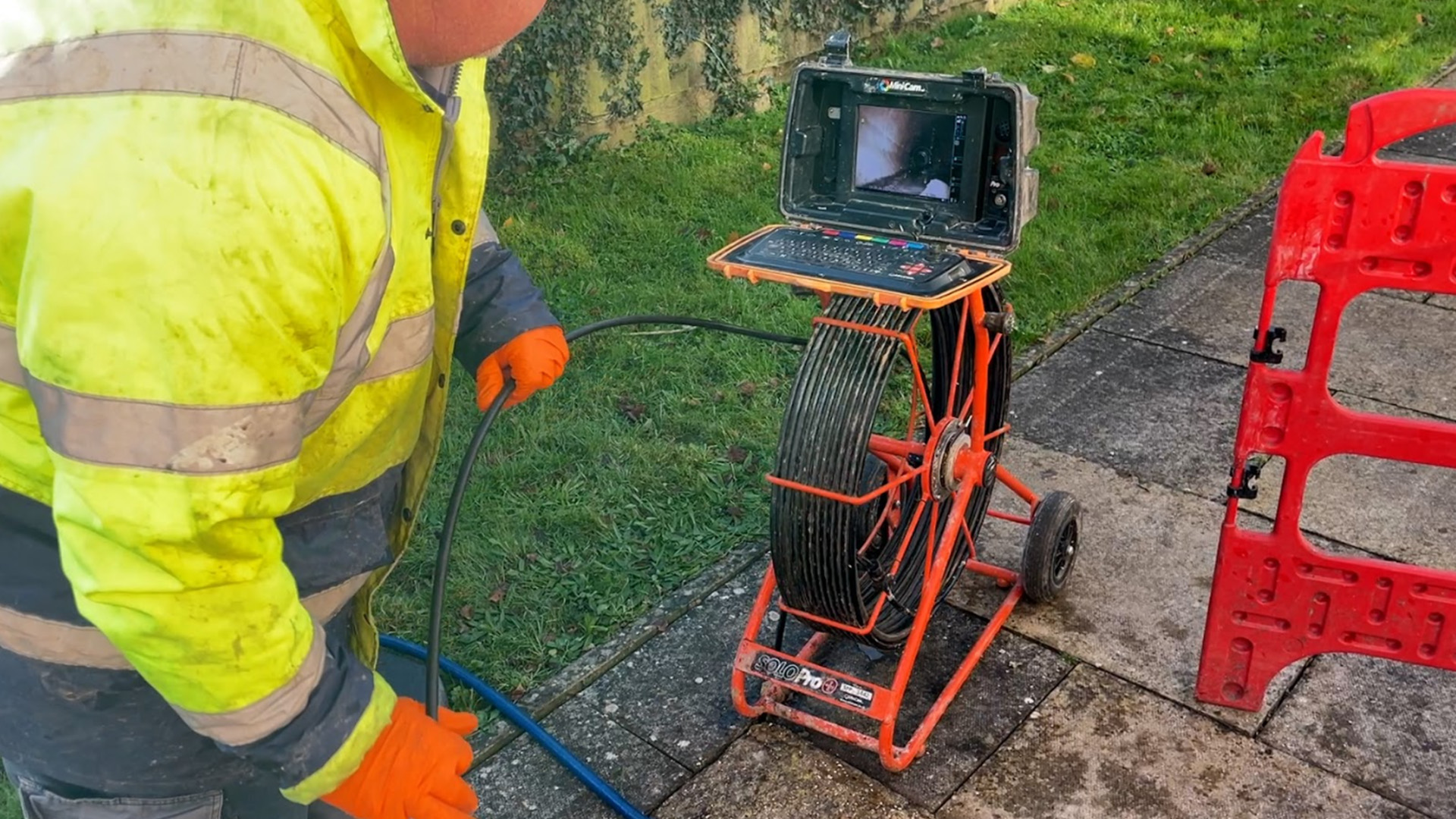
The camera head is mounted on a flexible push rod that is fed into the drain pipe. As the rod is pushed forward, the camera transmits live colour footage back to a monitor. The engineer watches the footage in real time, steering the camera around bends and noting the position of any defects via a built-in counter that records the distance from the access point. Most London residential drains are 100mm or 150mm diameter clay or PVC pipe.
Defect Identification Using WRC Codes
Any defect observed is logged using the Water Research Centre (WRC) coding system, which is the industry-standard classification for drain defects. Common codes include displaced joints (where two pipe sections have shifted), root intrusion (roots entering the pipe at a joint or crack), fractures, deformation, and debris build-up. The WRC code, pipe position, and distance from the access point are all recorded for the report.
What the Survey Covers
A standard residential CCTV drain survey in London covers the main drain run from the nearest manhole or access point to the point where the drain connects to the public sewer. Branch connections — such as the kitchen waste pipe and the bathroom soil pipe where they enter the main run — can also be surveyed if they are accessible and the pipe diameter is suitable for the camera head. Inspection chambers are visually examined as the camera passes through them.
The Written Report
After the survey, you receive a written report that includes: a plan sketch of the drain runs surveyed; a list of all defects observed with their WRC codes, positions, and distances from access; still-frame images captured from the video at each defect location; and a recommendation for each defect — whether it requires immediate action, monitoring, or is advisory only. The full video recording is usually provided on a USB drive or as a download link. This report is what solicitors, mortgage valuers, and insurance companies require as evidence of the drain condition.
How to Read the Report
Defects are graded in the report. Structural defects — collapsed sections, severely displaced joints, pipe deformation — require repair. Maintenance defects — root intrusion, grease build-up, silt accumulation — may be resolved by jetting. Advisory observations — minor joint gaps, light root intrusion — should be monitored but do not require immediate action.
Next Steps After the Survey
If the survey reveals a blockage or build-up, high-pressure water jetting will clear it. If the survey reveals a structural defect such as a collapsed section or severely displaced joints, the repair options are CIPP relining (no-dig) or excavation and replacement depending on the severity. A reputable drainage company will explain both options and their costs before any work begins.
CCTV Drain Survey Costs in London
CCTV drain survey costs in London range from £120 to £400 depending on the number of drain runs surveyed, the length of the drain, and whether the property is residential or commercial. A standard single-run residential survey typically costs £150 to £250. Pre-purchase surveys that cover multiple drain runs at a larger property cost correspondingly more. Prestige Engineers provides fixed-price drain surveys across all London boroughs with same-day availability on most days.
Common Defects Found in London Drains
- Displaced joints in Victorian clay pipes: London has a very high proportion of Victorian clay pipe drainage, and joints frequently displace over time due to ground movement.
- Root intrusion: London plane trees, willows, and hedge roots are the most frequent culprits, particularly in clay soil areas of south and west London.
- Grease and fat build-up: Particularly common in kitchen drain runs where hot fat has been poured down the sink and solidified on the pipe wall.