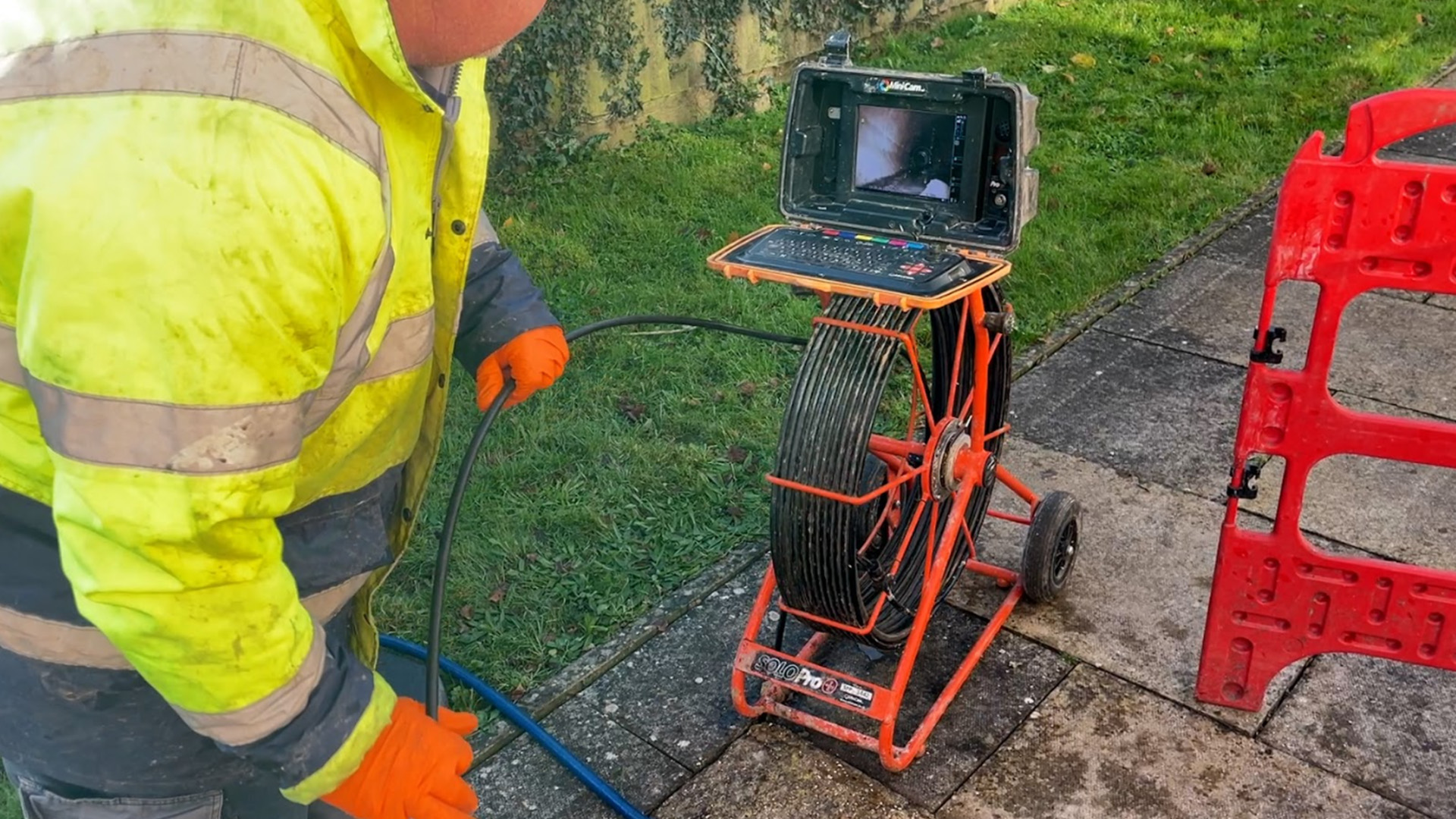
Why a CCTV drain survey is essential when buying a London property, what it reveals, and how to use the findings in negotiations before exchange of contracts.
Why London Properties Need Drain Surveys More Than Most
London has a higher density of properties with drainage problems than almost anywhere else in the UK. The city was largely built in the Victorian and Edwardian eras, which means the majority of its residential drainage infrastructure is 100 to 150 years old. Original clay pipe drainage, which was installed using simple socket and spigot joints sealed with mortar or lead-caulked rope, is now subject to joint displacement, cracking, and root intrusion at a scale that is rarely visible from the surface.
The density of mature trees in London — London planes, willows, ash, and large ornamental trees — combined with the city sitting on a thick layer of London clay means that root intrusion into drainage is particularly prevalent. London clay shrinks in dry summers and swells in wet winters, and this movement repeatedly stresses the joints in clay drain pipes, opening gaps that roots exploit. A property that looks perfectly maintained from the outside can be concealing thousands of pounds of drainage problems underground.
Additionally, most London properties have been extended at some point — rear extensions, loft conversions, basement conversions — and drainage connections added at the time of construction are not always routed or connected correctly. A CCTV survey often reveals ad hoc connections, pipes with incorrect fall, or drainage running across neighbouring properties in ways that create future problems.
What a Pre-Purchase Drain Survey Reveals
A CCTV drain survey carried out before you buy a London property can reveal all of the following:
- Collapsed or crushed pipe sections — which require excavation and replacement
- Root intrusion — which may be resolved by relining or pipe replacement depending on severity
- Displaced joints — where pipe sections have shifted out of alignment, creating gaps and potential for ingress
- Incorrect fall — pipes laid without sufficient gradient cause recurring blockages
- Rat runs — evidence of rat access through the drainage system, which requires structural repair to close the entry points
- Build-up of debris, fat, or silt — indicating a long-standing blockage or inefficiency in the drain
- Ad hoc connections — drainage connected without proper inspection chambers, making future maintenance difficult
When to Book the Survey
The right time to book a pre-purchase drain survey in London is after your offer has been accepted and before you exchange contracts. Exchange of contracts is the legally binding point in the conveyancing process; once you have exchanged, you are committed to buying the property regardless of what is discovered afterwards. A drain survey needs to be completed in time for you to act on the findings — either requesting the vendor carry out remedial work, negotiating a price reduction to cover the cost of repairs, or in extreme cases, withdrawing from the purchase.
Your conveyancing solicitor will advise you on timing in relation to exchange. Most buyers arrange their drain survey alongside or shortly after the RICS homebuyer survey, which typically happens two to three weeks after the offer is accepted.
CCTV Drain Survey Costs for London Buyers
A pre-purchase CCTV drain survey for a typical London terraced or semi-detached property costs £150 to £400. Larger properties with multiple drain runs, or properties where access requires locating hidden manholes, cost more. The survey fee is modest relative to the potential repair costs it can identify, and relative to the purchase price of even the least expensive London properties.
How to Use the Findings in Negotiations
If the drain survey reveals significant defects, you have several options. You can request that the vendor arranges and pays for remedial work before completion. You can obtain a quote for the repairs and request a corresponding reduction in the agreed purchase price. You can ask for a retention — a sum held back from completion funds until agreed repairs are carried out — which your solicitor can facilitate. The survey report provides the evidence base for any of these negotiations.
The Cost of Skipping the Survey
Buyers who skip a pre-purchase drain survey and later discover drainage problems face significant costs. High-pressure jetting clears blockages for £150 to £300, but it does not repair structural defects. CIPP drain relining, the least disruptive structural repair option, costs £800 to £3,000 depending on the length and number of runs. Excavation and replacement — required where the pipe has collapsed or the lining is unsuitable — costs £3,000 to £15,000 or more depending on depth, access, and ground conditions. These are costs that could have been identified and allocated in negotiations before exchange.
Who Arranges the Survey?
The buyer arranges and pays for the pre-purchase drain survey, not the vendor. Mortgage surveyors increasingly recommend CCTV drain surveys in their reports, particularly for older properties, and some mortgage lenders now require a drain survey before approving a mortgage on a property where there are concerns about drainage. Prestige Engineers can usually complete a pre-purchase drain survey in London within 24 to 48 hours of booking, and we provide a written report suitable for use in conveyancing negotiations the same day as the survey.