Root intrusion is one of the most common causes of recurring drain blockages in London. London clay soil and Victorian clay pipes create the ideal conditions for root ingress.
Why London Has a Particular Problem with Root Intrusion in Drains
Root intrusion into drainage systems is a nationwide problem, but London suffers from it at a disproportionate rate. Two factors combine to make the situation worse here than almost anywhere else: the city is built on London clay, and the majority of its residential drainage system was laid in clay pipe during the Victorian and Edwardian eras. Understanding why these two factors interact so badly helps you take the right action when a CCTV survey reveals roots in your drains.
How London Clay Soil Causes Drain Joint Failure
London clay is classified as a highly shrink-swell soil. In dry summers — and London has experienced increasingly dry summers in recent years — the clay shrinks significantly, pulling away from buried structures. In wet winters, it absorbs water and expands. This repeated cycle of contraction and expansion exerts mechanical stress on everything buried in it, including drain pipes and their joints.
Victorian clay drain pipes were laid in short sections, typically 600mm to 900mm long, joined with a socket and spigot system sealed with a cement mortar fillet or a lead-caulked rope joint. These joints were adequate when the pipes were first laid but were not designed to accommodate the ongoing ground movement that London clay produces. Over decades of shrinking and swelling, the mortar cracks and the joint gaps open. These gaps are what roots exploit.
How Roots Enter Drain Pipes
Tree and hedge roots do not seek out drains deliberately, but they do follow moisture and nutrient gradients in the soil. A drain pipe that develops even a small joint gap will release moisture vapour into the surrounding soil, and fine root hairs — the primary nutrient-absorbing structures of most tree root systems — grow towards this moisture. Once inside the pipe, the root encounters abundant moisture, warmth, and nutrients and grows rapidly. What starts as a fine root hair can develop within a few seasons into a dense mass of root material that completely blocks the pipe.
The Most Common Culprit Trees in London
- London plane trees: Planted throughout central and inner London, these trees have an extensive surface and subsurface root system. Their roots are known to follow drain runs over considerable distances.
- Willows and poplars: These species are highly water-seeking and are among the most aggressive in pursuing drainage systems. Any willow or poplar within 15 to 20 metres of a drain run should be considered a risk.
- Ash trees: Common in outer London gardens and streets, ash trees develop wide lateral roots that frequently intersect with residential drain runs.
- Large ornamental hedges: Leylandii, laurel, and privet hedges adjacent to drain runs are a frequent cause of root intrusion in London back gardens, as the cumulative root mass of a long established hedge is considerable.
How CCTV Identifies Root Intrusion
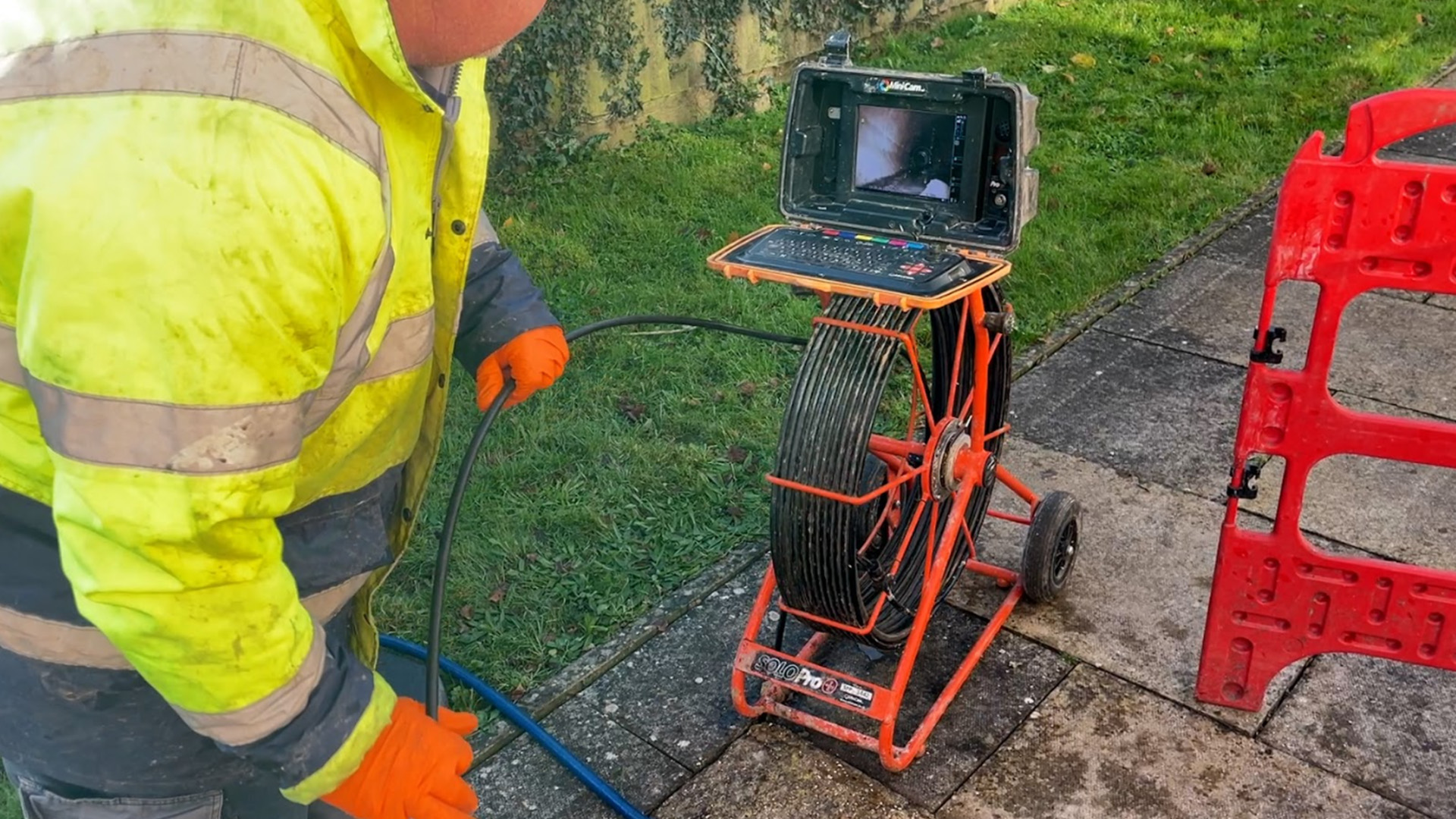
A CCTV drain survey clearly distinguishes root intrusion from other defect types. The camera footage shows the characteristic fine fibrous root mass entering through a joint gap or crack. The WRC code system classifies root intrusion by its severity — from fine root hairs at a joint (minor) to a dense root mass partially or fully blocking the pipe (severe). The survey also identifies the entry point, which is the critical information needed to plan the repair.
Options for Repairing Root Intrusion in London Drains
Root cutting is the least expensive short-term option. A high-speed rotary cutting tool is fed through the drain to shear off the roots at the pipe wall. This clears the blockage immediately but does not seal the joint gap through which the roots entered. Without structural repair, roots will regrow within 12 to 24 months in most cases.
CIPP drain relining is the preferred permanent solution for root intrusion in London. After the roots are cut and the pipe is cleaned by high-pressure jetting, a resin-impregnated liner is inserted into the pipe and inflated to press against the pipe wall. The resin cures to form a new structural pipe within the old one, sealing the joint gaps through which roots entered. CIPP relining is a no-dig method, meaning no excavation of your garden, patio, or driveway is required. It is the most cost-effective permanent repair in London properties where access for excavation is restricted.
Pipe replacement by excavation is necessary where the pipe has collapsed or deformed to the point where a liner cannot be inserted. Excavation costs significantly more than relining and involves disruption to the garden or hard surfaces above the drain run.
Preventing Recurrence
After relining, the sealed pipe surface is resistant to new root intrusion for the life of the liner — typically guaranteed for 10 years. If the trees or hedges causing the problem remain in place, periodic CCTV monitoring every three to five years is advisable to confirm the liner is performing as expected. In cases where a tree is causing repeated drain problems and is not subject to a Tree Preservation Order, removal of the tree is worth considering as a long-term solution.
Repair Costs
Root cutting and jetting typically costs £200 to £400 in London. CIPP relining of a single drain run typically costs £800 to £2,500 depending on the length and diameter of the pipe. Excavation and replacement costs start from £2,500 to £8,000 for a short section and can be considerably more for longer runs or deep drains. Prestige Engineers provides CCTV surveys followed by fixed-price repair options across all London boroughs.