Rewiring during a renovation is the most cost-effective approach for London properties. This guide explains how to sequence the electrical work within the wider renovation programme to avoid delays and unnecessary costs.
Why a Renovation Is the Best Time to Rewire a London Property
A full rewire in an occupied property is one of the most disruptive jobs that can be carried out in a home. Every floor needs to be lifted to run cables in the floor void, walls need to be chased or opened to run vertical cable drops, and the property is without power for extended periods. In contrast, a rewire during a full renovation — when the property is empty, floors are lifted for other trades, and walls are stripped back to the plaster or masonry — can be completed in a fraction of the time at significantly lower cost.
The electrician can run cables in exposed joist voids without lifting boards that then need to be relaid and potentially replaced. Wall chasing can be done before plastering so that cables are concealed behind new plaster with no making-good required. The consumer unit can be positioned in the most logical location for the new layout, rather than being constrained by the existing position. The rewire becomes part of the first fix programme rather than a major disruptive job in its own right.
The Renovation Programme: Where Electrics Fit
A well-organised London property renovation follows a logical sequence of trades to avoid reworking. The electrical rewire fits into this sequence at specific points.
Before plastering: electrical first fix. The first fix is the work that goes into the structure before surfaces are finished. For electrics, first fix means all cable runs installed, all back boxes fixed to the wall or joist, and all cables clipped or threaded through the structure in preparation for surface finishes. The electrician carries out first fix after the structural work, any damp proofing, and carpentry first fix (fitting door linings, window boards, and any other timber work that defines the final room proportions). First fix electrics must be completed before plastering so that cables are concealed and back boxes are flush with the finished plaster face.
Consumer unit position agreed before first fix begins. The position of the new consumer unit should be agreed with the electrician before any first fix work starts. In London Victorian properties, the consumer unit is commonly in the hallway near the front door, fed from the meter cupboard on the external wall. The electrician needs to confirm that the meter position allows a practical cable route to the proposed consumer unit location, and that the location complies with the requirement for the consumer unit to be accessible to all household members.
Plumbing first fix before electrical first fix in bathrooms. In bathrooms and en-suites, plumbing first fix — setting out the waste and supply pipe positions for bath, shower, basin, and WC — should be completed before electrical first fix. The electrician needs to know where the shower tray, bath, and basin are positioned to correctly place the shower circuit, shaver socket, and any heated towel rail connection in compliance with the IP zone requirements for bathroom installations.
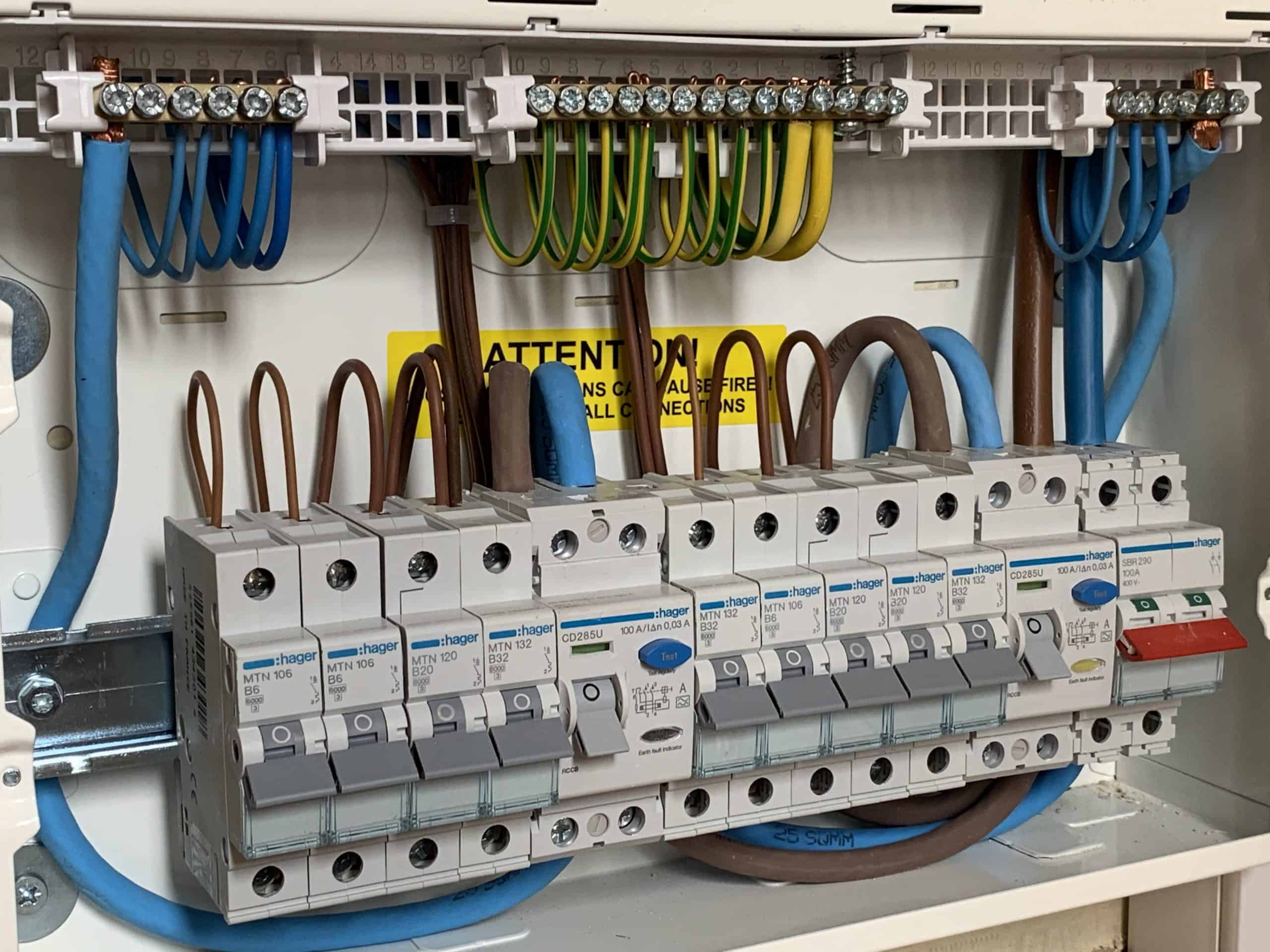
After plastering: electrical second fix. Second fix is the work carried out after all surface finishes are complete. For electrics, second fix means fitting all socket and switch faceplates, light fittings, the consumer unit, and testing and commissioning. Second fix electrics are carried out after plastering and painting, immediately before the property is handed over for occupation.
Coordinating with Other Trades in London
London renovations commonly involve 6 to 12 different trades in a single property — structural engineer, damp specialist, plasterer, plumber, electrician, carpenter, tiler, decorator, and potentially a gas engineer for a boiler replacement. Coordinating these trades without conflicts is the project manager role, whether that is a professional project manager, a main contractor, or the homeowner. The key principle is that first fix trades must complete before plastering, and second fix trades follow in sequence after plaster is dry.
Prestige Engineers works on London renovation projects as part of a multi-trade programme and is experienced in coordinating with other trades on site. We provide a first fix completion certificate before plastering and return for second fix on the agreed programme date. We issue the Electrical Installation Certificate and handle Part P notification as a standard part of every rewire regardless of project size.