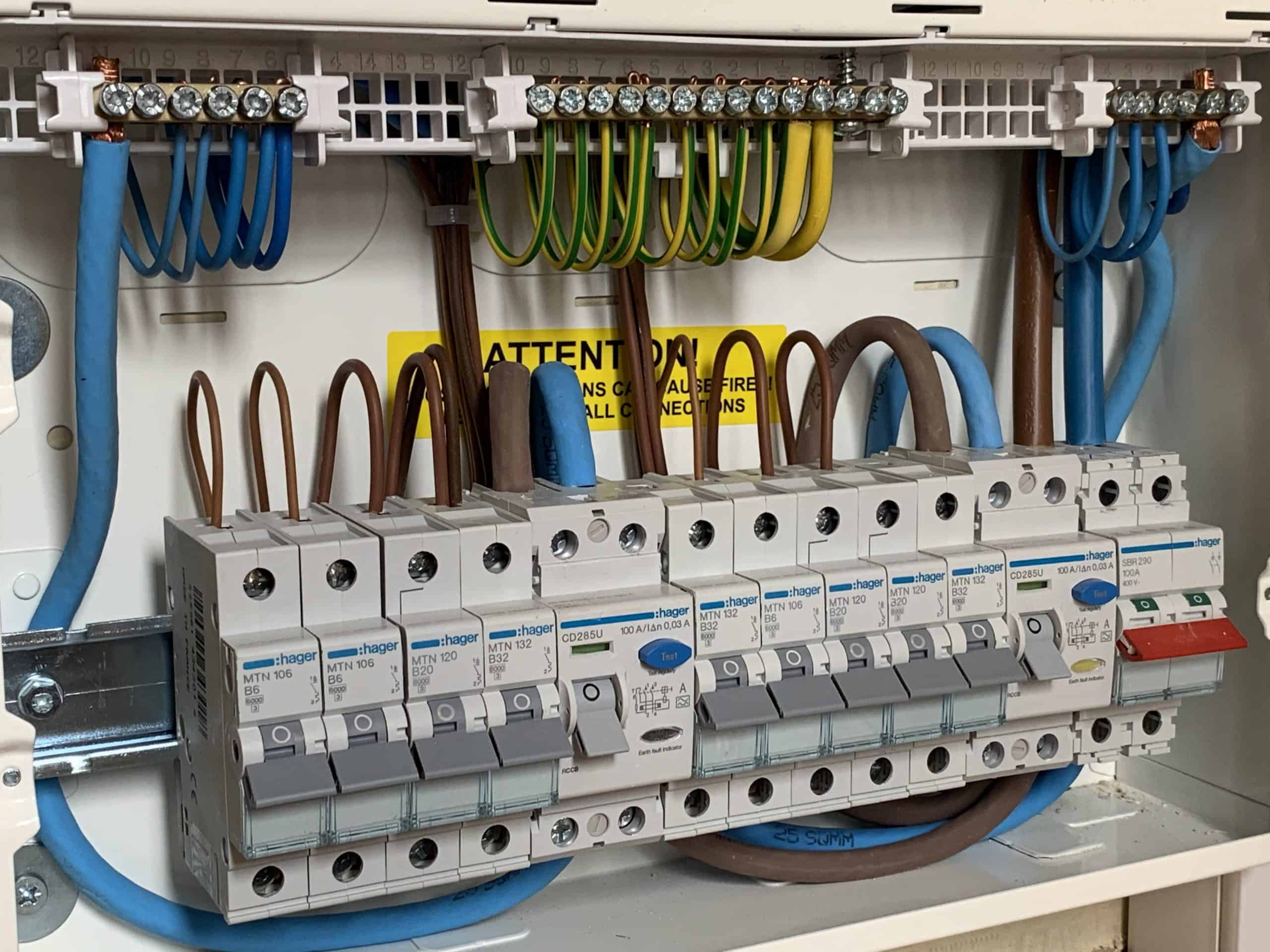
Old or unsafe wiring is one of the most common electrical hazards in London homes. This guide explains the signs to look for, what types of wiring are dangerous, and what to do if you suspect your property needs a rewire.
Why London Properties Are Particularly at Risk of Old Wiring
London has a very large stock of pre-1960 housing — Victorian terraces, Edwardian semis, and interwar properties — that were originally wired in the 1930s, 1940s, and 1950s using materials that are now recognised as potentially dangerous. Many of these properties have not had a full rewire since that original installation. Unlike structural issues that tend to become visible, old electrical wiring deteriorates silently inside walls and floor voids, giving no obvious warning until a fault develops.
The Electrical Safety Standards in the Private Rented Sector (England) Regulations 2020 now require all private landlords to have rental properties inspected every five years by a qualified electrician, but there is no equivalent requirement for owner-occupied homes. This means a London homeowner in an older property may be living with genuinely dangerous wiring without knowing it.
Types of Wiring That Indicate a Full Rewire Is Needed
Rubber-insulated wiring. Wiring with rubber insulation covered by a cotton braid sheath was standard in UK properties built or wired before approximately 1960. After 60 to 80 years, rubber insulation degrades — it becomes brittle, cracks, and crumbles. Degraded rubber insulation exposes bare conductors, creating a serious risk of electric shock, short circuit, and fire. If you see wires in your property with a brown or black cloth or rubber covering, this is almost certainly rubber-insulated wiring and the installation should be assessed immediately. A full rewire is the correct resolution.
Lead-sheathed wiring. Earlier still, wiring installed before approximately 1945 may have lead sheathing rather than a plastic or rubber outer. Lead-sheathed cables are obsolete and potentially dangerous. Their presence indicates wiring that is at least 80 years old.
Circular sheathed wiring without a separate earth conductor. In the 1960s and 1970s, a common cable type had a round profile with two conductors (live and neutral) and no separate earth conductor. These cables are recognisable by their circular cross-section and their two-core construction. Absence of a dedicated earth is a serious safety deficiency that leaves all metalwork in the property unearthed, creating shock risk when a fault develops.
Old round-pin sockets. Properties with large round-pin sockets (BS 546 standard) have wiring that predates the current standard flat-pin socket. These properties are invariably wired in rubber-insulated cable and require a full rewire.
Electrical Symptoms That Suggest a Rewire May Be Needed
Persistent tripping of fuses or circuit breakers. If the same circuit trips repeatedly without an obvious cause, it may indicate degraded cable insulation causing intermittent faults.
Burning smell from sockets or switches. A burning smell from an electrical accessory, even without visible discolouration, indicates overheating that may be caused by deteriorated insulation or a loose connection.
Discolouration or scorch marks on sockets or switches. Brown or black marks around switch or socket faces, or on the face plates themselves, indicate heat damage from a fault.
Flickering lights. While this can be caused by a faulty lamp or a loose connection at the fitting, persistent flickering across multiple rooms may indicate problems with the wiring supplying the lighting circuit.
Electric shocks from switches, sockets, or appliances. Any electric shock from a fixed installation accessory — however minor — must be investigated by a qualified electrician immediately. This should never be normalised or ignored.
How to Confirm Whether a Rewire Is Needed
The definitive way to assess the condition of a property electrical installation is an Electrical Installation Condition Report (EICR), carried out by a qualified electrician. The EICR involves testing every circuit in the installation and inspecting all accessible wiring, accessories, and the consumer unit. Each finding is coded: C1 indicates immediate danger, C2 indicates potential danger, and C3 indicates an improvement is recommended. A property with multiple C1 or C2 findings distributed across all circuits generally indicates that a full rewire is the most cost-effective resolution.
Prestige Engineers is NICEIC registered and carries out EICR inspections across all London boroughs. Contact us to arrange an EICR or a rewire survey — we typically attend within 2 to 3 working days and provide a written assessment and fixed-price rewire quote on the same visit if the property needs rewiring.