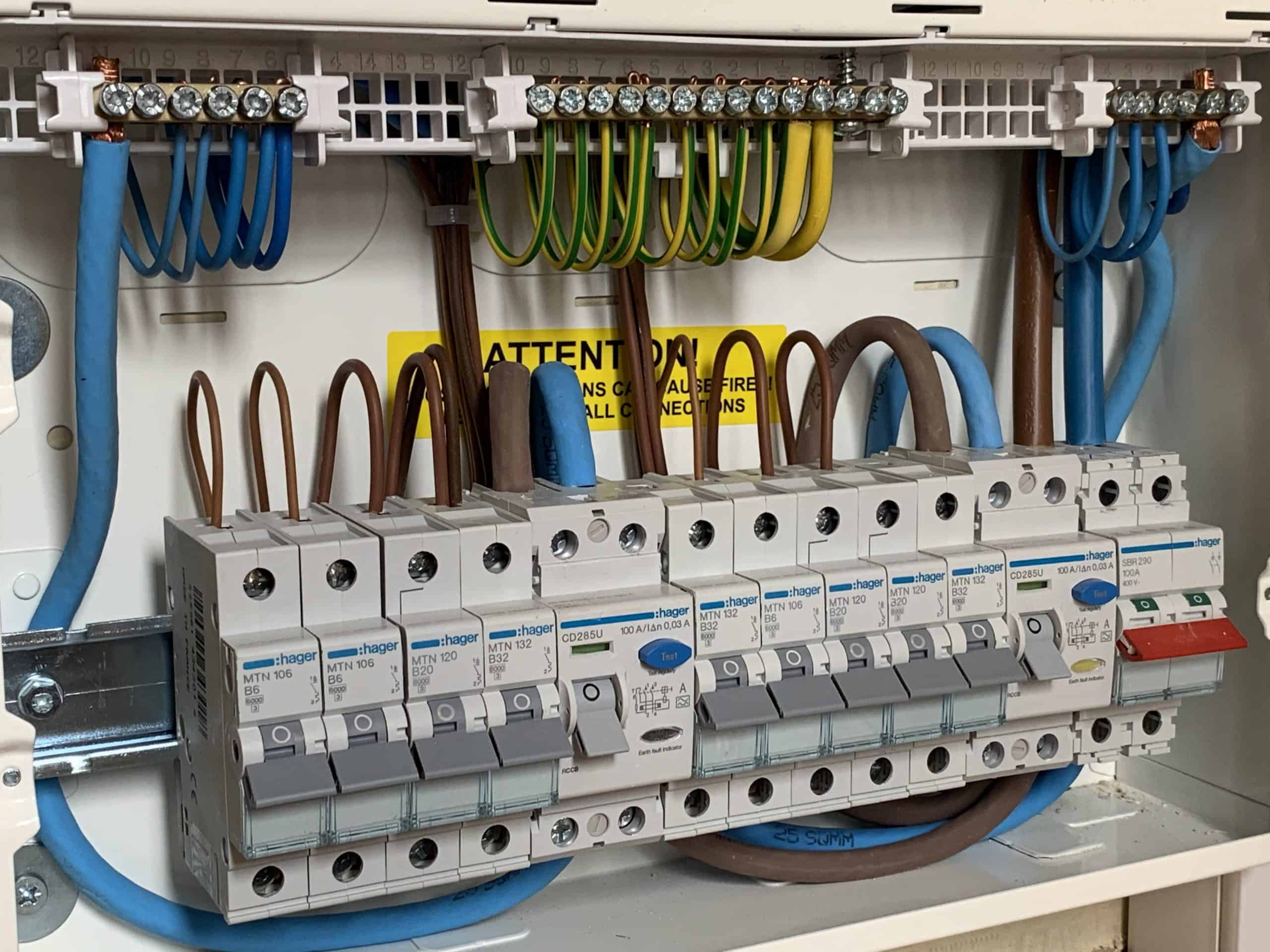
A clear explanation of the three main electrical certificates issued in London — EIC, EICR, and MEIWC — when each is required and what they cover.
The Three Main Electrical Certificates in London
When electrical work is carried out in a London property — whether as a landlord maintaining a rental, a homeowner upgrading the installation, or a contractor fitting out a commercial premises — one or more electrical certificates are required. The three certificates you will encounter most often are the EIC, the EICR, and the MEIWC. Understanding the difference between them, and knowing which one applies to your situation, will help you ask the right questions and know what paperwork to expect.
EIC: Electrical Installation Certificate
An Electrical Installation Certificate (EIC) is issued when a new electrical installation is carried out or when a significant alteration or addition is made to an existing installation. The EIC certifies the new or altered work only — it does not comment on the condition of the rest of the installation. It must be signed by both the designer and the installer of the work, who may be the same person or different people depending on the complexity of the job.
EICs are required for Part P notifiable work under the Building Regulations. Part P applies to electrical work carried out in dwellings, and it requires that certain types of work are either notified to the local building control authority or self-certified by a registered competent person. Work that is notifiable includes: new circuits, consumer unit replacements, work in special locations (bathrooms, kitchens, swimming pools), and work on outdoor circuits. An NICEIC or NAPIT registered electrician can self-certify this work, which means they notify building control on your behalf and you receive the EIC as your certificate of compliance.
You should receive an EIC when a new consumer unit is fitted, when a new circuit is run, when rewiring work is carried out, or when any significant electrical alteration is made. Keep the EIC with the property's documents — it is required when selling the property and may be requested by insurers.
EICR: Electrical Installation Condition Report
An Electrical Installation Condition Report (EICR) — also known as a periodic inspection report — is an inspection and testing of the existing electrical installation in a property. Unlike the EIC, which covers new work, the EICR assesses the entire installation against the current edition of BS 7671 (the IET Wiring Regulations).
The EICR is required for all privately rented residential properties in England at least once every five years, or at each change of tenancy if the tenancy is shorter than five years. Landlords must provide tenants with a copy of the EICR within 28 days of the inspection and must supply a copy to any new tenant before or on the day they move in. Local authorities can serve remedial notices and impose fines of up to £30,000 for non-compliance.
The EICR grades each observation using a standard coding system:
- C1 (Danger present): Risk of injury — must be made safe immediately. The electrician is required to make safe before leaving the property if possible.
- C2 (Potentially dangerous): Risk if not investigated or repaired — must be remedied within 28 days of the report.
- C3 (Improvement recommended): Not dangerous but does not fully meet current standards — no mandatory action required but improvement is advisable.
- FI (Further investigation required): A potential defect that cannot be fully assessed without further inspection — requires follow-up within 28 days.
C1 and C2 observations must be remedied and evidence of remediation provided to the tenant and local authority within 28 days. Owner-occupiers are not legally required to have an EICR but are strongly advised to obtain one for properties that have not had a periodic inspection within the last ten years, and particularly before purchasing an older property.
MEIWC: Minor Electrical Installation Works Certificate
A Minor Electrical Installation Works Certificate (MEIWC) is issued for minor works that do not constitute a new circuit or significant alteration. It documents that the minor work has been inspected and tested and is safe. A MEIWC is not a Part P self-certification document — it is a record of the work carried out and its test results.
Examples of work for which a MEIWC is appropriate include: replacing a socket or light switch on an existing circuit in a room that is not a special location, adding a spur from an existing ring circuit, replacing a light fitting on an existing circuit, or any other minor addition to an existing circuit outside a notifiable zone.
A MEIWC is not appropriate for work in bathrooms, for new circuits, or for work that constitutes a significant alteration. In those cases an EIC is required.
Summary: Which Certificate Do You Need?
- New circuit, new consumer unit, or work in a bathroom or kitchen zone: EIC (issued by the registered electrician at completion)
- Inspection of the existing installation (rental property or periodic check): EICR (required every 5 years for rental properties)
- Replacing a socket or fitting on an existing circuit in a non-notifiable location: MEIWC (issued by the electrician at completion)
Prestige Engineers issues the correct certificate for every job. All our electricians are NICEIC registered and authorised to self-certify Part P notifiable work, providing you with full compliance documentation on completion.