A complete guide to drain relining costs in London, how the CIPP no-dig process works, what defects it can fix, and when excavation is unavoidable.
What Is Drain Relining and Why Do London Properties Need It?
Drain relining — technically known as cured-in-place pipe lining or CIPP — is a method of repairing a damaged underground drain without excavating the ground above it. Instead of digging up a garden, patio or driveway to reach the broken pipe, a new structural pipe is formed inside the old one using a resin-impregnated liner. The liner is inserted from an existing access point, inflated to press against the pipe wall, and cured with hot water or UV light to create a smooth, jointless pipe inside the original pipe.
London properties require drain relining more frequently than most of the country because the vast majority of residential drainage in the capital was laid in Victorian clay pipe between 1870 and 1910. These pipes are now 110 to 150 years old, and the socket-and-spigot joints that connect each pipe section are cemented with a mortar fillet that has been subject to 150 years of ground movement, temperature cycling, and the shrink-swell movement of London clay. Joint displacement, cracking, and root intrusion are universal problems in London drainage, and relining is the most cost-effective response to them in the dense urban environment of the capital.
CIPP Drain Relining Costs in London
Drain relining costs in London depend on the length of liner required, the pipe diameter, the depth and accessibility of the access points, and the extent of preparatory work such as root cutting. The following figures represent current market rates for residential drain relining in London.
- Short patch repair (up to 1.5 metres): £300 to £600 — used for a single displaced joint, a localised crack, or a short section of root intrusion
- Medium patch repair (1.5 to 3 metres): £600 to £1,000 — used for a run of displaced joints or a section with multiple cracks
- Full drain run lining (up to 10 metres, 100mm diameter): £1,500 to £3,000 — used where defects are distributed along the whole drain run
- Full drain run lining (up to 10 metres, 150mm diameter): £2,000 to £4,000 — larger commercial pipe or main drain
- Lateral launch liner: £800 to £1,500 — specialist liner for the junction between a property lateral and the main sewer
- Pre-lining CCTV survey: £150 to £250 — included in all fixed-price relining quotes from Prestige Engineers
By comparison, excavating and replacing a short section of drain in a London garden typically costs £2,000 to £5,000 before reinstatement of paving or soft landscaping. In properties with limited access — small rear gardens, basement conversions, extensions over drain runs — excavation costs can be substantially higher.
The CIPP Relining Process Step by Step
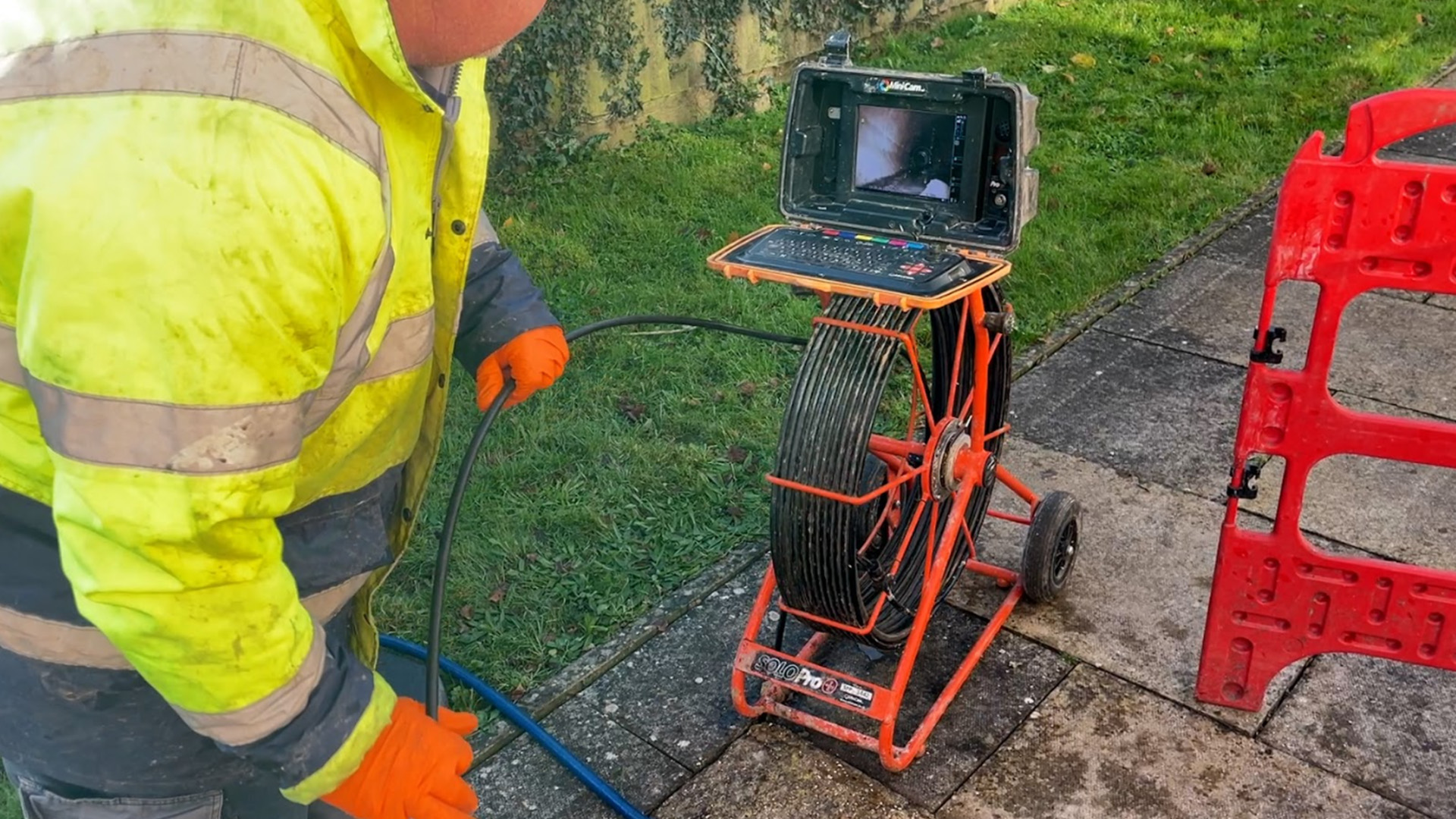
Step 1: CCTV survey. A camera is pushed through the drain from the nearest access point to survey the full length of the drain run. Every defect is identified, logged with its WRC code and its distance from the access point, and captured as a still image. The survey confirms whether the pipe retains enough of its original profile to accept a liner.
Step 2: Root cutting. Where root intrusion is present, a high-speed rotary cutting tool is fed through the pipe to shear the root mass back to the pipe wall. Root cuttings are then flushed from the pipe by high-pressure jetting.
Step 3: High-pressure jetting. The full drain run is cleaned by high-pressure water jetting at 3,000 to 4,000 psi to remove all debris, grease, silt and loose pipe fragments from the pipe wall. The pipe must be clean and clear before the liner is inserted.
Step 4: Liner preparation and insertion. The liner — a felt or fibreglass tube saturated with two-part epoxy or polyester resin — is cut to the exact length required and loaded onto an inversion drum. Using compressed air, the liner is turned inside-out as it advances through the pipe, pressing the resin-coated surface against the pipe wall along its full length.
Step 5: Curing. Hot water is circulated through the liner at 60 to 80 degrees Celsius to accelerate the resin cure. Curing takes 30 to 90 minutes depending on liner diameter and length. After curing, the end caps are removed and the liner is trimmed flush with the access point.
Step 6: Post-installation CCTV inspection. A camera is passed through the finished liner to confirm full bonding, correct bore, and the absence of voids or bridging. Any lateral connections sealed by the liner are cut open using a robotic cutter. A written completion report with post-installation photos is issued.
What Defects CIPP Relining Can Fix
CIPP relining is effective for the following defect types, which represent the majority of defects found in London residential drainage:
- Displaced joints: The liner bridges and seals the gap at the displaced joint, restoring structural continuity
- Cracks and fractures: The cured liner bonds to the inside of the pipe and seals all cracks
- Root intrusion: After root cutting and jetting, the liner seals all joint gaps through which roots entered, preventing regrowth
- Surface deterioration: The liner provides a new smooth bore regardless of the surface condition of the original pipe
- Minor deformation: Where the pipe oval is not severe, a liner can be inserted and restores the original internal dimensions on curing
When CIPP Relining Is Not Suitable
There are circumstances where CIPP relining is not appropriate and excavation is unavoidable. A fully collapsed pipe section — where the crown has fallen in — cannot accept a liner because there is no continuous bore for the liner to follow. A severely offset joint where one pipe has shifted substantially sideways may prevent liner insertion. In these cases, the collapsed or severely offset section must be excavated and replaced, after which the remaining pipe can be relined if suitable.
Victorian egg-shaped and oval-profile drains require correctly sized liners. Where deformation of the pipe profile exceeds 20 to 30 percent of the original bore, relining may not restore adequate flow capacity and replacement may be recommended.
The 10-Year Guarantee
A correctly installed CIPP liner is backed by a 10-year guarantee from Prestige Engineers covering both the liner and the workmanship. The liner material itself has a design life of 50 or more years when correctly installed. It is smooth-bore, jointless, and chemically resistant, making it superior to the original clay pipe in many respects. Contact Prestige Engineers for a fixed-price drain relining quote following a CCTV survey across any London borough.