A collapsed drain in a London property can mean excavation, relining, or a combination. This guide explains the options, costs and how to decide which approach is right for your situation.
Signs of a Collapsed Drain in a London Property
A partially or fully collapsed drain produces recognisable symptoms in most London properties. Multiple fixtures draining slowly at the same time — rather than a single slow basin or toilet — usually indicates a problem with the main drain run rather than a branch pipe. Sewage backing up from a ground-floor toilet or through a rodding eye in the garden is a stronger indicator of collapse or severe blockage downstream of the property. A persistent unpleasant smell from the garden near the drain run may indicate a collapsed section releasing gas through the soil. Subsidence in a specific area of the garden or a sunken patch of lawn above a known drain run can indicate a collapsed pipe creating a void in the ground.
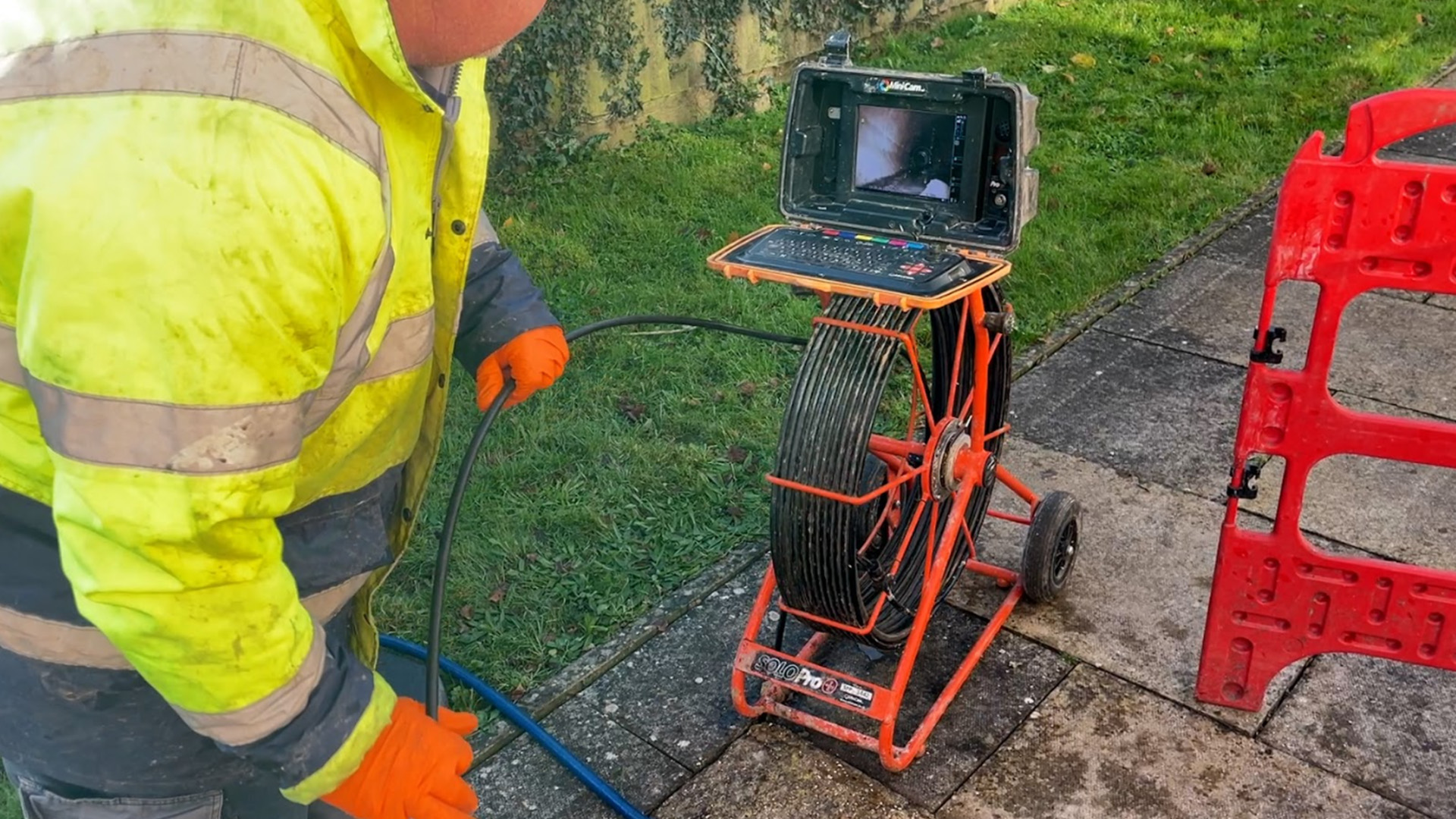
A CCTV drain survey is the only way to confirm a collapse and to assess its extent and severity. Without a survey, it is not possible to determine whether the problem is a blockage (clearable by jetting), a partial collapse (which may be relinable), or a full collapse (which requires excavation and replacement).
Types of Drain Collapse
Drain collapses in London properties are typically classified by their severity and by whether the pipe bore is still continuous.
Partial collapse means the pipe has fractured or deformed but the bore is still substantially continuous. The crown of the pipe has cracked or a section of pipe wall has broken inward, reducing the bore. Depending on the severity of the deformation, a partial collapse may still be suitable for CIPP relining — the liner, being flexible before curing, can accommodate moderate deformation and restore the original bore on curing.
Full collapse means the pipe bore is no longer continuous. The crown has fallen in and soil or debris has entered the pipe at the failure point. A fully collapsed section cannot be relined because the liner cannot pass through. Excavation and replacement of the collapsed section is unavoidable. After the collapsed section is replaced, the remaining pipe can be relined if its condition warrants it.
Displaced joint is not technically a collapse but produces similar consequences. A severely displaced joint — where one pipe section has shifted substantially sideways relative to the next, creating a step or dog-leg in the pipe — may block the passage of solids and is a common cause of recurring blockages. Moderate joint displacement can be relined. Severe displacement may require localised excavation at the offset joint to realign the pipe before relining.
Repair Options and Costs in London
CIPP relining (where suitable): If a CCTV survey confirms the pipe is suitable — the bore is substantially continuous and the pipe profile is not severely deformed — CIPP relining is the preferred option in London. It avoids excavation, which is particularly significant in London where small rear gardens, extensions over drain runs, and basement conversions make excavation expensive or impractical. Relining costs for a short patch over a partial collapse run from £400 to £800. Full-run lining costs £1,500 to £3,500 for a standard residential drain.
Excavation and pipe replacement (where relining is not suitable): Where the pipe has fully collapsed, the affected section must be excavated, the collapsed pipe removed, new pipe installed and connected, and the excavation backfilled and compacted. In a London rear garden, a straightforward excavation and replacement of a short drain section (2 to 3 metres) at a depth of 1 metre typically costs £2,500 to £5,000, depending on whether hard surfaces need to be broken and reinstated. Deeper drains, drains under extensions, or drains beneath shared access routes cost significantly more.
Combination approach: Where a drain run has a fully collapsed section in one area and a relinable but damaged section elsewhere, the standard approach is to excavate and replace the collapsed section and then reline the remaining damaged sections. This avoids both the cost of relining a section that is not suitable and the cost of excavating sections that could be relined.
Insurance and Drain Collapse in London
Buildings insurance policies vary considerably in their treatment of drain repair costs. Many standard policies cover drain clearance (jetting) but not structural repair (relining or excavation). Some policies provide drain cover as an add-on or include it in the main buildings sum insured. A CCTV survey report provides the documentary evidence required to support an insurance claim for structural drain repair. Prestige Engineers produces survey reports in the format required by insurers and can provide a written estimate for the repair work to accompany a claim. Contact us for a CCTV survey and drain repair quote across all London boroughs.