Water Leak Insurance Claims in London: The Loss Adjuster's Sequence
An escape of water claim on a London block is decided less by the size of the damage than by the order in which events happened and the evidence recorded at each step. This guide is written for the person who has to file the claim rather than the person mopping the floor: the correct sequence, what trace and access cover actually pays for, what a loss adjuster is assessing on site, how buildings and contents policies divide up in a leasehold block, and the three reasons claims are most often cut back.
The Order a Water Leak Claim Has to Happen In
Stop the water, notify the insurer, mitigate the damage, get authority to trace, then repair, then reinstate. That order is not a preference. Most escape of water disputes in London blocks come down to a step taken out of sequence, and the most damaging one is repairing the failure before anyone acting for the insurer has been given the chance to see it.
The first step is isolation at the nearest workable point: the flat's own stop tap if the failure is inside a demised flat, the riser isolation valve if it is a common pipe, the main stopcock if neither can be found quickly. Record the time. On a managed block, note who isolated it and on whose instruction, because that timeline becomes the spine of the claim file.
Notification comes next and it comes fast. Almost every buildings policy carries a condition requiring the insured to notify the insurer of a claim or a potential claim promptly, and a delay of weeks while a managing agent decides whether the damage is worth claiming for is itself a breach of that condition. Notify on the day, even where the extent of the damage is unknown. A claim reference opened early costs nothing and can be withdrawn; a claim reported late cannot be un-delayed.
Only then does investigation begin. If the source of the water is not visible, do not authorise a plumber to start opening floors and walls until you have confirmed with the insurer that the trace and access extension applies and what its limit is. Work carried out before that confirmation is work you may be paying for yourself.
What Escape of Water Actually Covers, and What It Does Not
Escape of water is an insured peril covering damage caused by water escaping suddenly from a fixed water or heating installation — a burst supply pipe, a failed flexible tap connector, a split heating circuit, an overflowing cistern. It covers the damage the water causes. It generally does not cover the cost of repairing the component that failed, and it does not cover deterioration that happened gradually.
That distinction between sudden and gradual is where most London claims are argued. A pinhole in a copper pipe that has been weeping into a floor void for eight months produces damage that looks identical to a burst, but many policies exclude damage caused by a leak that occurred gradually over time, or limit the period for which gradual damage is covered. This is why a plumber's report that identifies the mode of failure, rather than simply recording that a leak was found and fixed, materially changes the outcome.
The other common exclusions worth checking before a claim goes in are damage occurring while the property has been unoccupied beyond the policy's stated unoccupancy period, damage arising from faulty workmanship on a previous installation, and damage arising from a lack of maintenance where the policy imposes a maintenance condition. Unoccupancy clauses in particular catch London landlords between tenancies, because they typically also require the water to be turned off and the system drained after the stated period.
Trace and Access: The Clause, the Limit, and the Invoice
Trace and access is a policy extension that pays for the cost of locating the source of an escape of water and for making good the damage caused by that search. It pays for lifting a floor to find a leak and for relaying that floor afterwards. It does not pay for repairing the failed pipe, and it is almost always subject to its own separate limit rather than the full sum insured.
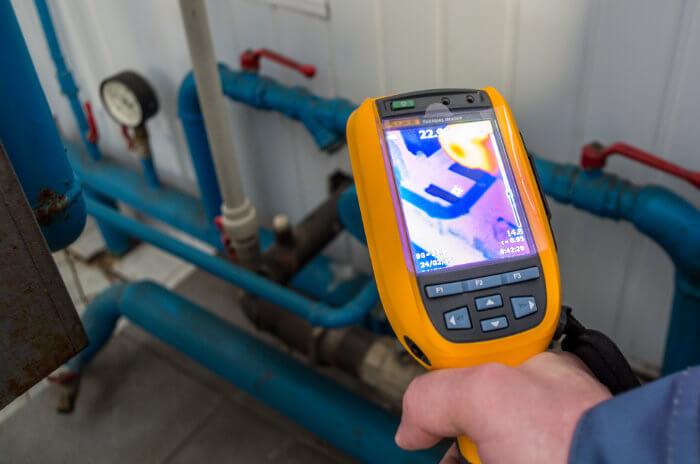
Read the limit before instructing anyone. Where the extension carries a sub-limit, a non-invasive detection survey followed by a targeted opening-up is not simply the tidier approach — it is the approach that keeps the cost inside the limit. Instructing a plumber to lift an entire floor in a converted flat because it is quicker than a survey routinely produces an invoice larger than the limit, and the balance falls on the policyholder.
The invoice matters as much as the method. An insurer can only apply the trace and access limit to trace and access work, so an invoice that reads as a single line for "leak repair" invites the whole sum to be treated as an uninsured repair cost. A usable invoice separates three things: the detection work, the repair of the failed component, and the reinstatement of what was opened up. Each should be priced and described independently, with the detection method named.
What a Loss Adjuster Is Looking For on Site
A loss adjuster is appointed by and acts for the insurer. Their job is to establish the cause of the loss, whether the policy responds to it, whether policy conditions were complied with, and whether the scope being claimed is proportionate to the damage. They are not there to argue the policyholder's case, which is the role a loss assessor performs for a fee.
In practice the adjuster is testing four things on the visit. What failed, and did it fail suddenly. When did it start and when was it reported. Was the property occupied, heated and maintained as the policy required. And is the damage now being claimed actually attributable to this event rather than to an older problem in the same location.
That last point is why pre-existing damp in a London basement or a historically stained ceiling below a bathroom is worth photographing before the claim rather than after. Where an adjuster cannot separate new damage from old, the scope tends to be settled on the conservative reading.
Have the file ready for the visit rather than promising to send it afterwards: the policy schedule, the dated timeline of isolation and notification, the plumber's written report, moisture readings taken at identified locations with the instrument named, and photographs taken before any drying equipment was installed.
Blocks and Communal Pipework: Which Policy Pays
In a leasehold block, the buildings insurance is normally arranged by the freeholder or the residents' management company under an obligation in the lease, with the premium recharged through the service charge. Individual leaseholders hold contents policies. So a leak in one flat that damages the flat below usually involves one buildings policy and two contents policies, and the first question is which of them is being asked to pay for what.
Responsibility for the repair itself is a separate question from who insures the damage, and it is answered by the lease rather than by the policy. Pipework that serves only one flat is usually within that flat's demise and is the leaseholder's to repair; common risers, stacks and pipes serving more than one flat are usually retained by the landlord and are a service charge matter. A managing agent who conflates the two ends up telling one leaseholder they are liable for a repair the lease puts on the block.
Leaseholders have a statutory right to information about the cover. Section 30A of the Landlord and Tenant Act 1985 and the schedule to it entitle a tenant to request a summary of the insurance cover and to inspect the policy and supporting documents, which is the cleanest way to settle an argument about what the block policy actually covers rather than what somebody believes it covers.
The excess is the other recurring flashpoint. Escape of water excesses on London blocks are frequently higher than the excess for other perils, and whether that excess can be recovered through the service charge or falls on the individual leaseholder depends on the recovery provisions in the lease. Establish that before telling anybody they are covered.
The Evidence Pack That Decides the Settlement
Photographs taken before drying equipment arrives, moisture readings recorded against identified locations, a written report naming the failed component and its mode of failure, the failed component itself retained, and a dated log of every notification and instruction. That is the pack. Assembled during the first forty-eight hours it takes very little time; reconstructed three weeks later it is largely guesswork.
Photographs should show the source, the path the water took, and each affected area, with something in frame that gives scale. Moisture readings should record the instrument used, the location, the reading and the date, and should be repeated as drying progresses so that the drying period itself is evidenced rather than asserted.
Retain the failed part. A split flexible connector or a corroded section of pipe in a labelled bag is the single most persuasive item in a dispute about whether a failure was sudden, and it costs nothing to keep. Where a component has been disposed of, its condition becomes a matter of recollection, and recollection loses to a photograph.
The Three Reasons Claims Get Cut Back
Claims are reduced or declined for three recurring reasons: the damage is characterised as gradual rather than sudden, a policy condition was breached, or the scope claimed cannot be separated from wear, betterment and pre-existing damage. Almost every rejection a London managing agent sees falls into one of those.
Gradual damage is defeated by evidence of the failure mode and by a tight timeline between discovery and notification. Condition breaches — late notification, unoccupancy without isolation, repair carried out before authority — are defeated by process rather than argument, which is why the sequence at the top of this guide is worth following even on a small claim. Scope disputes are defeated by the evidence pack, because a settlement negotiated from dated readings and photographs starts from a different place than one negotiated from an estimate.
There is a fourth issue that sits behind all three: disclosure. Commercial policies, including most block policies, are subject to the duty of fair presentation under the Insurance Act 2015, and a failure to disclose a material circumstance — a known previous leak, a history of claims on the same riser — gives the insurer proportionate remedies that can reduce a settlement even where the current claim is otherwise valid. Consumer policies are governed instead by the Consumer Insurance (Disclosure and Representations) Act 2012, which asks only that answers given to the insurer's questions are honest and reasonably careful.
If the Insurer Declines
Ask for the decision in writing with the specific policy wording relied on, then use the insurer's internal complaints process and obtain a final response letter. That letter is the gateway to the Financial Ombudsman Service, and a complaint must generally be referred to the Ombudsman within six months of it.
Eligibility matters in a block context. The Ombudsman can consider complaints from eligible complainants including consumers and micro-enterprises, and a person who is a beneficiary under a contract of insurance can be eligible even where they did not take the policy out, which is the route by which a leaseholder can sometimes complain about a block policy arranged by the freeholder. Where the complainant is a larger commercial entity the Ombudsman route may not be open, and the dispute is a legal one.
Prestige Engineers carry out leak detection and pipework repairs for property managers, managing agents and freeholders across London, and provide written detection reports that separate detection, repair and reinstatement so that a trace and access claim can be assessed on the invoice as submitted.