Since April 2020, it has been unlawful to grant a new tenancy in England on a property with an EPC rating below E. London landlords with F or G rated properties face fines of up to £30,000 and must carry out qualifying improvements before re-letting. Understanding what drives your EPC score — and what upgrades will move the needle — is now a legal necessity, not an optional upgrade.
The Legal Baseline: What MEES Requires
The Minimum Energy Efficiency Standards (MEES) regulations, introduced under the Energy Efficiency (Private Rented Property) (England and Wales) Regulations 2015, set a legal floor for the energy performance of privately rented homes. Since 1 April 2020, it has been unlawful for a landlord in England to continue letting a residential property with an EPC rating of F or G, regardless of whether the tenancy was granted before or after that date. The requirement applies to assured shorthold tenancies, regulated tenancies and most domestic lettings.
Enforcement sits with local authorities. In London, each borough has discretion over how aggressively it pursues non-compliant landlords, but the maximum civil penalty for letting an F or G rated property without a registered exemption is £30,000 per property. Penalties are also published in a public register, which carries reputational consequences alongside the financial ones.
An EPC (Energy Performance Certificate) rates a property from A (most efficient) to G (least efficient). The certificate is valid for ten years and must be produced by an accredited domestic energy assessor. For most London rental properties — many of which are Victorian or Edwardian terraces with solid walls, original sash windows and ageing gas boilers — achieving the E threshold is achievable but requires deliberate action.
Why London Properties Are Disproportionately Affected
London's housing stock is older than the national average. A high proportion of rental properties are Victorian conversions or inter-war flats with characteristics that drag down EPC scores: solid brick walls with no cavity for insulation, suspended timber floors, single-glazed windows in conservation areas where planning restrictions may limit replacement, and gas heating systems installed decades ago. Properties in borough licensing schemes — common across Southwark, Newham, Hackney and Waltham Forest, among others — face additional scrutiny at licence renewal, making a valid and compliant EPC even more operationally significant.
The assessor calculates an EPC score based on estimated energy use per square metre per year, taking into account the heating system, hot water system, insulation levels, glazing, lighting and the building fabric itself. A gas boiler installed before 2005 with no controls upgrade, combined with uninsulated walls and a poor hot water cylinder, will typically score in the D to G range depending on the dwelling's construction.
What Improvements Move the Rating
Not all improvement measures carry equal weight in the EPC calculation. The assessor's software (currently RdSAP) applies fixed improvement recommendations based on the property type and existing features. The most impactful measures for typical London rental properties are:
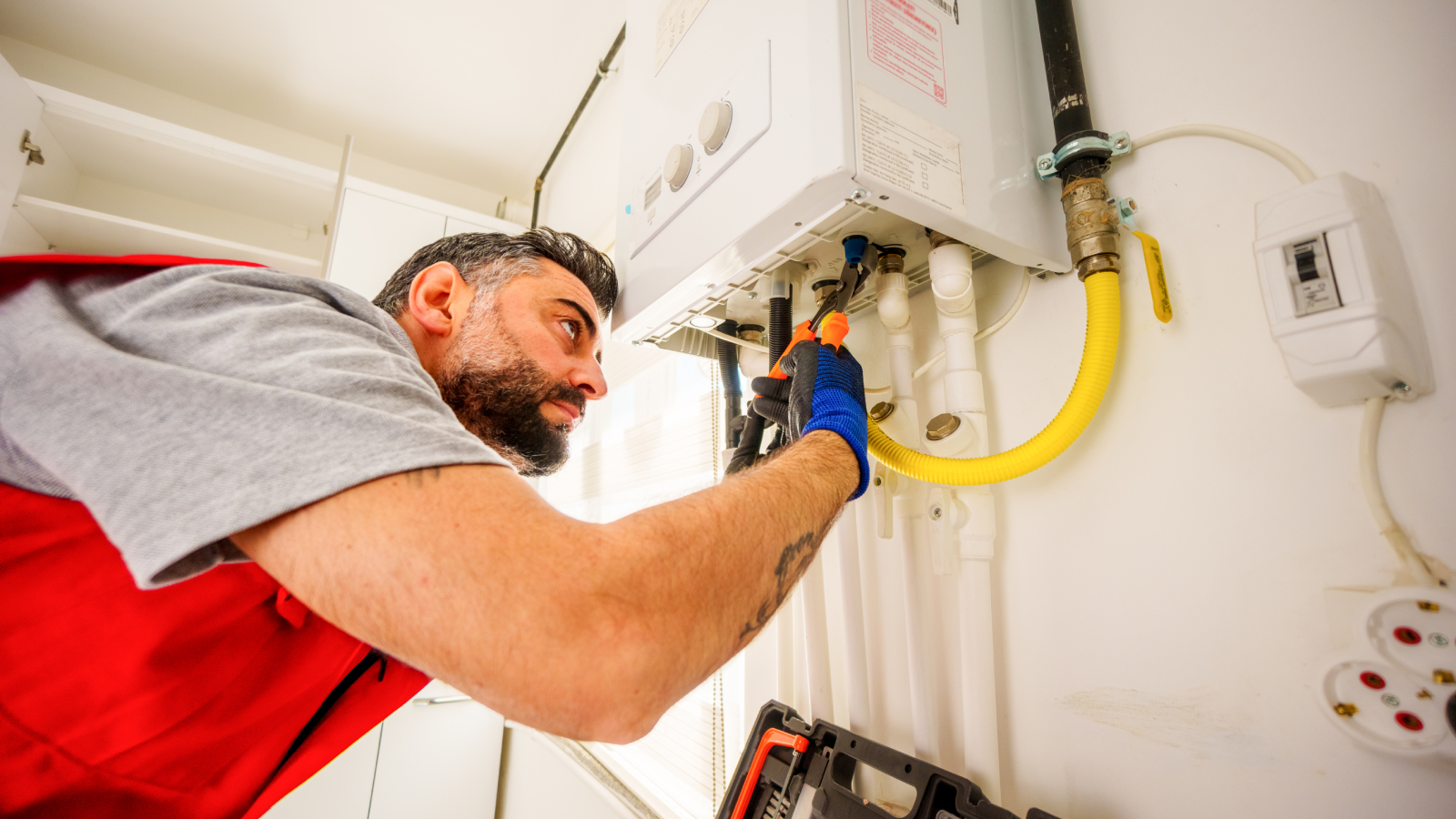
- Boiler replacement: Upgrading from an old G-rated or non-condensing boiler to a modern A-rated condensing combi or system boiler is frequently the single largest improvement available. A new boiler can shift a property by one to two EPC bands.
- Heating controls: Adding a programmer, room thermostat and thermostatic radiator valves (TRVs) where absent is a low-cost measure that the EPC methodology rewards directly. For a property without controls, this can improve the score by several points.
- Hot water cylinder insulation: An uninsulated or poorly insulated hot water cylinder is penalised heavily in the calculation. A jacket or cylinder upgrade is a low-cost, high-return improvement.
- Loft insulation: Where accessible, topping up loft insulation to 270mm is typically one of the cheapest measures per EPC point gained and is flagged as a priority recommendation on most London mid-terrace assessments.
- Cavity wall insulation: Where the property has a cavity wall (generally post-1920 construction), filling it is cost-effective. Solid wall insulation — internal or external — is more expensive and more disruptive, but may be necessary in older stock.
Exemptions: When They Apply and When They Don't
The MEES framework does include a set of exemptions, but they are narrow and must be formally registered on the PRS Exemptions Register — verbal reliance on an exemption is not lawful. The main categories relevant to London landlords are:
- Cost cap exemption: Where the landlord can demonstrate that all relevant improvement measures would cost more than £3,500 (inclusive of VAT) and the property still cannot reach an E rating, a five-year exemption may be registered. This cap is low, and in most London cases will not justify inaction without a professional assessment confirming it.
- Third-party consent exemption: Where improvements require the consent of a superior landlord, tenant or planning authority and that consent has been refused or is unattainable, an exemption can be registered. Properties in conservation areas or listed buildings may qualify where solid wall insulation or window replacement is blocked.
- Newly let exemption: A six-month temporary exemption applies when a landlord has just acquired a property that does not yet meet the standard.
It is the landlord's responsibility to register the exemption correctly. An unregistered exemption provides no legal protection against a penalty notice.
The Upcoming Tightening to EPC Band C
The government has signalled its intention to raise the minimum standard for new tenancies to EPC band C by 2028, with existing tenancies following by 2030. While the precise legislative timeline has shifted, the direction of travel is clear. Landlords who act now to bring properties from F or G to E will be better positioned to carry out the additional work required to reach C, rather than facing two rounds of emergency remediation. A heating upgrade carried out today — particularly to a high-efficiency boiler with full controls — will contribute meaningfully to a future C rating assessment.
Getting the Right Assessment and Works
Before commissioning any work, obtain an up-to-date EPC from an accredited assessor. The current certificate may be up to ten years old and may not reflect improvements already made to the property. Once you have a current assessment with the assessor's recommended measures listed, you can prioritise works by cost per EPC point gained. A Gas Safe registered engineer should carry out any boiler replacement or heating controls work; an NICEIC or NAPIT registered electrician should handle any electrical elements. For properties requiring an Electrical Installation Condition Report under the 2020 EICR Regulations, this is also a compliance prerequisite before any new tenancy is granted.
Frequently asked questions
What is the penalty for renting out a property with an EPC rating below E in London?
Local authorities can issue a civil penalty of up to £30,000 per property for landlords who let or continue to let a property with an F or G EPC rating without a registered exemption. The penalty is also recorded on a public register, which can affect a landlord's reputation and ability to obtain borough licensing approvals.
Can I register a cost cap exemption if my Victorian terrace is too expensive to insulate?
Yes, but only if you can demonstrate that all relevant improvement measures would cost more than £3,500 (inclusive of VAT) and the property still cannot reach an E rating after those works. The exemption must be formally registered on the PRS Exemptions Register with supporting evidence; it cannot simply be claimed informally.
Will replacing my old boiler with a new condensing boiler be enough to bring my property from F to E?
In many cases, yes — replacing a pre-2005 non-condensing boiler with a modern A-rated condensing boiler, combined with fitting programmer, room thermostat and TRVs where absent, can shift a property by one to two EPC bands. Whether that is sufficient depends on the property's fabric, insulation levels and hot water system, so an up-to-date EPC assessment should confirm the specific measures required.
Do I need a new EPC before I carry out improvement works or after?
You need a new EPC after the improvement works are completed in order to demonstrate that the property now meets the minimum E rating — the old certificate will not reflect the upgrade. It is advisable to obtain a current EPC before commissioning works as well, since the assessor's recommendations will identify which measures are most cost-effective for your specific property.