London landlords face a clear regulatory direction of travel — a minimum EPC band E is already required for all lets, with band C expected by 2028 for new tenancies. Knowing which improvements deliver the most EPC rating points per pound spent, and which will be most valued by London tenants, is now a material investment decision, not an optional upgrade.
The regulatory pressure on London landlords to improve the energy efficiency of their properties has intensified significantly since 2018, and the direction of travel is clear: the minimum standard will rise from EPC band E to band C for new tenancies by 2028, and for all tenancies by 2030. For landlords, the question is no longer whether to invest in energy efficiency improvements, but which improvements to prioritise and when.
How EPC Ratings Are Calculated
An Energy Performance Certificate is produced using the Reduced Standard Assessment Procedure (RdSAP) — a modelling tool that estimates a property's energy consumption per square metre per year based on its physical characteristics. The key inputs are:
- Heating system type and efficiency
- Hot water system type
- Insulation levels (loft, walls, floors)
- Glazing type (single, double, triple)
- Lighting (proportion LED vs. standard)
- Building fabric and construction type
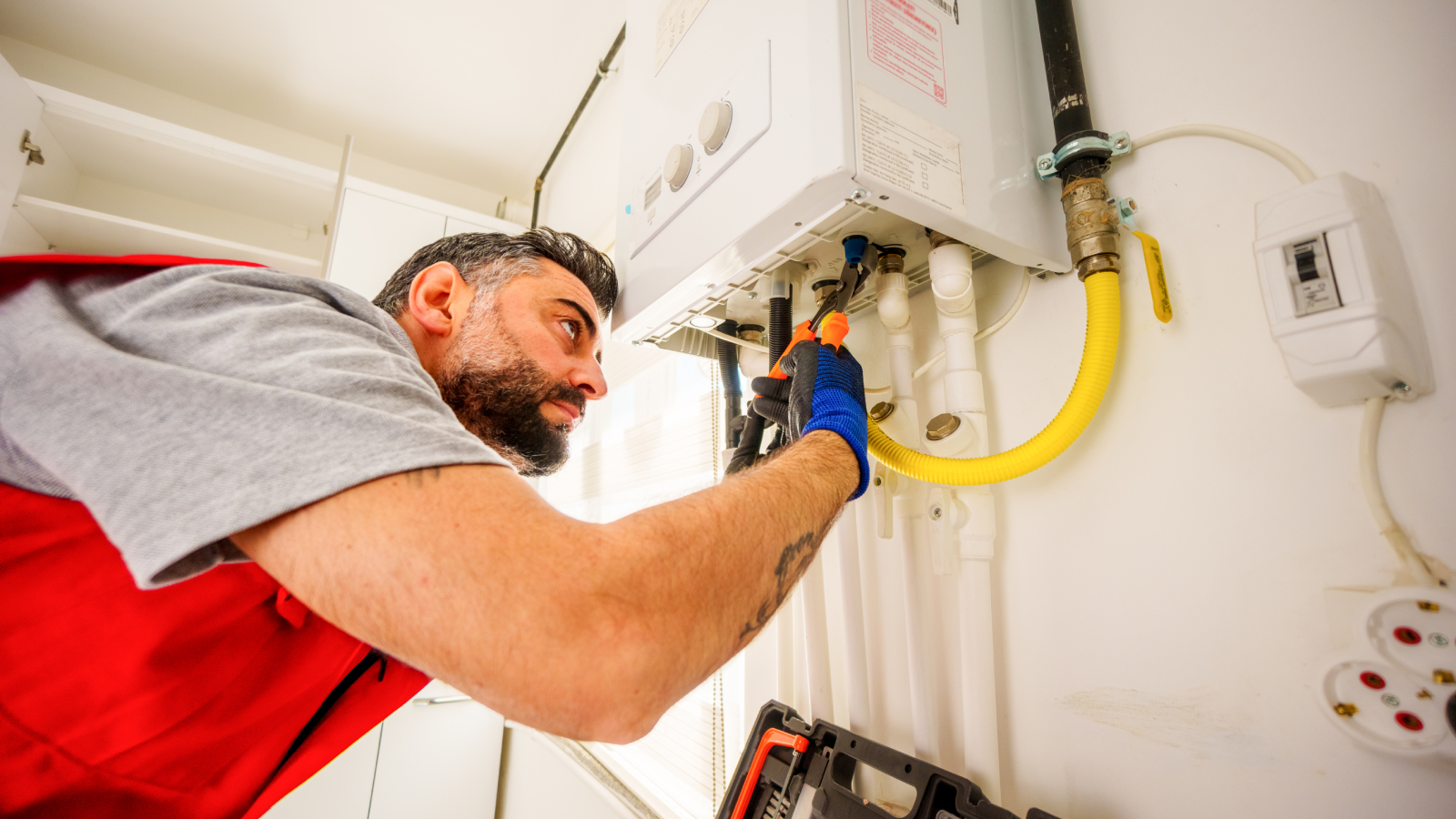
The most important insight for landlords is that the EPC methodology heavily weights the heating system — particularly the boiler. A modern A-rated condensing combi boiler with full controls (programmer, room thermostat, TRVs) can deliver a significantly higher score than an identical property with an old non-condensing boiler, regardless of insulation levels. This means heating system upgrades are often the most cost-effective first step for London properties sitting at D, E or F.
High-Impact, Lower-Cost Improvements
Boiler Replacement
Replacing a pre-2005 non-condensing boiler with a modern A-rated condensing combi or system boiler is frequently the single highest-value EPC improvement available in London's older housing stock. Cost: typically £1,800–£2,800 installed in London. EPC impact: often one to two full bands. The new boiler should be installed with a full controls package — programmer, room thermostat and TRVs — to maximise the RdSAP credit.
Heating Controls Upgrade
Where a property already has a condensing boiler but lacks a full controls package, adding a room thermostat, programmer and TRVs is a relatively inexpensive improvement (£200–£500 installed) that the EPC methodology rewards directly. Smart thermostats such as Nest, Hive or Tado also qualify for RdSAP credit and add tenant appeal as a letting feature.
Loft Insulation
Topping up accessible loft insulation to 270mm is one of the cheapest improvements per EPC point for properties with an accessible loft — typically £300–£600 for an average London mid-terrace. The immediate payback through reduced heating bills is also one of the fastest of any insulation measure. This is typically the first recommendation on EPC assessor reports for London terraced properties.
LED Lighting Upgrade
Replacing all fixed light fittings with LED is low-cost (under £200 for most flats), fast to implement and counts in the RdSAP calculation. While the EPC impact per point is modest, it is a quick win that also reduces tenant running costs and is valued in the lettings market.
Higher-Cost Improvements for Reaching Band C
Solid Wall Insulation
London's Victorian and Edwardian terraces are predominantly solid-wall construction — no cavity for insulation. Solid wall insulation — either internal lining or external cladding — is one of the highest-impact measures available for these properties, potentially delivering two full EPC bands in a poorly insulated property. However, it is also one of the most expensive: external wall insulation typically costs £8,000–£15,000 for a full London terrace; internal insulation costs £4,000–£8,000 but reduces floor area and requires full redecoration.
For landlords with properties currently at E or F, solid wall insulation is likely to feature in any credible route to band C. Prioritising it during a void period or alongside a broader renovation minimises disruption and cost.
Double Glazing
In London properties that retain single glazing — particularly those in conservation areas where planning restrictions may have previously prevented replacement — upgrading to double glazing contributes meaningfully to the EPC score and reduces tenant heating costs. In conservation areas, planning approval is now more commonly granted for high-quality double-glazed sash windows that replicate the original profile.
Heat Pumps
Air source heat pumps (ASHPs) are increasingly cited in government guidance as the preferred replacement for gas boilers. Under current RdSAP calculations, an ASHP in a well-insulated property can deliver a very high EPC score. However, ASHPs perform poorly in poorly insulated properties — they require lower flow temperatures to operate efficiently, which means adequate insulation (particularly wall and loft insulation) must be in place first. Installation cost in London is typically £8,000–£14,000; the government's Boiler Upgrade Scheme currently offers a £7,500 grant for eligible installations.
Prioritisation Framework for London Landlords
A practical prioritisation order for most London landlords currently at D, E or F ratings:
- Get an up-to-date EPC — certificates up to ten years old may not reflect improvements already made or may use outdated software assumptions.
- Replace the boiler if it is pre-2005 or non-condensing — this is almost always the highest EPC return per pound spent.
- Add or upgrade heating controls — inexpensive and directly rewarded in the methodology.
- Top up loft insulation — cheap and fast for properties with accessible lofts.
- Upgrade lighting to LED — quick win, low cost.
- Plan solid wall or cavity wall insulation — needed for most London terraces to reach band C; align with void periods or major refurbishment cycles.
Frequently asked questions
What is the cheapest improvement to increase a London property's EPC rating?
For most London properties, upgrading all fixed lighting to LED and adding missing heating controls (room thermostat, programmer, TRVs) are the lowest-cost improvements that directly improve the EPC score. Together these can typically be completed for under £500 and improve the score by several points.
Will a new boiler improve the EPC rating of a London Victorian terrace?
Yes, significantly. The RdSAP model used for EPC calculations heavily weights the heating system. Replacing an old non-condensing boiler with a modern A-rated condensing boiler with full controls typically improves the EPC score by enough to move one to two full bands, making it one of the most impactful improvements available.
Can London landlords get grants for energy efficiency improvements?
Yes. The Boiler Upgrade Scheme currently offers £7,500 towards a heat pump installation for eligible properties. The ECO4 scheme provides support for energy efficiency improvements in properties occupied by low-income tenants. The government's Warm Homes: Local Grant (expected from 2025) is targeted at fuel-poor households including in private rentals. Eligibility criteria vary — check gov.uk for current scheme details.
Is solid wall insulation worth doing in a London Victorian terrace to reach EPC band C?
For many London Victorian terraces, yes — solid wall insulation is one of the highest-impact improvements available, potentially delivering two full EPC bands. However, with costs of £4,000–£15,000 depending on type, it should be planned alongside other improvements and ideally timed during void periods or major refurbishment. It is typically unavoidable if the target is band C.