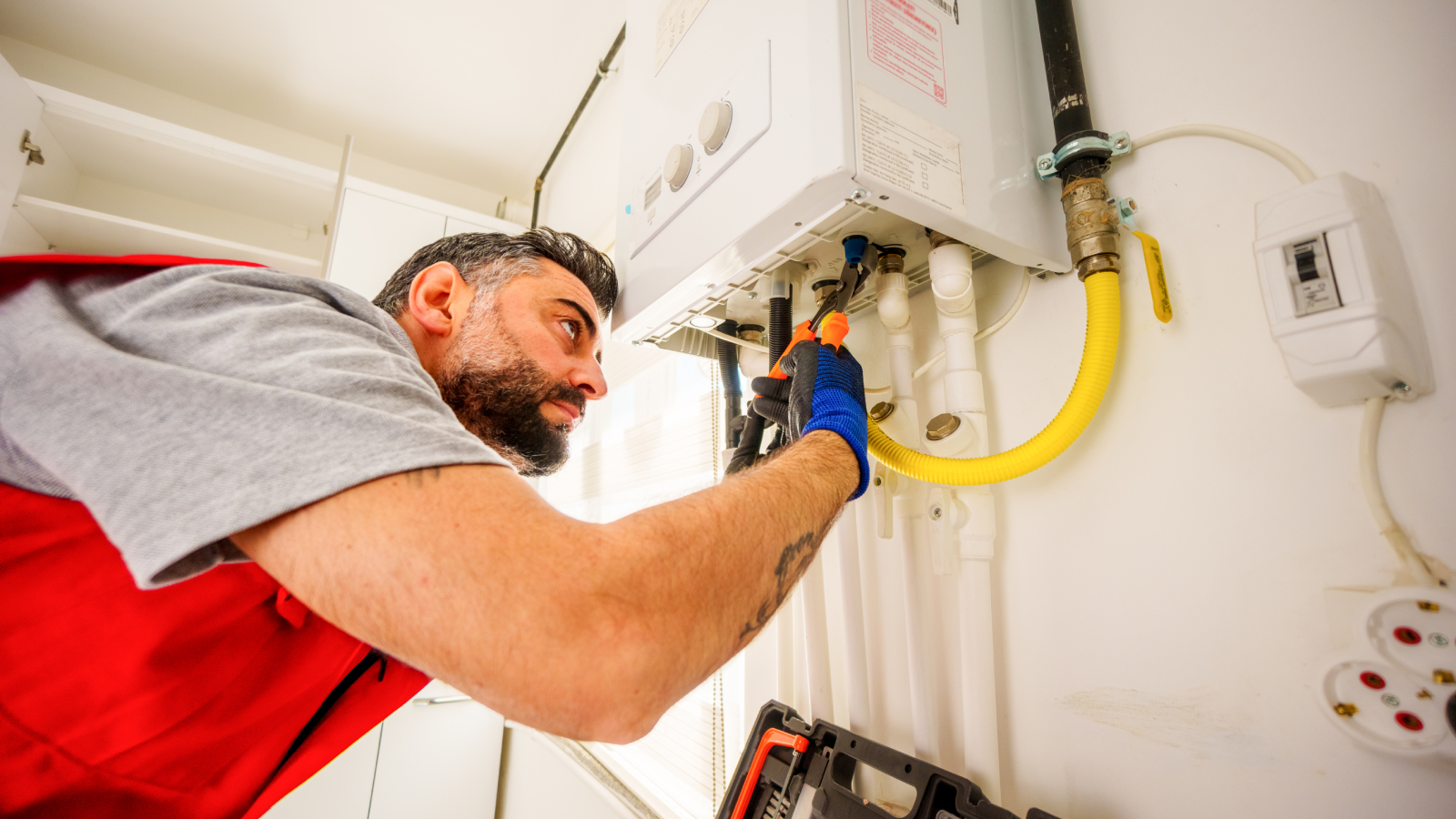
Since October 2022, landlords in England have been legally required to install carbon monoxide alarms in any room containing a fixed combustion appliance, including gas boilers. Understanding exactly where alarms must be placed, which appliances trigger the requirement, and the penalties for non-compliance is essential for every London landlord managing a rental property.
The Legal Framework
The Smoke and Carbon Monoxide Alarm (Amendment) Regulations 2022 came into force on 1 October 2022, significantly expanding the obligations that had existed since 2015. These regulations apply to all private rented properties in England and are enforced by local housing authorities, including all 32 London boroughs and the City of London.
Under the 2022 regulations, landlords must ensure a carbon monoxide (CO) alarm is installed in every room used as living accommodation that contains a fixed combustion appliance. This applies regardless of the fuel type — gas, oil, solid fuel, or biomass. The regulations also apply to social housing landlords for the first time, bringing them in line with private sector obligations.
Which Appliances Trigger the Requirement
Any fixed appliance that burns fuel falls under the regulations. In the context of London rental properties, the most common triggers are:
- Gas boilers — including combi boilers, system boilers, and conventional heat-only boilers
- Gas fires and log-effect gas fires — common in Victorian and Edwardian properties throughout inner London boroughs
- Solid fuel heating appliances — wood-burning stoves and open fireplaces where solid fuel is burned
- Oil-fired boilers — more prevalent in larger properties in outer London boroughs
Note that gas cookers and hobs are not fixed combustion appliances for the purposes of these regulations. However, installing a CO alarm in a kitchen is still considered good practice given that gas appliances are present.
Where Alarms Must Be Positioned
The regulations require an alarm to be present in the room where the combustion appliance is located. In most London flats and houses, this means the room containing the boiler — which is frequently the kitchen, a utility cupboard, or a dedicated boiler room.
For placement, manufacturers and the British Standards guidance (BS EN 50291) recommend positioning CO alarms at head height, approximately 1 to 3 metres horizontally from the appliance, and away from exterior walls where possible. Alarms should not be placed directly above cookers, in areas with poor air circulation, or near extractor fans that could disperse the gas before detection.
If a property has multiple combustion appliances in separate rooms — for example, a gas boiler in a kitchen and a wood-burning stove in the living room — a CO alarm is required in each of those rooms separately.
Alarm Standards and Testing
Landlords must ensure alarms conform to British Standard BS EN 50291-1. Most battery-powered and mains-wired alarms sold in the UK meet this standard, but it is worth confirming compliance before purchase, particularly when buying in bulk for a larger portfolio.
Before the start of each new tenancy, landlords are required to test that every CO alarm is in proper working order. This is distinct from the ongoing responsibility on tenants to test alarms regularly during the tenancy and to report any faults to the landlord promptly. A simple functional test — pressing the test button — is sufficient to demonstrate the alarm is working. Landlords should retain a record of this test, particularly in licensed HMOs (Houses in Multiple Occupation) where documentation requirements are more stringent.
HMOs and Borough Licensing Schemes
In London, many properties are subject to mandatory HMO licensing or additional and selective licensing schemes operated at borough level. Boroughs including Newham, Southwark, Haringey, and Waltham Forest operate borough-wide selective licensing, and compliance with the CO alarm regulations is typically a licence condition.
Failure to meet alarm requirements in a licensed property can result in licence revocation as well as a civil penalty. Landlords managing portfolios across multiple boroughs should check the specific licence conditions for each scheme, as some impose additional requirements beyond the statutory minimum — such as interlinked alarms or mains-powered units.
Enforcement and Penalties
Local authorities have the power to serve a remedial notice on a landlord who has failed to install a required CO alarm. If the landlord does not comply within 28 days of the notice, the council may arrange for the alarm to be installed and recover the costs from the landlord. In addition, the local authority can impose a civil penalty of up to £5,000 per breach.
It is worth noting that a CO alarm failure that results in injury or death can also expose landlords to significant civil liability and potential prosecution under health and safety legislation. The reputational and financial consequences of non-compliance far outweigh the modest cost of installing and maintaining compliant alarms.
Annual Gas Safety Checks and CO Alarms
While the CO alarm requirement is separate from the Gas Safety (Installation and Use) Regulations 1998, Gas Safe registered engineers carrying out annual gas safety checks will often inspect the presence and condition of CO alarms as part of a thorough inspection. A valid Gas Safety Certificate (CP12) remains a separate legal obligation, required annually for all gas appliances in rental properties. Using a Gas Safe registered engineer ensures both obligations are addressed by a qualified professional.
If you are unsure whether your rental property meets the current CO alarm requirements, or if you need a gas safety inspection ahead of a new tenancy, Prestige Engineers can assist with both compliance checks and any remedial work required.
Frequently asked questions
Do I need a carbon monoxide alarm if my rental property only has a gas cooker and no boiler?
No. Gas cookers and hobs are not classified as fixed combustion appliances under the Smoke and Carbon Monoxide Alarm (Amendment) Regulations 2022, so they do not trigger the legal requirement. However, fitting a CO alarm in the kitchen is considered good practice given the presence of gas.
Does a carbon monoxide alarm need to be mains-wired or is battery-powered acceptable?
The regulations do not specify whether alarms must be mains-wired or battery-powered, so either type is legally acceptable provided it conforms to BS EN 50291-1. Some borough-level HMO licence conditions go further and require mains-wired or interlinked alarms, so landlords should check the conditions of their specific licence.
When must a landlord test carbon monoxide alarms — before every tenancy or annually?
Landlords are legally required to test CO alarms on the first day of each new tenancy to confirm they are in working order. During the tenancy, testing and reporting faults becomes the tenant's responsibility, though the landlord must repair or replace any alarm reported as faulty.
What is the maximum penalty a London landlord can face for failing to install a required carbon monoxide alarm?
Local authorities can impose a civil penalty of up to £5,000 for each breach of the CO alarm regulations. In licensed HMO properties, non-compliance can also trigger licence revocation. Separate civil and criminal liability may arise if a failure to install an alarm results in harm to a tenant.