A practical guide to the trades required for a London kitchen renovation -- covering the correct sequencing of plumber, electrician, gas engineer, and kitchen fitter, with advice on coordinating the work to avoid delays.
Trades Required for a Kitchen Renovation
A full kitchen renovation in London typically requires at least three trades: a plumber, an electrician, and a kitchen fitter. Depending on the scope of the project, a gas engineer may also be required, and for London flats with consent requirements, the renovation should be notified to the building management or freeholder before work begins. Understanding which trades are needed, what each one does, and in what sequence they must work is the most effective way to prevent delays and rework during the project.
The Kitchen Fitter
The kitchen fitter installs the cabinet carcasses, doors, drawers, worktops, and appliances. They do not carry out plumbing, electrical, or gas work -- these must be completed by qualified tradespeople to the required standard. In a well-sequenced kitchen renovation, the kitchen fitter works around the plumber and electrician: they cannot complete the sink unit until the plumber has made the final water and waste connections, and they cannot complete the appliance connections until the electrician has installed the sockets. Agreeing the sequencing in advance prevents the kitchen fitter waiting on site while a plumber or electrician is unavailable.
The Plumber: First Fix and Second Fix
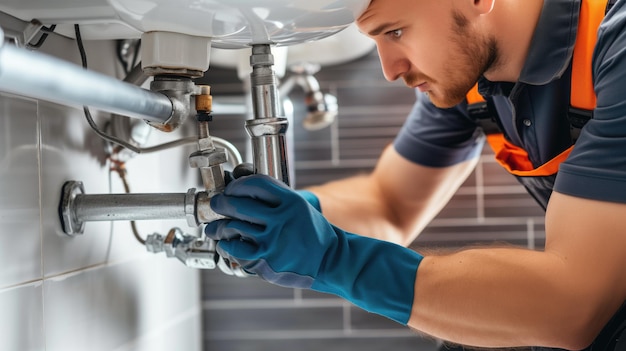
Kitchen plumbing works in two phases. The first fix is carried out before the kitchen units are installed: this is when the plumber moves supply and waste pipes to the new positions required by the kitchen layout, caps off old positions, and terminates new supply runs with capped stubs ready for the second fix connections. All pipework that will be concealed behind units or under the floor must be completed in the first fix. The second fix is carried out after the units are installed: connecting the sink waste trap, the sink hot and cold supplies, the dishwasher supply and standpipe, the washing machine standpipe, and the boiling water tap tank connection. Isolation valves must be fitted on every supply branch so each appliance can be isolated without turning off the kitchen supply.
For London flats, the plumber must check the route of the soil stack -- the vertical waste pipe that takes kitchen and bathroom waste from the flat to the building drain. The kitchen sink waste must connect to this stack or to the existing kitchen waste run with a proper fall. Extended horizontal waste runs (more than 1.5 to 2 metres in many flats) require careful gradient planning to drain reliably.
The Electrician: First Fix and Second Fix
The kitchen electrician also works in two phases. The first fix is installing the cable runs for all new or moved circuits: sockets, the cooker circuit, the extractor fan circuit, the lighting circuit, and any appliance spurs (dishwasher, fridge, boiling water tap). All cables must be installed before units are fitted against the walls. The second fix is fitting the sockets, switches, and appliance connections once the units are in place. New circuits are notifiable under Part P of the Building Regulations -- the electrician must be registered with a Competent Person Scheme and will issue a completion certificate for each new circuit.
The Gas Engineer
If the kitchen includes a gas cooker or hob, a Gas Safe registered engineer must connect it. This is not work the kitchen fitter or general plumber can carry out unless they hold a current Gas Safe registration. The gas engineer connects the hob or cooker to the existing gas supply using an approved flexible connection, carries out a gas tightness test, and commissions the appliance. Where a gas supply does not currently reach the kitchen (for example, a kitchen extension), a new gas pipe run from the meter is required and must be carried out to Gas Safe standards with appropriate pressure testing and certification.
Correct Sequencing
For a standard London kitchen renovation: week one begins with strip-out, followed by the plumber and electrician carrying out first fix works simultaneously (supply and waste repositioning, cable runs). Once first fix is signed off, the kitchen fitter installs the carcasses, worktops, and doors. The plumber and electrician then return for second fix -- connecting appliances, fitting sockets, making final connections. The gas engineer commissions the hob or cooker at second fix, ideally at the same time as the plumber to minimise visit costs. Final snagging is carried out once all trades have completed their work.
Coordinating Trades in London
The most common cause of delay in London kitchen renovations is trades being unavailable for the second fix visit at the required time. Booking the plumber and electrician for both first fix and second fix at the outset of the project, and confirming dates with the kitchen fitter, eliminates most scheduling conflicts. Prestige Engineers provides plumbing, gas, and electrical services under one booking, which simplifies the coordination of all trade visits within a single project schedule.