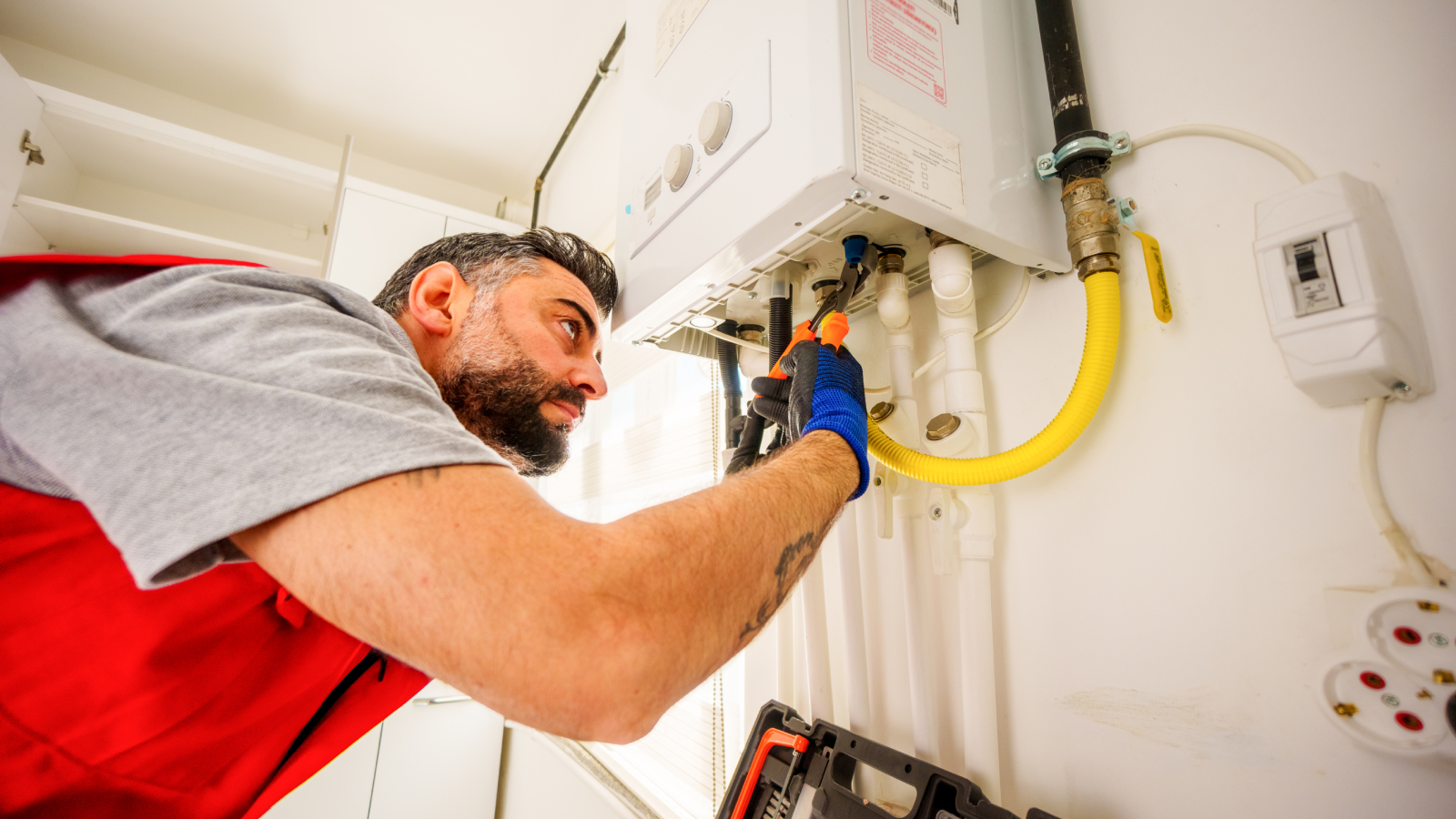
Cold at the top of your radiators? Bleeding removes trapped air from your central heating system. Step-by-step guide plus when to call an engineer if bleeding does not fix the problem.
Why Do Radiators Need Bleeding?
Air gets trapped in central heating systems over time, particularly after system top-ups, pressure loss, or when radiators have been removed and refitted. Air is less dense than water, so it rises to the top of each radiator — the cold top, warm bottom symptom is the classic sign.
What You Need to Bleed Radiators
- Radiator bleed key (available from hardware stores)
- Small container to catch water
- A cloth or old towel
Step-by-Step: How to Bleed a Radiator
- Turn on your heating and wait for it to fully heat up
- Identify which radiators are cold at the top — these need bleeding first
- Turn off the heating and allow it to cool slightly (5 minutes)
- Place your container under the bleed valve (small square fitting at the top corner of the radiator)
- Insert the bleed key and turn anti-clockwise — you will hear a hissing sound as air escapes
- When water starts to flow steadily (not just drip), close the valve
- Check your boiler pressure gauge — bleeding often reduces system pressure
- Repressurise if needed (below 1 bar) before restarting heating
When Bleeding Does Not Fix Cold Radiators
If radiators are cold at the bottom as well as the top, or only get partially warm, bleeding will not help. These symptoms indicate sludge and magnetite build-up in the system — a power flush removes this debris.
Frequently asked questions
How often should I bleed radiators in a London home?
Most London homes need radiators bleeding once a year, typically at the start of the heating season. If air is frequently entering the system, there may be a micro-leak or the system inhibitor has been diluted — a Gas Safe engineer can investigate.
Do I need to turn the heating off to bleed radiators?
You should turn the heating off and let it cool slightly before bleeding. Bleeding with the pump running can draw more air into the system. Turn off the boiler but leave the system pressurised.
What is a power flush and when do I need one?
A power flush uses a high-velocity pump to force cleaning chemicals through your central heating system, removing sludge, magnetite and limescale. If radiators are cold at the bottom despite bleeding, the system takes longer to heat up than it used to, or you hear banging and gurgling, a power flush is likely needed.