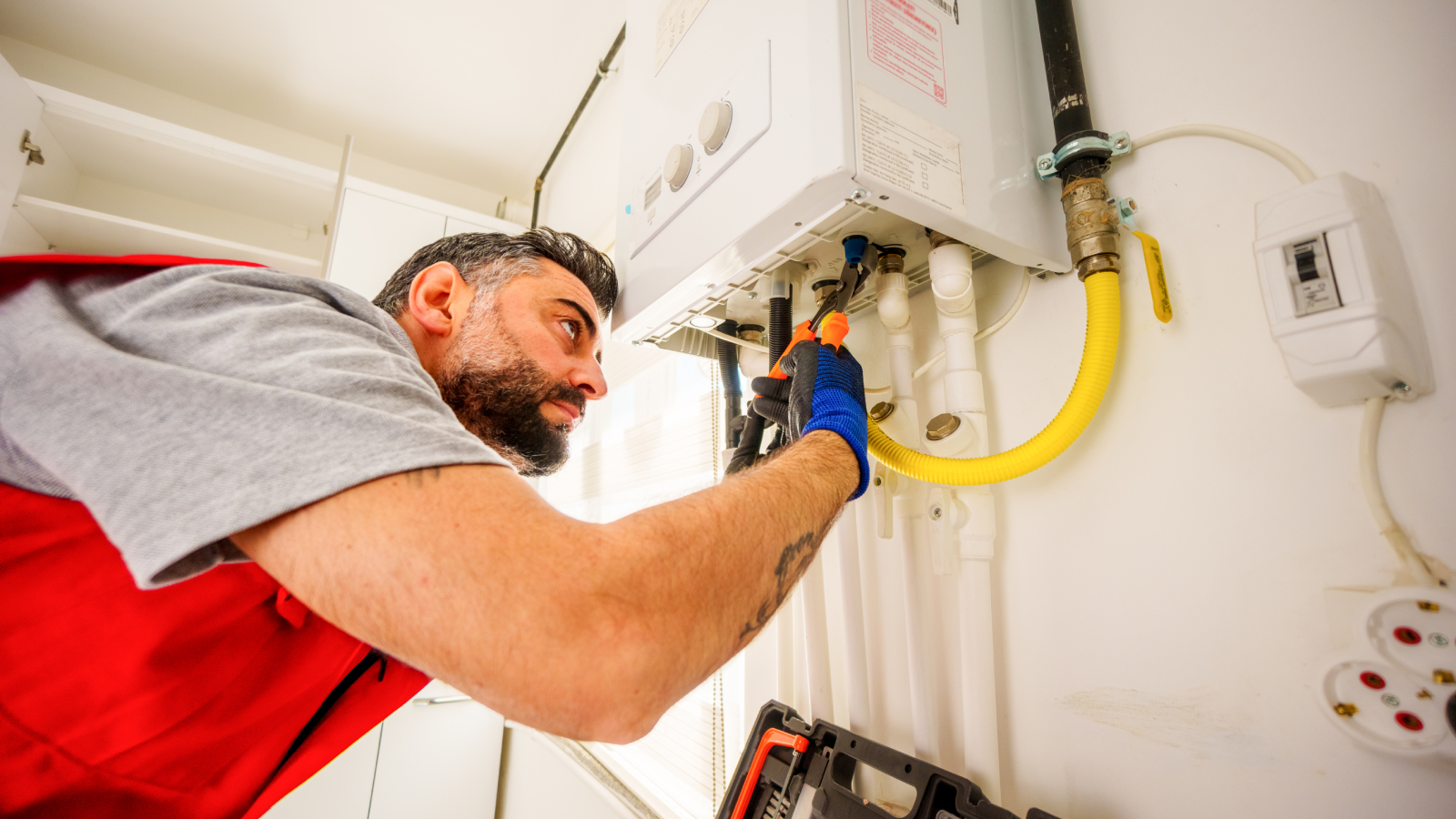
Heating failed? Step-by-step diagnostic guide for London homeowners and landlords — from thermostat checks to boiler faults and when to call a Gas Safe engineer.
Step 1: Check the Thermostat
Before calling an engineer, check the obvious. Is the thermostat set above the current room temperature? Smart thermostats (Nest, Hive, Honeywell Evohome) can sometimes lose connection or revert to schedule mode after a power cut.
Step 2: Check Boiler Pressure
Most boilers require 1.0–1.5 bar to operate. If the gauge reads below 0.5, the boiler will lock out. Repressurise using the filling loop — see our boiler pressure guide for step-by-step instructions.
Step 3: Check for Fault Codes
Modern boilers display fault codes when they lock out. Note the code and look it up for your boiler brand. Common brands in London: Vaillant (F codes), Worcester Bosch (EA/E codes), Baxi (E codes), Ideal (F codes).
Step 4: Check the Pump
The central heating pump circulates hot water through the system. A failed pump means the boiler fires but no heat reaches the radiators. Signs of pump failure: boiler firing but radiators staying cold, boiler overheating and cutting out, no noise from the pump location.
Step 5: Check Motorised Valves
Zone valves and 3-port valves control which circuits (heating vs hot water) receive flow. A seized valve can prevent heating from working even when the boiler fires. This is common in London properties where zone valves have not been serviced for years.
Frequently asked questions
Why does my central heating work sometimes but not others?
Intermittent heating failure often points to a faulty zone valve, a pump on the verge of failure, or a PCB (printed circuit board) developing an intermittent fault. Gas Safe engineers diagnose these with pressure testing and pump current checks.
Is it worth repairing central heating or replacing the boiler?
Most central heating faults (pump, valves, sensors) cost significantly less than a new boiler. Boiler replacement makes sense when the boiler is over 12–15 years old, faces a repair costing over 50% of a new boiler, or is an F-rated non-condensing boiler with significantly higher running costs.
How long should a central heating repair take in London?
A standard central heating repair — pump replacement, valve repair, sensor replacement — typically takes 1–2 hours. Power flushing takes a full day. Boiler replacement takes a full day or two days for complex system changes.