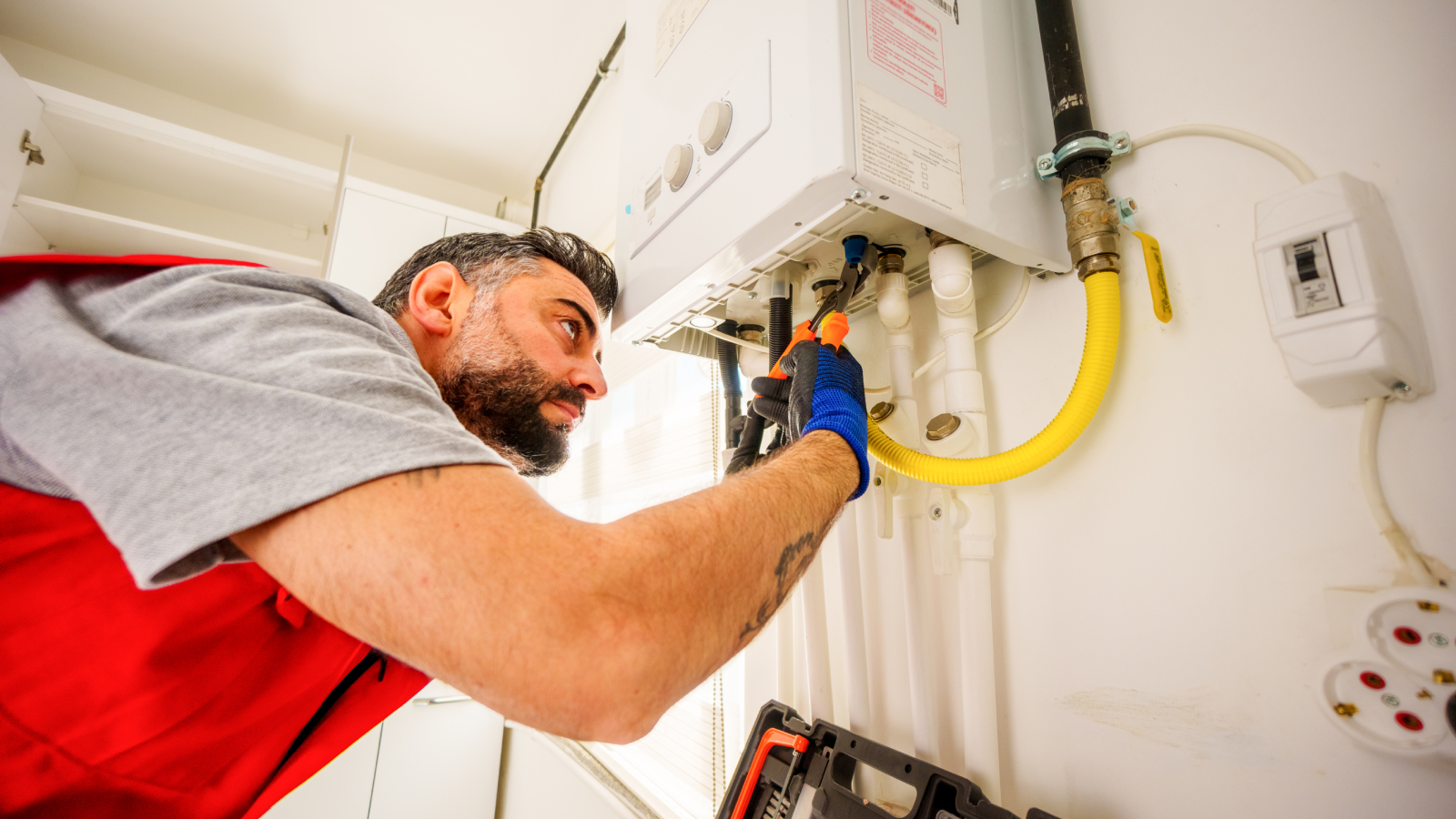
A boiler service takes 45–60 minutes and covers a specific set of checks and tests. Knowing what a Gas Safe engineer is doing and why — and what the service report they leave behind means — helps you make sense of the process and understand what you're paying for.
Before the Engineer Arrives
To make the service visit as efficient as possible, ensure:
- Clear access to the boiler — remove anything stored in front of or immediately around the boiler unit
- Access to the programmer and any separate room thermostat — the engineer will need to test controls
- Note down any problems you have experienced since the last service — unusual noises, pressure drops, intermittent ignition, fault codes that have appeared. The engineer can address these during the service visit rather than as a separate call-out.
- If you have the boiler's original documentation (installation certificate, user manual), have these available — they are useful reference for the engineer and contain model-specific service information.
Step 1: Visual Inspection — External
The engineer begins with an external visual inspection before touching any components:
- Casing and surroundings: Checking for visible damage to the boiler casing, signs of overheating (discolouration, melting, burn marks), and ensuring the boiler is mounted correctly and securely.
- Pipework: Inspecting visible pipework connections to the boiler — gas supply pipe, flow and return heating pipes, condensate pipe — for corrosion, leaks, or poor condition fittings.
- Flue terminal: Checking the external flue terminal (the plastic or metal outlet visible on the exterior wall) is intact, correctly positioned, not obstructed, and has the correct clearances from openable windows, doors, and airbricks.
Step 2: Check Gas Pressure at Meter and Appliance
Using a precision pressure manometer connected to the test point on the gas supply (typically at the meter outlet or the boiler's gas inlet), the engineer checks:
- Standing pressure: Gas pressure with no appliances operating — confirms the supply pressure from the meter is within specification (typically 21 mbar for natural gas domestic supply).
- Working pressure: Gas pressure with the boiler running — confirms adequate gas supply under demand. A significantly reduced working pressure compared to standing pressure may indicate a supply restriction or a gas valve issue.
Step 3: Check System Pressure
For a sealed central heating system (which covers most modern boiler installations), the engineer checks the system pressure gauge — it should read between 1.0 and 1.5 bar when cold. If pressure is below this, the system is repressurised using the filling loop. If pressure consistently drops between services, this indicates a leak in the system or a failing expansion vessel.
Step 4: Remove Casing and Internal Inspection
The boiler casing is removed to allow inspection of the internal components. The engineer inspects:
- Heat exchanger: The primary heat exchanger (the large component where the gas burner heats the water) is inspected for scale deposits, corrosion, or physical damage. In London's hard water environment, limescale accumulation on the heat exchanger is a significant efficiency issue — moderate deposits reduce heat transfer and increase fuel consumption.
- Combustion chamber: The chamber surrounding the burner is checked for soot deposits, signs of incomplete combustion (black staining), and any physical damage.
- Burner: The burner components are visually inspected for debris, corrosion, or damage that would affect the combustion pattern.
- General internal condition: Signs of water ingress, condensate leaks, electrical connection condition, and any visible components showing unusual wear.
Step 5: Clean Burner and Heat Exchanger if Required
If the inspection reveals debris on the burner or scale deposits on the heat exchanger:
- The burner is removed and cleaned — debris affecting combustion air flow or burner port alignment is carefully removed.
- The heat exchanger surfaces accessible from the combustion side are cleaned. Full chemical descaling of a heavily scaled heat exchanger is a more involved process and may be a separate task if the scale is severe.
In London properties, limescale removal from the heat exchanger is more frequently required than in soft water areas — annual servicing helps keep scale to a manageable level. A boiler that has missed several services may require a more substantial clean as part of recommissioning.
Step 6: Check Ignition Electrodes and Flame Sensor
The ignition electrode (the ceramic-insulated rod that produces the spark to light the burner) and the flame sensor (the metal rod that confirms the flame has established) are inspected:
- The electrode tip is checked for wear and erosion — a worn electrode produces a weaker, less reliable spark. The ceramic insulation is checked for cracks (which cause spark tracking and ignition failure).
- The flame sensor is cleaned with fine wire wool or emery cloth — oxide build-up on the sensor rod prevents it from conducting the small flame detection current, causing lockout even when the flame is burning correctly.
- The ignition lead (which carries the high-voltage spark from the ignition transformer to the electrode) is checked for insulation condition.
Step 7: Check Expansion Vessel Pre-Charge Pressure
The expansion vessel is a pressurised chamber (containing a rubber diaphragm separating a gas charge from the system water) that accommodates the increase in water volume as the system heats up. The vessel must be pre-charged to the correct pressure — typically 0.5–1.5 bar depending on the system, specified in the boiler documentation.
To check the expansion vessel pressure, the engineer isolates the vessel from the system and depressurises the system side, then checks the gas charge pressure using a tyre pressure gauge on the Schrader valve on the vessel. If the gas charge has dissipated (a common failure as the rubber diaphragm ages), the vessel is refilled with nitrogen to the correct pressure. A failed expansion vessel diaphragm (where the rubber has perforated) requires vessel replacement.
An expansion vessel that has lost pre-charge pressure causes the system pressure to fluctuate excessively during use and can cause the pressure relief valve to discharge repeatedly.
Step 8: Combustion Analysis
Combustion analysis is the most technically significant element of a boiler service. A calibrated flue gas analyser probe is inserted into the boiler's flue outlet (at a test point in the flue system) and measures the composition of the combustion gases:
- CO2 (carbon dioxide) content: Indicates whether the gas-to-air ratio is correctly set. Natural gas should produce approximately 8.5–9.5% CO2 at rated output for a correctly burning boiler. Too high suggests insufficient air; too low suggests excess air.
- CO (carbon monoxide) content: The critical safety measurement. Carbon monoxide is produced by incomplete combustion — a cracked heat exchanger allowing combustion gases to contaminate the flue, or an incorrectly set gas-air ratio can produce elevated CO levels. The acceptable limit is typically below 50ppm CO-to-CO2 ratio. Elevated CO in flue gases requires immediate investigation — this is a safety critical finding, not a routine servicing observation.
- O2 (oxygen) content: Used alongside CO2 to assess combustion completeness.
- Flue gas temperature: High flue temperatures indicate the heat exchanger is not extracting heat efficiently — which may indicate scale build-up or incorrect burner setting.
If combustion analysis reveals an out-of-specification CO2 level, the engineer will adjust the gas rate (on boilers where this is adjustable) to bring combustion within specification. Elevated CO is treated as a safety matter — depending on the levels and suspected cause, the boiler may be taken out of service pending further investigation.
Step 9: Test Safety Devices
- Pressure relief valve (PRV): The pressure relief valve is manually tested by lifting the test lever to confirm the valve opens and reseats correctly. A PRV that does not reseat after testing (continues to drip from the discharge pipe) requires replacement.
- Overheat thermostat: The high-temperature overheat cutout is tested to confirm it is functioning — on most modern boilers this involves simulating an overheat condition or using the boiler's internal diagnostic function.
- Condensate trap: The condensate trap (the siphon that retains a water seal preventing flue gases from escaping through the condensate outlet) is checked and cleared if blocked.
Step 10: Test Controls
The engineer tests the full control system:
- Room thermostat or smart thermostat — heating demand confirmed
- Time programmer — confirms the programmer cycles correctly and the clock is set correctly
- Zone valves (where fitted) — confirmed to open and close correctly
- Hot water cylinder thermostat and zone valve (on system boilers with a cylinder)
Step 11: Gas Tightness Test
A gas tightness test is carried out on the installation — confirming that the gas pipework and connections hold pressure without loss (no leaks). The test uses a precision manometer connected to a test point on the gas supply. A stable pressure reading over the test period confirms no gas leak. Any measurable pressure drop must be investigated before the boiler is commissioned.
Step 12: Refit and Test Full Operation
The casing is replaced and the boiler is recommissioned — cycled through full heating and hot water operation to confirm everything functions correctly after the service. The engineer observes ignition, combustion, heat-up, thermostat response, and heat output to confirm the boiler is operating normally.
Step 13: Service Report
The engineer completes a service report documenting:
- Date of service and boiler model/serial number
- Gas pressures (standing and working)
- Combustion analysis results (CO2, CO, flue gas temperature)
- Expansion vessel pre-charge pressure checked and result
- Any components cleaned or adjusted during the service
- Any faults found and whether they were remediated or require follow-up
- Safety device test results
- The engineer's Gas Safe registration number and signature
Keep the service report. For landlords, the service report is part of the evidence trail that gas appliances are maintained. For all homeowners, the report provides a record of the boiler's condition and the combustion analysis results over time — deteriorating CO2 or CO trends across successive annual services can indicate developing heat exchanger issues before they become serious faults.
Cost
A standard boiler service in London by a Gas Safe registered engineer typically costs £80–£120. The service does not include parts — if any component is found to need replacement (ignition electrode, flame sensor, expansion vessel) during the service, this is quoted and charged separately. Getting an annual service helps identify minor component wear before it becomes a complete breakdown, which is typically more expensive to resolve in winter when engineer availability is reduced.
Frequently asked questions
What does a boiler service include?
A standard boiler service by a Gas Safe engineer covers: external visual inspection (casing, pipework, flue terminal); gas pressure checks (standing and working pressure); system pressure check; internal inspection of heat exchanger, burner, and combustion chamber; cleaning of the burner and heat exchanger if needed; inspection and cleaning of the ignition electrode and flame sensor; expansion vessel pre-charge pressure check; combustion analysis (CO2 and CO levels in flue gas); safety device tests (pressure relief valve, overheat thermostat); control system test (programmer, thermostat, zone valves); gas tightness test; and a written service report. The visit takes 45–60 minutes.
Why is combustion analysis important in a boiler service?
Combustion analysis measures CO2 and CO levels in the boiler's flue gases. CO2 levels confirm whether the gas-to-air ratio is correctly set — out-of-specification CO2 means the combustion efficiency has drifted and the engineer can adjust the gas rate to restore it. CO (carbon monoxide) measurement is the critical safety check — elevated CO in flue gases indicates incomplete combustion that could mean a cracked heat exchanger allowing combustion gases to contaminate the flue or living space. Elevated CO is treated as a safety-critical finding. Combustion analysis can only be carried out with a calibrated flue gas analyser — it is not a visual check.
How often should a boiler be serviced?
Annual servicing is the standard recommendation from boiler manufacturers and the Gas Safe Register. Most boiler warranties require annual servicing by a Gas Safe engineer to remain valid. For landlords, annual gas safety certificate inspections (which include a boiler check) are a legal requirement, and a full service in addition to the gas safety certificate is best practice. Annual servicing keeps the boiler operating efficiently, maintains the manufacturer warranty, identifies developing faults before they become breakdowns, and provides a documented maintenance history.
What is in the boiler service report and why should I keep it?
The service report documents the date, boiler model and serial number, gas pressure readings, combustion analysis results (CO2, CO, flue gas temperature), expansion vessel check, any components cleaned or adjusted, fault findings, safety device tests, and the engineer's Gas Safe registration number and signature. Keep it because: landlords need it as evidence of appliance maintenance alongside the gas safety certificate; manufacturers require proof of annual servicing to honour warranty claims; and tracking combustion analysis results across successive annual services allows you to spot deteriorating heat exchanger condition before it becomes a safety issue or complete breakdown.