Water Softener Installation in London: Types, Costs and Benefits for Hard Water Homes
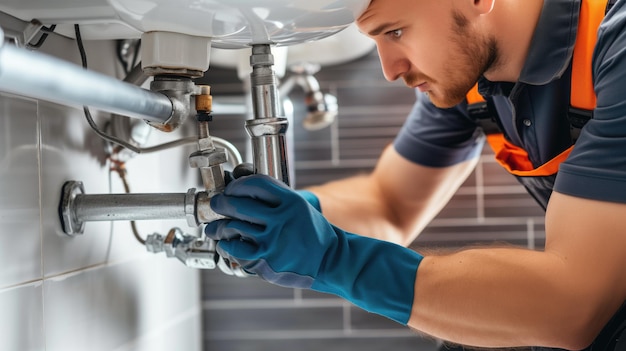
London has some of the hardest water in England, causing limescale in boilers, appliances and showers. This guide covers the different types of water treatment available, what installation involves, and whether the cost is justified.
Water Softener Installation in London: Is It Worth It?
London water is among the hardest in England. Thames Water supply areas measure hardness at 290 to 420 milligrams per litre as calcium carbonate, depending on the specific supply zone. At these concentrations, limescale accumulates visibly in kettles within weeks, coats shower screens and taps within months, and deposits inside boiler heat exchangers and washing machine heating elements over years. For homeowners who have lived in London for any length of time, the evidence of hard water is impossible to miss. The question is whether a water softener installation is justified by the savings and quality-of-life improvements it delivers.
Ion Exchange Water Softeners: How They Work
A true ion exchange water softener removes the calcium and magnesium ions responsible for hardness by passing the water through a resin bed that exchanges them for sodium ions. The result is genuinely soft water throughout the property wherever the softened supply is plumbed. The resin requires periodic regeneration using block salt to flush out the accumulated calcium and magnesium. A household of two to four people typically uses a 25-kilogram block of salt every four to eight weeks, at a cost of approximately £5 to £8 per block.
Twin-cylinder ion exchange softeners from established brands such as Harvey, Monarch, and BWT are the standard domestic specification for London installations. Twin cylinders allow one cylinder to regenerate while the other continues supplying soft water, ensuring there is no interruption to supply during the regeneration cycle. These units cost £700 to £1,200 supply-only. Installation adds £300 to £500 depending on the complexity of the pipework alterations required, bringing the total installed cost to approximately £1,000 to £1,700.
Salt-Free Water Conditioners: A Lower-Maintenance Alternative
Salt-free water conditioners do not remove the calcium and magnesium ions from the water — the water remains chemically hard. Instead, they alter the crystalline structure of the calcium carbonate so that it does not precipitate as hard scale on surfaces. The practical effect is that existing scale deposits tend to dissolve over time and new hard scale formation is significantly reduced, though not eliminated entirely.
The advantages over ion exchange softeners are that no salt is required, maintenance is minimal, and there is no need for a separate unsoftened drinking water spur (explained below). The disadvantages are that the scale prevention is less complete than ion exchange, and the conditioner does not produce the skin and hair softness benefits associated with genuinely soft water. For properties where the primary concern is protecting the boiler and appliances rather than skin feel and shower screen cleanliness, a conditioner represents a lower-cost and lower-maintenance solution at £300 to £600 installed.
Installation Requirements
A water softener must be installed on the incoming mains supply before the water distributes to the rest of the property, so that all hot and cold outlets receive treated water. A critical requirement that is sometimes overlooked is the provision of a separate unsoftened cold water spur directly from the incoming mains to at least one tap — typically the kitchen cold tap — for drinking water. Softened water has an elevated sodium content that makes it unsuitable as a regular drinking water source, particularly for infants and people on low-sodium diets. Building Regulations and the Water Regulations Advisory Scheme both require this unsoftened drinking water supply to be maintained.
The softener also requires a waste connection for the regeneration brine discharge, typically to a nearby drain. Access to an electrical supply for the regeneration timer is required for most units. A suitable location for the salt store is needed — 25-kilogram salt blocks are heavy and require a space that is accessible for regular top-up.
Running Costs
The ongoing cost of running an ion exchange softener is primarily the salt consumption: approximately £20 to £30 per month for a typical London household. Softeners also use a small volume of water during each regeneration cycle — typically 40 to 80 litres per regeneration — which adds a marginal amount to the water bill. The combined running cost of £240 to £360 per year should be weighed against the benefits.
Benefits for London Properties
The documented benefits of soft water in a London property are substantial. Boiler heat exchangers and cylinder coils last significantly longer without scale accumulation — a particularly important consideration given the cost of heat exchanger replacement. Washing machines and dishwashers run more efficiently and have fewer heating element failures. Shower screens and taps require considerably less cleaning to remain presentable. Skin and hair respond noticeably to soft water: many residents report reduced dry skin and improved hair condition within weeks of installation. For households that buy significant quantities of descaling products and spend time cleaning limescale from surfaces, the quality-of-life improvement is immediate and tangible.