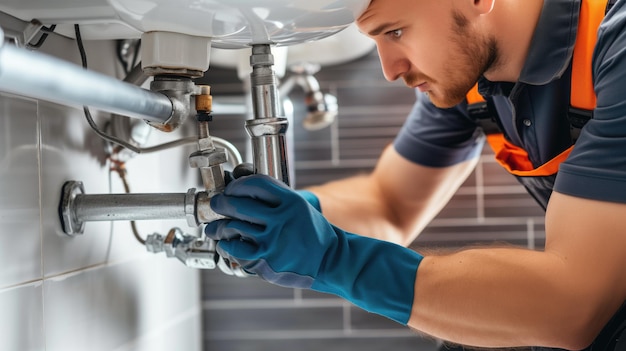
London water is very hard at 250 to 400mg/l. A water softener protects your boiler, extends appliance life, reduces detergent use and improves skin and hair. Here is what to expect.
Why London Water Is Among the Hardest in the UK
Thames Water, which supplies the majority of London, draws its water from chalk and limestone aquifers in the Thames Valley and from the chalk of the North Downs and the Chilterns. As rainwater filters through these chalk and limestone formations, it dissolves calcium carbonate and magnesium carbonate, producing water with a hardness of 250 to 400mg/l as calcium carbonate. This is classified as very hard — among the highest levels in the UK and significantly higher than the national average of around 150mg/l.
The consequences of this hardness are visible throughout London homes. White limescale deposits on taps and shower screens, a layer of hard scale forming on the inside of kettles within weeks of descaling, white streaks on washed glassware, reduced lather from soap and shampoo — these are all direct effects of the calcium and magnesium in London water. Less visible but more damaging is the scale that forms on the heat exchanger inside your boiler and inside the hot water cylinder.
How a Salt-Based Water Softener Works
A salt-based ion exchange water softener is the only technology that genuinely removes the hardness minerals from the water supply. The softener contains a bed of ion exchange resin — small beads with a negative charge that attract positively charged calcium and magnesium ions. As the mains water passes through the resin bed, the calcium and magnesium ions are held by the resin and replaced with sodium ions, which do not form limescale. The result is genuinely soft water throughout the property.
Over time the resin bed becomes saturated with calcium and magnesium ions and needs to be regenerated. Regeneration involves flushing the resin bed with a concentrated brine solution (made from salt tablets in the brine tank). The brine dislodges the calcium and magnesium from the resin, replacing them with fresh sodium ions, and the waste brine is flushed to drain. The regeneration cycle happens automatically, usually at night when water demand is low.
The Benefits for a London Property
Boiler protection. The heat exchanger inside a combi or system boiler is the most expensive component in the unit. Limescale on the heat exchanger surface acts as an insulating layer that forces the boiler to work harder and reach higher temperatures to achieve the same heat transfer. Studies by the Building Research Establishment have found that a 1mm layer of limescale on a heat exchanger reduces efficiency by around 7 percent. In very hard water areas such as London, scale build-up can be rapid. Softened water eliminates scale formation in the boiler, extending its service life and maintaining full efficiency.
Hot water cylinder protection. In properties with a hot water cylinder — either vented or unvented — the immersion heater element and the indirect coil are both subject to scale build-up in hard water areas. Scale-insulated elements draw more current and fail earlier than clean elements. Softened water keeps both the element and the coil clean throughout their service life.
Appliance longevity. Washing machines, dishwashers, shower pumps, and combination boiler diverter valves are all affected by limescale build-up. A softener significantly extends the service life of all water-using appliances by preventing scale accumulation on heating elements, seals, and valves.
Reduced detergent and cleaning product use. Soft water produces a much better lather with soap, shampoo, washing powder, and dishwasher tablets. Most households in London using a water softener report reductions of 25 to 50 percent in detergent usage. This offsets a proportion of the cost of salt.
Better skin and hair. Hard water leaves a thin residue of calcium soap (formed when soap reacts with calcium in the water) on skin and hair. Softened water rinses cleanly, leaving skin feeling softer and hair more manageable. This is a commonly reported benefit for households with young children or those with sensitive skin.
The Dedicated Drinking Water Tap
Softened water has elevated sodium content because sodium ions replace the removed calcium and magnesium ions. For most people, the additional sodium is within safe daily intake limits, but there are guidelines recommending that softened water should not be used as the primary source of drinking water for infants or for people on sodium-restricted diets. It is also recommended by the British Water Quality Group that softened water should not be used to make up baby formula.
For this reason, Prestige Engineers installs a separate unsoftened cold water tap alongside the kitchen cold tap as standard in every water softener installation. This provides a separate supply of unmodified mains water for drinking and cooking, while all other outlets in the property — hot water taps, shower, washing machine, dishwasher, bathroom basin — are fed with softened water.
Water Softener Installation Costs in London
- Compact under-sink single-tank softener: from £800 supply and fit
- Mid-range whole-house salt softener: £1,000 to £1,500 supply and fit
- Harvey Water Softeners Premier or similar twin-cylinder: £1,500 to £2,000 supply and fit
- Kinetico twin-tank non-electric system: £1,800 to £2,500 supply and fit
- Dedicated unsoftened drinking water tap: included in all installations
- Annual service: £80 to £120
Salt tablets for the brine tank cost approximately £15 to £25 per 25kg bag and are available from most builder merchants and supermarkets. A typical London household uses one to two bags per month depending on household size and water hardness. Prestige Engineers installs water softeners across all London boroughs. Contact us for a fixed-price supply and installation quote.