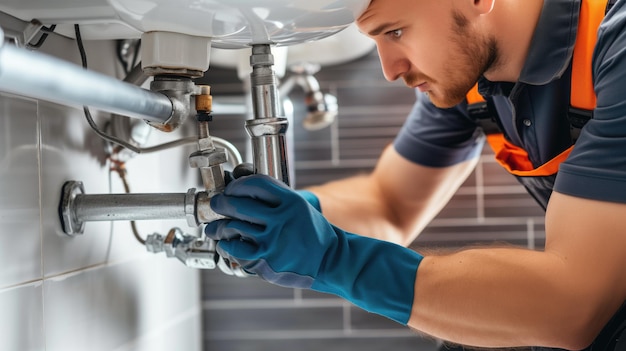
Low water pressure is a common complaint in London, particularly in flats and older properties. This guide covers the main causes and what a plumber can do to fix them.
Understanding Water Pressure
Water pressure in London is measured in bar. Domestic supplies typically run at 1–3 bar. A shower needs at least 0.7–1 bar to function properly; a power shower typically requires 1.5 bar. Water pressure varies across London and can differ significantly between ground floor flats and upper floor properties in the same building.
Common Causes of Low Pressure
Supply Pressure from Thames Water
In some areas of London — particularly dense urban neighbourhoods and upper floors of tall buildings — the mains supply pressure is simply low. This is Thames Water's responsibility. You can check your postcode on the Thames Water website to find your supply pressure. Where pressure is below the minimum standard (1 bar at the boundary stop tap), you can raise a pressure complaint.
Partially Closed Stopcock
The internal stopcock under the kitchen sink is sometimes partially closed — perhaps it was turned down at some point and never fully reopened. Check that it is fully open (handle parallel to the pipe).
Corroded or Scaled Pipework
Older London properties with lead or early copper pipework accumulate scale and corrosion that narrows the internal bore, restricting flow. Limescale is particularly aggressive given London's hard water. Replacing corroded sections or fitting an inline filter can help.
Pressure Reducing Valve (PRV)
Many newer London properties have a pressure reducing valve fitted to protect pipework and appliances from high mains pressure. If the PRV is failing or set too low, it can cause low pressure throughout the property. A plumber can adjust or replace the PRV.
Internal Leaks
A hidden leak elsewhere in the system can reduce pressure at outlets. Signs include unexplained wet patches, a constantly running water meter (test by turning off all taps and checking the meter), or unexpectedly high water bills.
Boosting Water Pressure
A pump (combi booster or whole-house pump) can boost pressure where supply is low. For gravity-fed systems, converting to a mains-pressure combination boiler system is often the best long-term solution.
Frequently asked questions
Why is water pressure low in my top-floor London flat?
Upper floors lose pressure through gravity — each metre of height reduces pressure by approximately 0.1 bar. Top-floor flats in older buildings often rely on a cold water storage tank and gravity feed rather than direct mains pressure, which gives lower flow rates.
Can Thames Water fix low pressure at my property?
Thames Water are responsible for maintaining a minimum supply pressure of 1 bar (10 metres head) at your boundary stopcock. If your supply is below this, raise a complaint. They will investigate and may upgrade the supply pipe.
Does a combi boiler improve water pressure?
A combi boiler takes hot water directly from the mains, delivering it at mains pressure. This is generally better than a gravity-fed hot water cylinder. However, the cold water pressure is unchanged.
How do I test if I have a water leak causing pressure loss?
Turn off all taps and water-using appliances. Note the reading on your water meter. Wait 30–60 minutes without using any water. If the meter has moved, there is a leak in the supply pipe or internal plumbing.