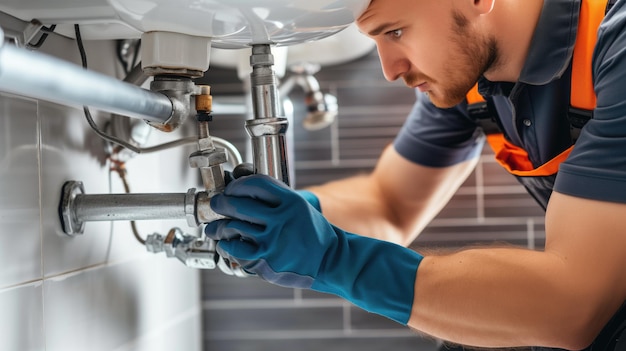
Should London homeowners switch to a metered water supply? A clear guide to the financial and practical considerations of switching to a water meter in London.
How Water Billing Works in London
Water in London is supplied and billed by Thames Water for most properties, with some areas served by Affinity Water or other suppliers. Properties without a water meter are charged a fixed rateable value charge — a flat annual amount based on the historic rateable value of the property, not on actual water consumption. Properties with a water meter are charged per cubic metre of water used, plus a standing charge. The choice between the two billing methods has significant financial implications depending on household size, water usage habits, and property type. Thames Water currently charges approximately £2.50 to £2.80 per cubic metre of water and sewerage combined for metered properties in London.
Who Benefits Most from a Water Meter
The financial benefit of switching to a meter depends on whether your actual water consumption is higher or lower than the amount implied by your current rateable value bill. As a rule of thumb, households with fewer people than bedrooms — a one-person household in a two-bedroom flat, for example — typically use less water than the rateable value charge assumes, and will save money on a meter. Large families using high volumes of water (multiple showers daily, large garden, high-frequency laundry) in an older property with a low rateable value may pay more on a meter. The Consumer Council for Water provides a water meter calculator at ccwater.org.uk that allows you to estimate your likely metered bill based on household size and usage habits — this is the first step before making a switching decision.
The Trial Period
Thames Water offers a free two-year trial period for metered billing. During the trial, you can switch back to rateable value billing at any time if the metered charges turn out to be higher. After the trial period, the switch to metered billing becomes permanent. This makes the decision low-risk: request a meter installation, monitor your metered bills for 12 months, and compare them against your previous fixed charges. If the meter is cheaper, stay on it. If it is more expensive, revert before the two-year trial ends. Thames Water installs meters free of charge for standard residential properties.
Water Meter Installation Process
For most London properties, a water meter is installed on the supply pipe near where it enters the property — typically in the footpath outside or in the internal service area. Installation is carried out by Thames Water or their appointed contractor and takes approximately 30 minutes. The engineer fits the meter on the incoming supply pipe and registers the installation. For some London properties with shared supply pipes (common in converted Victorian terraces where multiple flats share a single incoming supply), individual metering is more complex and may require sub-metering within the property — Thames Water can advise on the options for your specific supply arrangement.
Financial Incentives for Switching
Thames Water and other London water suppliers run periodic incentive schemes for meter switching, including bill credits and water-saving device packages. These are available from time to time and are worth checking at the time of application. Beyond direct incentives, a water meter creates a direct financial incentive to reduce water consumption — fixing a running toilet (which wastes 200 to 400 litres per day) has an immediate measurable impact on a metered bill, whereas the same fault has no effect on a rateable value bill. Metered households typically use 15 to 20 percent less water than equivalent unmetered households, partly due to awareness and partly due to the incentive to fix leaks promptly.
Impact on Plumbing Maintenance
Switching to a water meter increases the financial benefit of maintaining a leak-free plumbing system. A dripping tap, a running toilet, or a slow underground leak that goes undetected generates a direct measurable cost on a metered supply. Conversely, a meter can help detect a hidden leak — a sudden unexplained increase in the metered reading between billing periods (or observed directly by taking meter readings on two consecutive days with no household water use) indicates water is leaving the system somewhere. Thames Water provides a leak allowance scheme under which they will share the cost of repairing a buried leak on the supply pipe between the boundary stop valve and the property if it has gone undetected for a period — check the current scheme terms at the time of application.
Summary: Is Switching Worth It for London Homeowners?
For single-person or two-person households in multi-bedroom London properties, switching to a water meter almost always saves money. For large families in small properties, the calculation is less clear and the trial period should be used to gather evidence before making a permanent decision. For landlords, the question of whether to install a meter depends on whether water charges are included in the rent — if the landlord pays water charges, a meter aligned with the actual occupancy pattern may reduce costs significantly. The two-year trial period eliminates the financial risk of the decision, making it worth requesting a meter in almost all cases to establish the facts for your specific property and usage pattern.