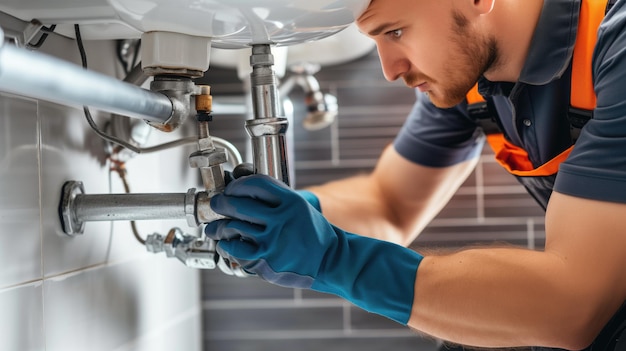
Everything you need to know about having an unvented hot water cylinder installed in a London property, including the G3 Building Regulations requirement.
What Is an Unvented Hot Water Cylinder?
An unvented hot water cylinder stores domestic hot water under mains pressure, unlike a traditional vented cylinder which relies on a cold water storage tank in the loft to create a gravity head. Because the stored water is at mains pressure, an unvented system delivers hot water at the same pressure as the cold mains supply — significantly improving shower performance and eliminating the need for pump-assisted systems. In London, where high-rise flats, basement conversions, and loft extensions create installation scenarios where gravity-fed systems underperform, the unvented cylinder has become the default choice for stored hot water in new and refurbished installations. However, the installation of an unvented cylinder is a notifiable building work under Part G of the Building Regulations and must be carried out by a G3-competent engineer.
G3 Building Regulations: The Competent Person Requirement
Part G3 of the Building Regulations (England and Wales) requires that unvented hot water storage systems with a capacity greater than 15 litres or an input power greater than 45 kW are installed, commissioned, and serviced by a competent person. Competence under G3 is demonstrated by registration with an approved competent person scheme. The two main schemes are APHC (Association of Plumbing and Heating Contractors) and CIPHE (Chartered Institute of Plumbing and Heating Engineering), both of which operate G3 competent person registers. An engineer with G3 competence can self-certify the installation with the local building authority, without requiring a separate building inspection visit. An installation carried out by an unregistered engineer is technically non-compliant building work; if you are a London homeowner or landlord, you should always verify G3 registration before instructing anyone to install an unvented cylinder.
Mandatory Safety Devices on Unvented Systems
Because an unvented cylinder stores water under mains pressure and heats it — causing volumetric expansion — the system requires specific safety devices to prevent dangerous overpressure. These are not optional; they are a requirement of G3 and BS EN 12897. The required safety components are: a temperature and pressure relief valve (TPR valve or T&P valve) set to discharge if the water temperature exceeds 90 to 95 degrees Celsius or the pressure exceeds a safe threshold; a pressure-reducing valve (PRV) set to limit incoming mains pressure to the rated system pressure, typically 3 bar; an expansion vessel to accommodate the increase in water volume as the cylinder heats; a non-return valve to prevent expansion water returning to the cold mains; and a motorised zone valve or thermostat to control heating. All of these components must be installed correctly and tested during commissioning. A missing or incorrectly set TPR valve in particular represents a serious risk of cylinder failure.
Vented vs Unvented: The Key Differences
A traditional vented cylinder relies on a cold water storage tank in the loft — typically 230 litres — to supply cold water to the cylinder and create the pressure head for hot water outlets. The maximum pressure available is determined by the vertical distance between the tank and the outlet, typically 1 to 2 bar in a London terraced house. An unvented cylinder operates at the full mains pressure, typically 2.5 to 3.5 bar after the PRV. This difference is significant for shower performance: a vented system with a pump achieves 1.5 to 2 bar at the shower head; an unvented system with good mains pressure provides 2.5 to 3 bar without any pump. Unvented systems also eliminate the cold water storage tank in the loft, reclaiming loft space and removing the risk of loft tank freezing or contamination.
Cylinder Types and Sizing
Unvented cylinders are available as indirect (heated by a primary circuit coil connected to the boiler), direct (heated by an integral immersion heater), or combination thermal store units. Indirect cylinders are the most common in London new installations, heated by the central heating boiler through a primary coil. For a 1 to 2 person household, a 120-litre cylinder is typically adequate. A household of 3 to 4 people requires 150 to 180 litres; a household of 5 or more typically needs 210 to 250 litres. Undersizing a cylinder for a large London household results in regular hot water shortfall during peak morning demand periods, while oversizing wastes energy by maintaining a larger volume of water at temperature.
London Hard Water and Scale Prevention
London water hardness is 300 to 350 milligrams per litre as calcium carbonate — among the highest in the UK. At cylinder temperatures above 60 degrees Celsius, calcium carbonate precipitates from the water and deposits as limescale on the cylinder immersion heater element and heat exchanger coil, progressively reducing efficiency and eventually causing element failure. A scale reducer or water softener on the cold mains feed to the cylinder is strongly recommended for all unvented cylinder installations in London. An electrolytic or magnetic scale reducer costs £80 to £200 to supply and fit and materially extends cylinder and component life in hard water areas.
Installation Costs in London
Supply and installation of an unvented cylinder in London costs between £1,500 and £2,500 for a new installation in a property already plumbed for a system boiler and hot water cylinder. Conversion from a vented cylinder system — which typically involves removing the loft storage tank, relocating pipework, and commissioning the new safety devices — costs between £2,500 and £4,000 depending on the complexity of the existing installation and the extent of pipework alterations required. These prices include a G3-competent installation, commissioning, and the building regulations notification through the competent person scheme.
Annual G3 Service Requirement
An unvented cylinder must be serviced annually by a G3-competent engineer. The annual service includes: inspection and test of the TPR valve discharge; check of the expansion vessel charge pressure; inspection of all safety device settings; check of the cylinder thermostat calibration; and a visual inspection of the cylinder, pipework, and discharge arrangements. The annual service costs approximately £80 to £120 in London. Failure to maintain an unvented cylinder annually not only risks safety device failure but also voids most manufacturer warranties, which typically require annual servicing as a condition of coverage.
Legionella Risk and Cylinder Temperature
Legionella bacteria thrive between 20 and 45 degrees Celsius and are killed at temperatures above 60 degrees Celsius. An unvented cylinder stored below 55 degrees Celsius creates a Legionella risk, particularly in larger cylinders where temperature stratification may mean that water at the base of the cylinder remains in the danger zone. For residential single-family properties, cylinder storage temperature should be set at 60 to 65 degrees Celsius. For larger installations or HMOs with multiple hot water outlets, a Legionella risk assessment is recommended. A weekly thermal pasteurisation cycle — heating the cylinder to above 60 degrees once per week — is good practice for all stored hot water systems.
Solar Thermal Compatibility
Unvented cylinders with a dual coil are compatible with solar thermal collectors. The lower coil is connected to the solar thermal primary circuit, which heats the cylinder from the bottom up when solar energy is available. The upper coil is connected to the conventional boiler to top up temperature when solar input is insufficient. Dual-coil unvented cylinders are available from 180 litres upward and represent the most effective integration point for solar thermal in London properties. Given that London receives an average of 1,460 hours of sunshine per year, solar thermal can provide 40 to 60 percent of annual domestic hot water energy on a well-designed system.