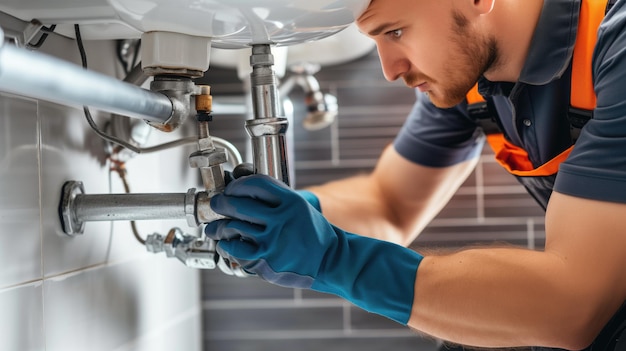
A toilet that runs continuously or refills in repeated bursts wastes hundreds of litres of water every day. This guide explains why London toilets run, how to diagnose the fault, and what a plumber will do to fix it.
Why Toilets Run Continuously
A running toilet is one of the most common plumbing faults in London homes. The sound of water trickling into the pan, or the cistern refilling in short repeated cycles when no one has flushed, indicates that water is escaping from the cistern past a seal that is no longer holding. The fault lies in one of two places: the flush mechanism or the fill valve.
The flush mechanism controls the release of water from the cistern into the pan. In traditional UK close-coupled cisterns, this is a siphon — a plastic or brass component that uses the siphon principle to draw water over a bend and into the pan when the handle is depressed. In modern cisterns, including most close-coupled pan-cistern units produced after approximately 2000 and virtually all wall-hung concealed cisterns, a drop valve is used instead. The drop valve is a direct-flush mechanism: pressing the button lifts a sealed disc off the bottom of the cistern, allowing water to flow directly into the pan under gravity.
Siphon Failure on Older UK Toilets
Traditional siphon cisterns use a flexible diaphragm — a washer made from reinforced rubber or polythene — inside the siphon body. Every time the toilet is flushed, the handle lifts a plate inside the siphon that pushes water up through the siphon bend and starts the siphonic flow. The diaphragm flexes with every flush. After years of use, the diaphragm cracks or tears, reducing the efficiency of the flush. On a badly worn diaphragm, water leaks past the siphon and trickles continuously into the pan.
Siphon diaphragm replacement is the most straightforward cistern repair. The cistern lid is removed, the cistern is flushed to empty it, the siphon body is lifted out, and the worn diaphragm is replaced with a new one. The entire job takes 20 to 30 minutes and costs very little in parts. A qualified plumber attending a running toilet on an older siphon cistern will almost always be able to complete the repair on the first visit.
Drop Valve Seal Failure on Modern Cisterns
Drop valves fail when the rubber or silicone seal on the valve seat wears or becomes encrusted with calcium deposits from London hard water. When the seal no longer closes fully, a small but continuous flow of water passes from the cistern into the pan. This produces the characteristic sound of a running toilet — a quiet but persistent trickling — and wastes a significant volume of water.
London tap water is notably hard, with calcium hardness levels typically between 250 and 400 milligrams per litre depending on the area. Calcium deposits build up on the flat seating face of the drop valve seal and on the underside of the seal itself. Once the deposit layer is thick enough, the seal cannot close against the valve seat and the leak begins. In some cases, removing the scale buildup and refitting the seal resolves the problem. In most cases, the valve seat is also degraded and the correct repair is full replacement of the drop valve.
Fill Valve Failure
The fill valve controls the refilling of the cistern after flushing. Traditional ballcock-type fill valves use a float ball that rises with the water level and shuts off the valve when the water reaches the correct height. Modern fill valves use a float cup or diaphragm valve with a more compact design. Both types fail over time.
When the fill valve does not shut off correctly, water continues to enter the cistern past the designed cut-off level. The excess water drains away through the internal overflow tube — a vertical pipe inside the cistern — producing the characteristic dripping from the overflow pipe on the exterior of the building. This is often the first visible sign of a fill valve fault. Fill valve replacement costs £60 to £100 and is completed in 30 minutes on the same visit.
How London Hard Water Accelerates Toilet Faults
London is supplied by Thames Water from chalk aquifer sources, producing water with high calcium and magnesium content. The calcium concentration in London tap water is among the highest in England. Over time, calcium carbonate precipitates out of the water onto any surface that water contacts — cistern valve seats, fill valve diaphragms, siphon bodies, and the internal faces of the flush pipe. This limescale accumulation is a primary cause of premature valve failure in London properties compared to areas with softer water.
The practical consequence is that cistern components in London properties may need replacing more frequently than the manufacturers recommend. A fill valve that might last 15 years in a soft-water area may require replacement after 7 to 10 years in a central London property. Regular descaling of the cistern interior using a proprietary limescale remover can slow this process. Water softener installation eliminates the problem entirely for all plumbing fittings in the property.
Diagnosing a Running Toilet Before Calling a Plumber
There are two simple checks that help identify whether you have a fill valve fault or a flush valve fault. First, add a few drops of food colouring to the cistern water without flushing. Wait 10 to 15 minutes. If coloured water appears in the toilet pan without flushing, this confirms that water is leaking past the flush valve seal into the pan. Second, check whether water is dripping from the overflow pipe on the outside of the building. If it is, the fill valve is not shutting off at the correct water level. Both faults produce a running toilet sound, but the fix is different in each case.
Toilet Repair Costs in London
The following costs are current for toilet repairs in London from Prestige Engineers. Call-out charge from £80. Siphon diaphragm replacement £60 to £90 including parts. Drop valve seal replacement £80 to £120 including parts. Fill valve replacement £60 to £100 including parts. Concealed cistern service (wall-hung toilet, Geberit or Grohe frame) £100 to £160 including parts. New toilet supply and fit £200 to £400 including basic ceramic close-coupled pan and cistern.
All toilet repairs are quoted before work begins. We carry standard flush valve kits, fill valves, and siphon parts on our vehicles for most common toilet makes and models, allowing most faults to be resolved on the first visit without ordering parts. Contact Prestige Engineers for same-day toilet repair across all London boroughs.