RCBO vs RCD Consumer Unit: What Is the Difference and Which Is Right for Your Property?
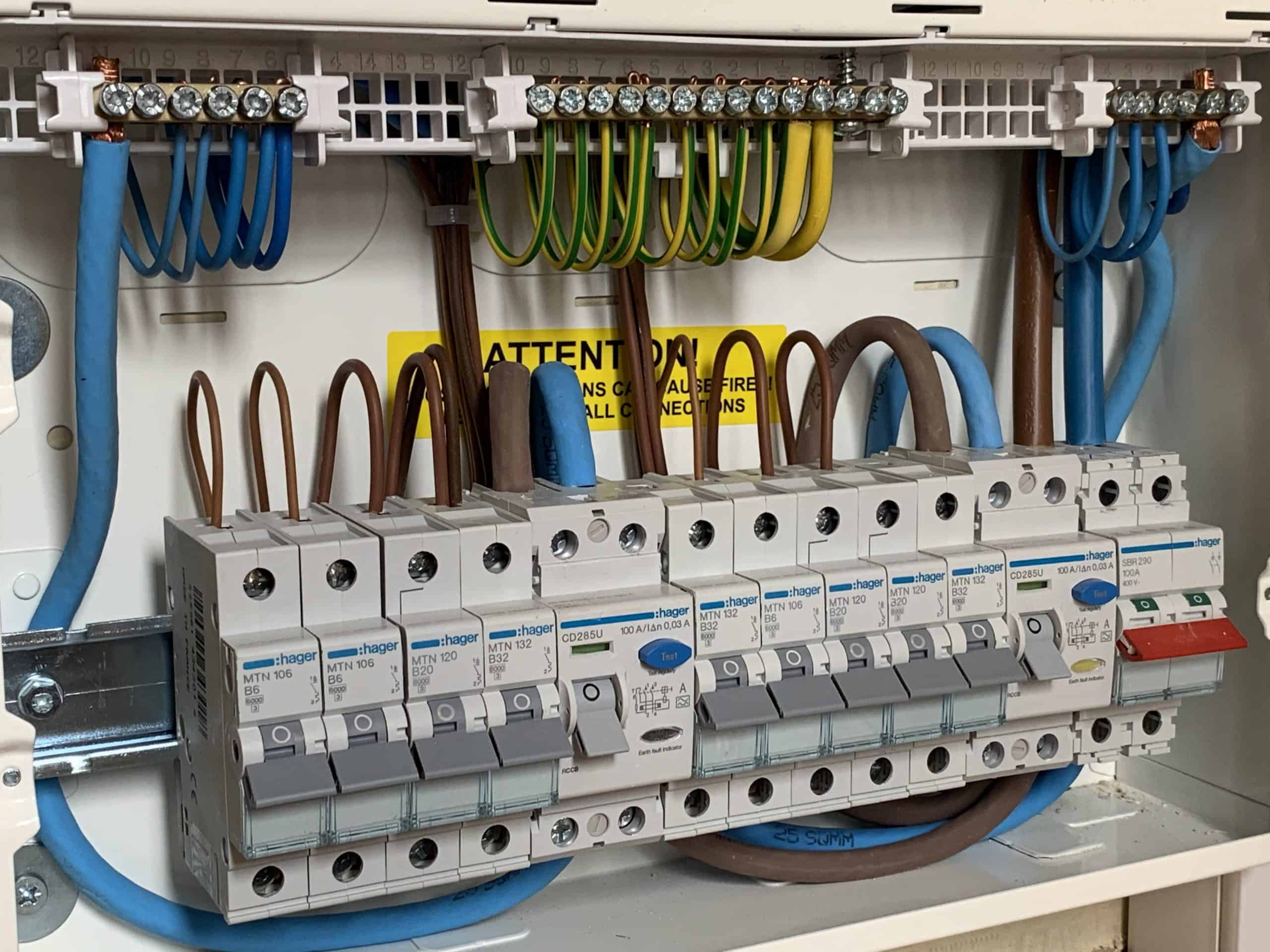
A technical guide explaining the difference between RCBO and split-load RCD consumer units — how each type works, the practical pros and cons, and which to specify for different property types.
What Is an RCD?
A Residual Current Device (RCD) detects the difference in current flow between the live and neutral conductors of a circuit. Under normal operation, current flowing out through the live wire returns through the neutral — the two currents are equal and their difference (the residual current) is zero. If a fault causes current to flow to earth — through a person receiving an electric shock, through damaged insulation touching an earthed metal part, or through a fault in an appliance — the RCD detects the difference and disconnects the supply within milliseconds. The standard tripping threshold for a 30mA RCD is sufficient to prevent cardiac fibrillation in most shock scenarios.
In a split-load consumer unit, typically one RCD protects half of the circuits (for example, circuits 1 through 9) and a second RCD protects the other half (circuits 10 through 18). Each individual circuit also has an MCB (Miniature Circuit Breaker) which provides overcurrent and short-circuit protection for that circuit. The RCD provides the earth fault and shock protection across multiple circuits simultaneously.
What Is an RCBO?
An RCBO (Residual Current Breaker with Overcurrent protection) combines the functions of both an MCB and a 30mA RCD into a single device, one per circuit. Each circuit has its own independent earth fault protection — a fault on one circuit trips only the RCBO for that circuit. No other circuits are affected. The board does not need a separate RCD section because the RCBO on each circuit provides the RCD function.
The Practical Difference: Nuisance Tripping
The key practical difference between the two types is what happens when a fault occurs. On a split-load board, a fault on any circuit protected by one RCD trips that RCD, cutting power to all circuits on that half of the board simultaneously. A faulty fridge on circuit 3 might trip the left-hand RCD and simultaneously cut power to the oven, washing machine, microwave, and kitchen ring main — all circuits on that half. The occupant must identify which circuit caused the trip before power is restored to everything else.
On an RCBO board, the same faulty fridge trips only the RCBO for circuit 3. Every other circuit remains energised. The occupant unplugs the fridge, resets the RCBO, and identifies the fault. The rest of the property is unaffected throughout. This is a significant practical advantage for landlords managing tenanted properties remotely, and it is particularly important in HMO properties where a single tripped RCD cutting power to shared kitchen circuits affects multiple tenants simultaneously.
17th Edition and RCD Requirements
The 17th Edition of the IET Wiring Regulations (BS 7671), which came into force in 2008, introduced a requirement for RCD protection on all socket outlet circuits in domestic installations. The 18th Edition (2018) extended this further, requiring RCD protection for almost all final circuits in new domestic installations. Any consumer unit replacement in a domestic property must therefore include RCD protection for all socket outlet circuits as a minimum — a simple MCB-only board is no longer compliant for new installations in England.
Which Type to Choose?
For a straightforward owner-occupied property where cost is the main consideration, a split-load dual RCD board is usually sufficient and costs approximately £100 to £200 less than a full RCBO board. The disadvantage of grouped tripping is less critical when the occupant is present and familiar with the property. For landlord-owned rental properties, HMOs, or any property where minimising disruption to tenants is a priority, an RCBO board is the correct choice. The higher upfront cost is typically justified by fewer tenant complaints, fewer emergency call-outs to reset boards, and clearer documentation when EICR requirements demand individual circuit protection. An RCBO board is also easier to fault-find because the tripped device immediately identifies the circuit at fault.