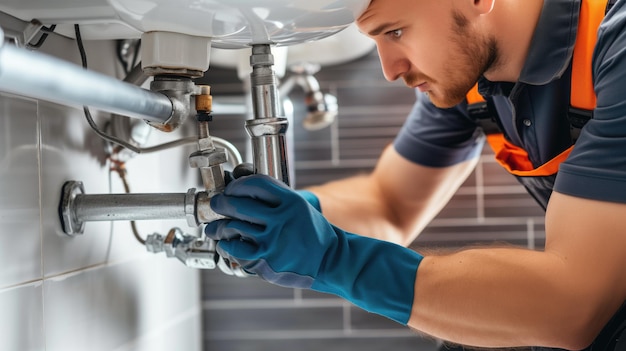
Bleeding a radiator removes trapped air from your central heating system, restoring even heat distribution and reducing energy waste. This guide walks London homeowners and landlords through the correct process, the tools required, and the warning signs that indicate a more serious underlying problem.
As autumn arrives and London households switch their central heating back on, cold spots on radiators are one of the most common complaints reported to plumbers across the city. The cause is almost always the same: air trapped inside the radiator preventing hot water from circulating fully. Bleeding the radiator releases that air and is a straightforward task most homeowners can do themselves — provided they know what they are doing and when to stop.
Why Radiators Develop Air Locks
Air enters a central heating system in several ways: through the feed and expansion tank in older open-vented systems, during routine maintenance or repairs, or gradually through the water itself as dissolved oxygen separates out over time. In London's large Victorian and Edwardian terraced properties — which make up a significant proportion of the housing stock across boroughs such as Islington, Hackney and Lambeth — it is common to find original or partially upgraded pipework that is more prone to air accumulation than modern sealed systems.
The symptoms are straightforward. A radiator that is cold at the top but warm at the bottom almost certainly has trapped air. A gurgling or trickling noise when the heating is running is another reliable indicator. If multiple radiators across the property are affected, or if the boiler pressure is dropping repeatedly, the issue may be systemic rather than isolated to a single unit.
What You Need Before You Start
- Radiator bleed key — a small, inexpensive tool available at any hardware shop. Some modern radiators use a flat-head screwdriver instead.
- A cloth or small container — to catch the water that follows once the air has escaped.
- A note of your boiler pressure gauge reading — check this before and after bleeding. Most sealed system boilers should sit between 1 and 1.5 bar when cold.
Step-by-Step: How to Bleed a Radiator
Step 1 — Turn your heating on. Run the system for 10 to 15 minutes so the water circulates and air rises to the top of each radiator. Then turn the heating off and allow the radiators to cool for 20 to 30 minutes. Working on a hot radiator risks scalding from pressurised water.
Step 2 — Identify which radiators need bleeding. Feel across each radiator from top to bottom. A cold patch at the top is the target. Start with the radiator furthest from the boiler and on the ground floor first, working your way up and towards the boiler.
Step 3 — Locate the bleed valve. It is typically found at the top corner of the radiator, either on the left or right side. It looks like a small square nut inside a circular fitting.
Step 4 — Insert the bleed key and turn anticlockwise. Turn slowly — no more than half a turn. You will hear a hissing sound as air escapes. Hold your cloth beneath the valve to catch any drips. Do not fully remove the valve.
Step 5 — Wait for water to appear. Once a steady trickle of water flows out without sputtering, all the air has been released. Close the valve by turning the key clockwise until it is firmly shut. Do not overtighten, as this can damage the valve seat.
Step 6 — Check boiler pressure. Bleeding releases water along with the air, which can drop system pressure. If your boiler operates on a sealed system and the pressure has fallen below 1 bar, you will need to repressurise it using the filling loop. Consult your boiler manual for the specific procedure, as it varies by model.
Step 7 — Restart the heating and recheck. Once you have bled all affected radiators and restored pressure, turn the heating back on. Radiators that were previously cold at the top should now heat evenly.
When Bleeding Is Not Enough
If you find yourself bleeding the same radiators repeatedly — particularly if the system loses pressure between bleeds — this points to a leak somewhere in the pipework or a fault with the auto air vent. A system that consistently draws in air may also have a problem with the inhibitor concentration; the inhibitor is a chemical added to central heating water to prevent corrosion, and low levels can accelerate sludge and air accumulation.
Black or very dark water emerging from the bleed valve is a sign of magnetite sludge — a byproduct of internal corrosion. This requires a full power flush rather than simple bleeding. For landlords in London, it is worth noting that a poorly maintained heating system can affect both tenant comfort and boiler warranty validity.
If you are not confident working on the system, or if the boiler pressure behaviour is unpredictable, contact a Gas Safe registered engineer. Prestige Engineers operate across all London boroughs and can diagnose heating performance issues, carry out power flushes, and ensure your system is running safely and efficiently ahead of winter.
Frequently asked questions
How often should radiators be bled in a London property?
Most systems benefit from bleeding once a year, typically at the start of the heating season in autumn. Properties with older open-vented systems or high-rise pipework configurations may require bleeding more frequently due to increased air ingress.
Will bleeding a radiator affect my boiler pressure?
Yes. On sealed system boilers — the most common type installed in London homes — bleeding releases water alongside air, which lowers system pressure. After bleeding, check the pressure gauge and repressurise to between 1 and 1.5 bar using the filling loop if it has dropped below 1 bar.
What does black water from a bleed valve indicate?
Black or very dark water indicates magnetite sludge, a byproduct of internal corrosion caused by inadequate inhibitor levels or dissimilar metals in the pipework. This cannot be resolved by bleeding alone and typically requires a professional power flush to remove the sludge and protect the boiler and pump.
Can a landlord be required to ensure radiators work correctly under London rental regulations?
Yes. Under the Homes (Fitness for Human Habitation) Act 2018 and the Landlord and Tenant Act 1985, landlords are legally required to maintain heating installations in proper working order throughout a tenancy. A heating system with persistent cold radiators or pressure loss could constitute a hazard under the Housing Health and Safety Rating System (HHSRS), which local authorities across London boroughs use to assess rental properties.