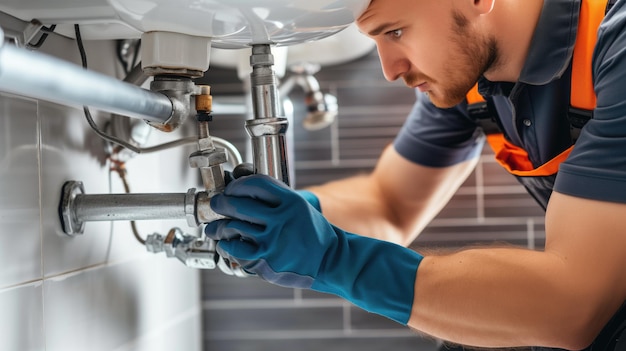
Some plumbing jobs in London are straightforward DIY tasks. Others require a qualified plumber and some are legally prohibited to self-perform. This guide tells you exactly which is which.
The Legal Framework for Plumbing in London
Unlike electrical work, which is subject to Part P of the Building Regulations and requires most domestic electrical work in England to be carried out by a registered competent person, plumbing work in England and Wales is not generally subject to a competent person scheme requirement for standard repair and maintenance work. There is no general law that prevents a homeowner from working on their own plumbing in England. However, there are important exceptions — most significantly, any work on gas pipework or gas appliances, which is restricted by law to Gas Safe registered engineers.
Water Regulations (the Water Supply Water Fittings Regulations 1999) apply to all new plumbing work on the water supply system. While homeowners are technically permitted to carry out plumbing work on their own properties, Thames Water has a right of inspection and can require non-compliant work to be remedied. In practice, homeowners carrying out straightforward repair work rarely face compliance issues. The areas of greatest risk are new connections to the mains supply, installation of backflow prevention devices, and work involving unvented hot water cylinders.
Plumbing Jobs That Are Safe to DIY
The following plumbing jobs can be safely undertaken by a competent DIYer with basic tools and a willingness to learn the correct technique. Replacing a tap washer on a traditional compression tap — this requires only a spanner, a tap washer, and the ability to turn off the mains stopcock or the under-sink isolation valve. Replacing a toilet flush valve siphon diaphragm — accessible from inside the cistern after the water is turned off. Replacing a fill valve (ballcock or float valve) in a toilet cistern — requires no specialist tools. Unblocking a sink or basin using a plunger or drain snake — no specialist knowledge required. Replacing a showerhead or a tap aerator. Replacing a toilet seat. Replacing an outside tap washer.
All these tasks involve working on existing fittings on the cold water or drainage system and do not require notifying Thames Water or the local authority. They require turning off the water supply to the relevant fitting before starting work, and turning it back on carefully to check for leaks on completion.
Plumbing Jobs That Are Better Left to a Professional
The following jobs are technically within a homeowner legal remit but carry significant risk of property damage or personal injury if done incorrectly. They are better handled by a qualified plumber in London. Installing or replacing an outdoor tap (requires knowledge of Water Regulations backflow prevention requirements). Replacing a mains stopcock or a gate valve on the cold supply. Connecting a new appliance to the mains supply for the first time (washing machine, dishwasher, water softener). Unblocking a drain that has not responded to plunging or drain rod use — this may indicate a more serious blockage or structural drain defect. Replacing a section of supply pipework with compression or push-fit fittings on a live system. Repairing a leaking radiator valve while the system is pressurised.
In all these cases, the risk is not primarily legal but practical: an incorrectly made compression joint on a cold supply pipe, or a poorly fitted drain connection, can result in a significant water leak that causes serious damage to the property structure, floor, and ceiling below. The cost of water damage remediation far exceeds the cost of calling a qualified plumber.
Plumbing Jobs That Are Legally Restricted
Gas work is the most important category of legally restricted plumbing work in London. The Gas Safety (Installation and Use) Regulations 1998 require that all work on gas fittings — pipework, valves, appliances, and flues — is carried out by a Gas Safe registered engineer. This applies to boiler installation, repair, and servicing, gas cooker connection, gas fire installation, and any modification to gas pipework. Performing gas work without Gas Safe registration is a criminal offence. Homeowners who work on their own gas installations risk prosecution, void insurance, and potentially fatal consequences if a fault develops.
Unvented hot water cylinder (Megaflow or similar) installation and servicing is subject to Building Regulations (Part G) and must be carried out by a person registered under an appropriate competent person scheme. Work on unvented cylinders also carries specific safety risks — an incorrectly set pressure relief valve or a failed temperature relief device can result in a catastrophic cylinder failure.
When to Call a London Plumber
If you have a running toilet, a dripping tap, a cistern that will not refill, or a visible leak that you are not confident to address yourself, calling a qualified plumber is always the correct decision. Prestige Engineers attends for toilet repairs, tap repairs, leak investigations, and outdoor tap installations across all London boroughs, typically on the same day. We provide a fixed price before any work begins and carry standard spare parts to resolve most common faults on the first visit.