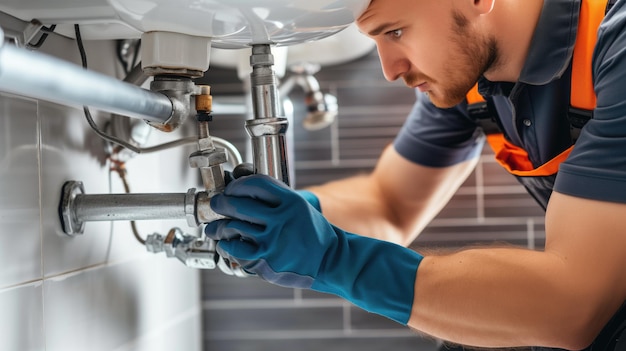
A frozen pipe becomes a burst pipe when the ice thaws and the water pressure returns. The damage is not from the freezing — it is from the expansion of ice inside the pipe that splits the metal or plastic. Knowing how to thaw pipes safely and, more importantly, how to prevent them from freezing in the first place, is practical knowledge for any London homeowner with exposed or unheated pipework.
Why Pipes Freeze and Burst
Water expands by approximately 9% when it freezes. In a pipe, this expansion occurs under pressure — the ice forms in the body of the water inside the pipe, and as it grows it pushes against the pipe wall. Most metals and plastics used in plumbing cannot withstand the pressure of ice expansion when it is concentrated over a short section of pipe, and the pipe splits or cracks at its weakest point.
The damage occurs during thawing, not during freezing. While the pipe is frozen, no water flows and no visible leak occurs. When the ice begins to melt — whether from rising temperature or from active thawing — water pressure returns and the split or crack that the ice created allows water to escape. This is why a frozen pipe discovered in the morning may appear intact, but causes a flood later in the day as temperatures rise.
Most Vulnerable Pipes in London Properties
Not all pipes are equally at risk. Pipes that run through or adjacent to cold spaces — where they can lose heat faster than the water inside them can maintain above freezing point — are the highest risk.
- Loft and roof space: In London's Victorian and Edwardian terraces, the cold water storage tank and the pipework feeding it are often in an uninsulated loft. Overnight temperatures in a poorly insulated loft can fall to ambient outdoor temperature. Cold water tanks should be insulated on all sides except the bottom (heat rises from the building below — this helps keep the tank warm; insulating the bottom cuts off this heat source).
- External walls: Pipes run through or against external walls are exposed to the coldest part of the structure. In older London properties where external walls are single-skin brick with no cavity insulation, the inner face of an external wall can approach outdoor temperature during a cold snap.
- Unheated outbuildings: Pipes serving an outside tap, a garden office, a garage, or a utility room that is not heated are highly vulnerable in winter. These should be isolated at an indoor valve and the section of pipe drained before the first frost.
- Concealed under-sink pipework against external walls: Kitchen sink pipework running through a cabinet against an external wall is more vulnerable than it appears. The cabinet keeps the pipe out of sight but also cuts off the warmth from the kitchen.
Safe Thawing Methods
When you locate a frozen pipe — identified by a complete absence of water flow from a tap, with no obvious blockage or supply issue — thawing must be done carefully to avoid adding heat too rapidly and causing the ice to expand further before melting.
Hair Dryer on Low Setting
A hair dryer held at a moderate distance and moved continuously along the frozen section of pipe is one of the most controllable thawing methods. The key is to start at the end of the frozen section nearest to the tap or outlet, so that when the ice melts the water has somewhere to flow. Apply heat progressively along the pipe, moving toward the frozen section's far end. Use the lowest heat setting — you are warming the pipe slowly and evenly, not scorching it. Keep the hair dryer moving — concentrating heat on one point can distort plastic pipe or damage compression joints.
Warm Cloth or Towel
Soaking a cloth or towel in warm (not boiling) water and wrapping it around the frozen section of pipe applies gentle, even heat. Re-soak and rewrap as the cloth cools. This is a slower method than a hair dryer but is very controlled and carries no risk of overheating. Suitable for accessible pipes where you have time and want to be cautious.
Hot Water Bottle
A hot water bottle (filled with hot but not boiling water) held against the pipe or wrapped around it provides gentle, sustained heat. Effective for small, accessible sections. Multiple hot water bottles can be positioned along a longer frozen section.
Specialist Pipe Thaw Machine
Professional plumbers use electrical pipe thaw machines that pass a low-voltage, high-current electrical flow through metal pipe, resistively heating the pipe from within. These are the fastest and most effective method for long frozen sections in metal pipework (they do not work on plastic). If a frozen pipe is in a difficult location or a long section is frozen, a plumber with a thaw machine can resolve the situation in minutes. This is not a DIY tool — professional equipment only.
What NOT to Do
- Open flame (blowtorch or lighter): Never apply an open flame to pipes. Soldering torches or lighters applied to copper pipe can overheat the joint solder, melt plastic components downstream, and — critically — can ignite adjacent timber joists, floorboards, or building fabric. Pipe fires in void spaces are notoriously difficult to detect and suppress before they spread. An open flame on a pipe is a fire risk, not a plumbing technique.
- Boiling water poured directly onto pipe: Pouring boiling water onto a frozen pipe risks steam explosion. When boiling water contacts ice in a confined space, the rapid temperature differential can cause the ice to crack violently and the resulting steam to build pressure faster than it can dissipate. Beyond explosion risk, boiling water on plastic pipe can soften and deform the pipe, particularly push-fit and compression joint components.
- Leaving any tap closed while thawing: Always open the tap or outlet at the end of the frozen section before thawing begins. This gives the melting water somewhere to go as pressure resumes. A closed tap at the end of a thawing pipe creates a pressure build-up that can split the pipe even where no ice damage occurred.
After Thawing: Check Before Restoring Full Flow
Once water begins to flow, do not simply assume the pipe is intact. Turn the water on slowly and watch the pipe run carefully for several minutes. Look for:
- Drips or weeping at joints — compression or push-fit fittings may have been displaced by ice expansion
- Bulges or distortion in the pipe wall — visible deformation indicates the pipe wall has been weakened and the section should be replaced
- Staining on surrounding surfaces — damp marks on joists or floorboards adjacent to the pipe may indicate a split that occurred during freezing and is now leaking
If any leak is found, isolate the pipe again at the nearest stopcock and call a plumber. Do not restore flow through a pipe that is leaking.
Prevention: Pipe Lagging
Foam pipe insulation — the grey or black foam tubes available from any builders' merchant — is inexpensive and straightforward to fit. It simply slides over exposed pipework (cut to length with scissors) and dramatically reduces the rate at which the pipe loses heat to the surrounding space. Lagging all exposed pipes in the loft and any pipes against external walls is the single most cost-effective winter protection measure.
Cost: foam pipe lagging typically costs £0.50–£1.50 per metre depending on diameter. A standard London loft installation of cold water pipework and tank can be lagged for £20–£50 in materials.
Prevention: Trace Heating
For high-risk pipe sections — long runs in unheated spaces, outdoor pipe sections that cannot be isolated, or areas where lagging alone is insufficient — electric trace heating cable is the definitive solution. Trace heating is a self-regulating cable that runs alongside the pipe and generates heat in proportion to the pipe's temperature — it works harder as the pipe cools and reduces output as the pipe warms. Installed under the lagging, trace heating prevents freezing regardless of ambient temperature.
Trace heating cables are available from electrical suppliers and are straightforward to install on accessible pipework. Professional installation is advisable for concealed runs or for pipes that require a thermostat and frost stat to control the cable.
Keeping the Property Heated
The simplest and most overlooked prevention measure is maintaining a minimum background temperature in unoccupied properties during winter. Setting the heating to a frost protection setting (typically 7–10°C) when a property is empty for more than a day during cold weather costs very little in energy but maintains the internal structure above the temperature at which pipes in walls and under floors are at risk. Turning the heating off entirely in a vacant London property during a cold spell is one of the most common causes of frozen pipe callouts.
Frequently asked questions
Why does a frozen pipe burst when it thaws rather than when it freezes?
The pipe splits due to ice expansion while frozen — the ice expanding inside the pipe creates a crack or split in the pipe wall. While frozen, no water flows so no visible leak occurs. When the ice melts, water pressure returns and forces water through the split that the ice created, causing the flood. This is why a frozen pipe can appear intact in the morning but cause flooding as temperatures rise during the day. Always check for splits and leaks carefully before restoring full water flow after thawing.
What is the safest way to thaw a frozen pipe at home?
Use a hair dryer on a low heat setting moved continuously along the frozen section, starting at the end nearest the outlet. Alternatively, wrap the pipe in cloths soaked in warm (not boiling) water and re-soak as they cool. Always open the tap at the downstream end before starting — this gives melting water somewhere to go and prevents pressure build-up. Never use an open flame or boiling water. After thawing, monitor the pipe carefully for several minutes for signs of leaking joints or pipe wall damage.
Which pipes in a London home are most likely to freeze?
The highest-risk pipes in London properties are those in uninsulated loft spaces (including cold water storage tanks and their feed pipes), pipes run through or against uninsulated external walls, outdoor tap supply pipes, and pipes serving unheated outbuildings like garages or garden offices. Insulating all loft pipework and tanks with foam pipe lagging is the most cost-effective preventive measure. Outdoor tap supplies should be isolated indoors and drained before the first forecast frost each autumn.
How do I prevent pipes from freezing when my London property is empty?
Set the heating to a frost protection or background temperature of 7–10°C rather than turning it off entirely. This maintains the property above the temperature at which pipes in walls and floors are at risk, at minimal energy cost. For pipes in the loft, ensure they are insulated with foam lagging on all sides (leave the tank base uninsulated to benefit from rising heat from below). For outdoor pipes that cannot be heated, isolate them at an indoor stopcock and open the external tap to drain the pipe section. Consider trace heating cable for high-risk exposed sections.