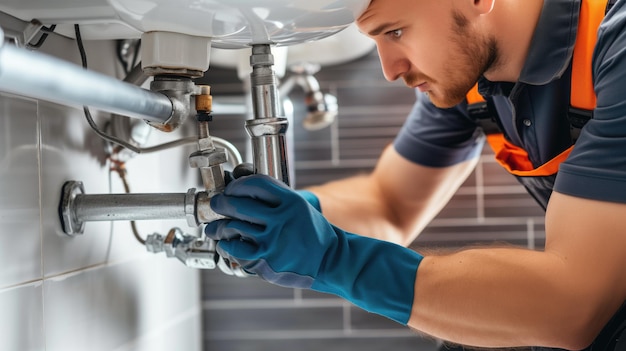
A dripping overflow pipe on the outside wall of your London home is not just annoying — it signals that a valve or cistern is failing. This guide identifies every type of overflow pipe and what is causing it to drip.
What Is the Overflow Pipe?
An overflow pipe is a safety pipe that discharges excess water outside the building when a cistern, tank, or boiler component is overfilling or pressurising beyond its set point. You will see it as a pipe (typically 21mm plastic, grey or white) emerging through an external wall, usually just dripping rather than gushing.
Type 1: Cold Water Tank Overflow (Loft)
If your property still has a cold water storage tank in the loft (common in pre-1990s London terraces with gravity-fed systems), the overflow pipe is the horizontal pipe that exits the loft through the eaves and discharges to the outside.
Cause: The ballcock float valve is not shutting off at the correct level — the water level rises past the overflow outlet and discharges. This is caused by: a waterlogged float ball (sinking, pulling the valve arm down past the shutoff point), a deteriorated valve diaphragm, or a float arm set too high.
Fix: Check the float ball — if it has water inside it, replace it (£3). Adjust the float arm downward (bend it slightly) to lower the shutoff level. If the valve keeps dripping after adjustment, replace the full valve assembly (£15-25, easy DIY job — isolate the supply first).
Type 2: Toilet Cistern Overflow
The toilet cistern overflow pipe discharges externally (or into the toilet pan on modern close-coupled toilets). See our toilet cistern guide for full diagnosis — the cause is almost always the fill valve not shutting off at the correct level.
Type 3: Boiler Overflow / Pressure Relief Valve Discharge
If the dripping pipe comes from near the boiler — often at low level outside a kitchen or utility room — it is the boiler's pressure relief valve (PRV) discharge pipe. The PRV opens when system pressure exceeds its limit (usually 3 bar).
This is a boiler fault — do not ignore it.
Causes: the expansion vessel has lost its pre-charge (most common), the filling loop is stuck in the open position (overcharging the system), or the PRV itself is faulty. A Gas Safe engineer should diagnose and repair — typically an expansion vessel re-charge or replacement (£150-300) resolves it. Do not repeatedly re-pressurise the boiler as a workaround.
Type 4: Unvented Cylinder Tundish Discharge
If you have an unvented hot water cylinder, the tundish (a small fitting that provides an air gap between the cylinder's temperature relief valve and the discharge pipe) may be seen dripping. This always indicates a fault — either the T&P valve has activated (water too hot, overpressure) or the T&P valve is failing and weeping. A G3-qualified engineer must attend immediately.
Frequently asked questions
Is a dripping overflow pipe an emergency?
Depends on type. A loft tank or toilet cistern overflow dripping is not an emergency — fix it within a few days to avoid water waste. A boiler pressure relief valve dripping is a boiler fault that needs a Gas Safe engineer within days. An unvented cylinder T&P valve weeping is urgent — call a G3-qualified engineer the same day.
My overflow pipe drips only at night — why?
Nighttime dripping is typically related to lower demand meaning no water is being drawn, allowing the tank level to rise and trigger the overflow. Check the float valve is shutting off at the correct level. Cold overnight temperatures can also cause slight pressure increases in sealed systems, triggering boiler PRV dripping.
How much water is wasted by a dripping overflow?
A steady drip from a loft tank or cistern overflow wastes 200-400 litres per day — on a water meter (most London properties metered after 1990) this adds £50-150/year to your water bill. A fast dribble wastes significantly more. Fix it promptly.
Can I cap the overflow pipe to stop the drip?
No — never cap an overflow pipe. Overflow pipes are safety devices. Capping a cold water tank overflow risks the tank overflowing into the loft and causing serious water damage. Capping a boiler PRV discharge pipe risks dangerous overpressure. Fix the underlying cause — do not block the symptom.