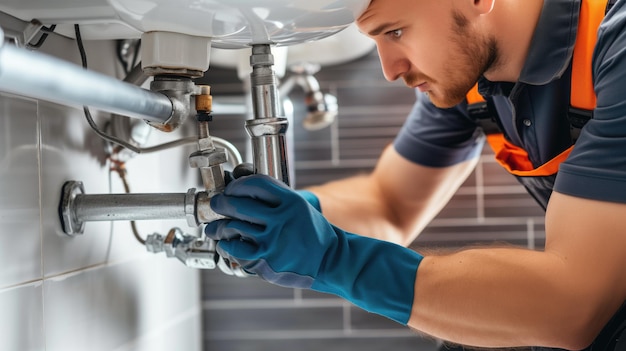
An outside tap is one of the most cost-effective plumbing additions you can make to a London property — genuinely useful for garden watering, car washing, and general outdoor cleaning. But there are Water Regulations requirements, frost precautions, and leasehold considerations that make it worth understanding before work starts.
Why Install an Outside Tap?
An outside tap provides a dedicated cold water supply point on the exterior of your property for garden watering, car washing, patio and driveway cleaning, filling paddling pools, and general outdoor use. Without one, every outdoor water use requires either a long hosepipe run from an internal tap (with the window or door left ajar) or carrying water in containers. The convenience return on a well-positioned outside tap is immediate and ongoing.
In London, where garden sizes range from postage-stamp yards to generous rear gardens, outside taps are almost universally useful. Even for properties with small rear yards, washing down bin areas, cleaning cycles, and filling plant pots is simplified. For properties with access to a front garden or driveway, a front outside tap adds significant convenience for vehicle washing.
The Water Regulations Requirement: Double Check Valve
The single most important regulatory requirement for outside tap installation is the mandatory fitting of a double check valve (also called a double non-return valve or backflow prevention device) on the branch pipe supplying the outside tap. This is required by the Water Supply (Water Fittings) Regulations 1999 and is non-negotiable.
The reason is back-siphonage. An outside tap is considered a Fluid Category 2 risk point — there is a possibility, however small, that contaminants from outside (garden chemicals, dirty water from a submerged hosepipe, animal waste from a pressure-washed area) could be drawn back into the mains water supply by negative pressure fluctuations or by a hosepipe being left submerged in a bucket. The double check valve prevents any flow back toward the mains supply.
A single check valve (one non-return disc) does not meet the standard for outside tap installation — it must be a double check valve (two independent non-return discs in series). WRAS-approved (Water Regulations Advisory Scheme) fittings should be used throughout the installation to confirm compliance.
Thames Water and other water companies carry out spot checks on outside tap installations, and an installation without a double check valve is a Regulations breach. Beyond compliance, the double check valve protects the safety of your mains water supply.
Isolation Valve
In addition to the double check valve, an isolation valve must be fitted on the branch pipe inside the property — before it passes through the external wall. This valve serves two purposes: it allows the outside tap to be isolated during winter (drain-down as frost protection) and it allows the tap and external pipework to be isolated for maintenance or replacement without turning off the entire cold water supply to the property.
The isolation valve is typically a simple screwdriver-slot ball valve or a lever-handle ball valve, fitted in a convenient and accessible position — usually under the kitchen sink or in a utility area, close to where the branch pipe leaves the internal pipework.
Pipe Routing Options
There are two primary routing options for the pipe from the internal cold supply to the external tap:
- Through the external wall: The most common approach. A core drill is used to create a hole through the external brickwork (typically 22mm diameter for a 15mm pipe plus lagging). The pipe passes through the wall with a short horizontal run on the exterior connecting to the tap. The wall penetration is sealed with waterproof mortar or foam to prevent water and draft ingress. The external pipe section must be protected against frost — either insulated or routed in a sheltered position, or designed to be drained in winter.
- Under the floor (ground floor flats and houses with accessible voids): In some ground-floor London flats, it is possible to route the pipe under the floor and bring it up through the floor and through the wall at a lower level. This is less common and more complex but avoids a visible surface-mounted pipe on the exterior wall.
Frost Precautions
London winters are generally mild, but temperatures below freezing do occur — and water in an external pipe or fitting left full of water during a hard frost will freeze, expand, and split the pipe or crack the tap body. Two approaches are standard:
- Drain-down valve: The isolation valve inside the property is specifically designed with a drain port — when the valve is turned to the isolated position, a small drain port opens, allowing the water in the external section of pipe to drain out under gravity or by blowing through the tap. This is the most reliable frost protection method. It requires the user to remember to operate the drain-down valve before the first frost of the season.
- Pipe insulation: The external pipe and tap body can be insulated with foam pipe lagging. This reduces (but does not eliminate) the risk of frost damage. Insulation alone is not adequate protection in a prolonged hard frost — drain-down is a more reliable approach. Insulation combined with a drain-down valve provides the best protection.
Cost of Outside Tap Installation in London
Outside tap installation in a London house or ground-floor flat typically costs £150–£300 installed. This includes the tap unit, double check valve, isolation valve (with drain-down port), pipe fittings, the wall core drill, and the plumber's labour for a typical half-day job. Factors that add to cost include masonry walls requiring carbide core drill bits (harder than average London stock brickwork), long pipe runs if the connection point is remote from the external wall, and the addition of a second tap (front and rear, for example).
Planning Permission
Installing an outside tap does not require planning permission in the vast majority of cases. An outside tap is a minor domestic fitting — not a structural change, not a change of use, and not a listed building alteration in most cases. However:
- Listed buildings may require listed building consent before drilling the external wall — check with your local planning authority if the property is listed
- Properties in conservation areas are generally unaffected (an outside tap is not a change to external appearance that would require consent), but confirm if in doubt
- HMO licensing conditions do not typically address outside taps
Leasehold Flats: Freeholder Permission
For leasehold flats in London — which represents a very large proportion of London's housing stock — an outside tap installation requires careful consideration of the lease:
- Most leases require freeholder or managing agent consent for any works affecting the structure of the building or the common parts. Drilling through an external wall typically falls within this scope.
- Written consent should be obtained before work starts. Some managing agents grant consent routinely for minor works; others require a formal licence to alter with a fee.
- Flats above ground floor generally cannot install an independent outside tap without significant additional pipework — the option is typically only practical for ground-floor flats with garden access.
Frequently asked questions
Do I need a double check valve for an outside tap in London?
Yes — a double check valve (two independent non-return valves in series) is a mandatory requirement under the Water Supply (Water Fittings) Regulations 1999 for any outside tap installation. It prevents back-siphonage of potentially contaminated external water back into the mains supply. A single check valve does not meet the standard. WRAS-approved fittings should be used. Thames Water carries out spot checks and an installation without a double check valve is a Regulations breach.
How much does outside tap installation cost in London?
Outside tap installation in a London house or ground-floor flat typically costs £150–£300 installed, including the tap unit, double check valve, isolation valve with drain-down port, pipe, core drill through the wall, and plumber's labour. The job typically takes two to three hours. Costs toward the upper end apply for harder masonry, longer pipe runs, or if a second tap position is required.
Do I need permission from my freeholder to install an outside tap in a London flat?
Almost certainly yes if you are a leaseholder in a flat. Most leases require freeholder or managing agent consent for works affecting the building structure — which drilling through an external wall does. Obtain written consent before instructing a plumber. Outside taps are typically only practical for ground-floor flats with private garden or yard access. Upper-floor flats cannot practically install an independent outside tap.
How do I protect an outside tap from frost in London?
The most reliable method is a drain-down isolation valve fitted inside the property. When winter approaches, turn the valve to isolate and drain — this empties the external pipework of water, eliminating the freeze risk. Additionally, insulate the external pipe and tap body with foam lagging. Insulation alone is not sufficient in a prolonged hard frost. Remember to operate the drain-down valve before the first frost each year, and reopen it fully in spring.