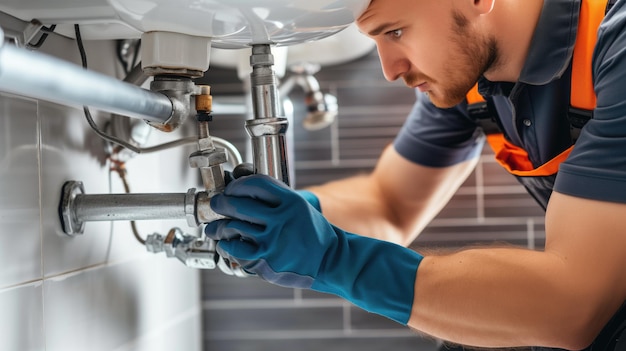
An outdoor tap is one of the most practical plumbing additions for a London home. This guide explains how outdoor taps are connected, what the legal requirements are, and what installation costs in London.
Why Every London Home Needs an Outdoor Tap
An outdoor tap is one of the simplest and most useful plumbing additions a London homeowner can make. Garden watering, car washing, cleaning the patio and garden furniture, filling paddling pools, and topping up water features all become straightforward once you have a permanent outdoor water point. Without an outdoor tap, these tasks require carrying heavy watering cans from the kitchen or bathroom — an inconvenience that becomes wearing very quickly over a summer of dry weather.
For London properties with even a small rear garden, an outdoor tap pays for itself in convenience within the first season. For terraced houses with rear access, installation is usually straightforward and takes a qualified plumber two to three hours. The total cost — including parts, labour, double check valve, and isolation valve — is typically £150 to £250.
How an Outdoor Tap Is Connected
The standard connection method for an outdoor tap is to tee off the kitchen cold supply pipe. A 15mm saddle clamp tee or inline tee fitting is fitted to the cold supply pipe under or adjacent to the kitchen sink. A 15mm branch pipe is run from this tee to the external wall of the property. Where the pipe needs to pass through the wall, a core drill (typically a 20 to 22mm diameter diamond core drill) is used to make a clean hole through the masonry.
On the outside of the wall, the pipe connects to a wall plate elbow — a brass fitting that is screwed to the wall and provides a threaded connection for the tap body. The tap body (a standard bib tap or a ball valve type) screws onto the wall plate elbow. Standard outdoor bib taps have a 3/4-inch BSP threaded outlet that accepts all standard hosepipe connectors sold in UK garden centres and DIY stores.
On the inside of the wall, before the pipe exits the building, an isolation valve is fitted on the branch. This is essential for two reasons: it allows the outdoor tap to be isolated in winter, and it provides a means of shutting off the supply to the tap for maintenance without turning off the water to the whole house.
The Double Check Valve — Required by Water Regulations
Every outdoor tap installation in the United Kingdom must include a double check valve (also described as a non-return valve or backflow preventer) on the supply to the tap. This requirement comes from the Water Regulations Advisory Scheme (WRAS) and is a legal requirement under the Water Supply (Water Fittings) Regulations 1999.
The reason for this requirement is backflow prevention. If a hosepipe connected to the outdoor tap is left submerged — for example, in a garden pond, a paddling pool, or a bucket of weedkiller or washing-up liquid — and mains water pressure drops suddenly due to a main burst or high demand on the network, there is a risk that contaminated water could siphon back through the hosepipe and into the mains supply. A double check valve contains two spring-loaded check valves in series. Either check valve alone would prevent backflow. The double configuration provides redundancy and meets the WRAS requirement for outdoor tap supplies.
Prestige Engineers fits a WRAS-approved double check valve on every outdoor tap installation as a standard part of the job. If you already have an outdoor tap without a double check valve, we can fit one retrospectively — this is a legal requirement that applies to all outdoor taps, not just new installations.
Frost Protection: Isolation Valve and Self-Draining Taps
The section of pipe between the isolation valve inside the building and the outdoor tap body is exposed to outdoor temperatures. In London, winter temperatures rarely fall below minus five degrees Celsius, but occasional cold spells are sufficient to freeze a water-filled pipe in an exposed position — particularly on a north-facing wall or in an unheated outhouse. A frozen pipe may burst when the ice thaws, causing a leak at the point where the pipe split.
The simplest method of frost protection is to turn off the indoor isolation valve in late autumn and open the outdoor tap fully to allow the water in the external pipe section to drain out. With no water in the pipe, there is nothing to freeze. This requires remembering to isolate and drain the tap at the start of each winter, then opening the isolation valve again in spring.
For those who want automatic frost protection, a self-draining outdoor tap (also called a frost-protected tap) is available. These taps incorporate an internal mechanism that opens a small drain port when the tap is closed, allowing the water in the external section of pipe to drain back into the building through the tap body. When the tap is in use, the drain port is sealed by the water pressure. Self-draining taps cost slightly more — around £200 to £300 supply and fit versus £150 to £250 for a standard tap — but eliminate the need to remember the seasonal isolation routine.
Outdoor Taps in London Flats and Terraced Houses
For terraced houses in London, outdoor tap installation is generally straightforward. The kitchen cold supply pipe is typically close to the rear wall of the property, and a short branch pipe can reach the external wall with a modest amount of pipework. The main variable is how the pipe will be routed — through a kitchen cabinet, under the worktop, or through a wall-mounted route — and whether the kitchen cold supply pipe is readily accessible.
For purpose-built flats, the feasibility depends on whether the property has an external wall accessible from the water supply location. Ground-floor flats with a rear garden often can have an outdoor tap fitted. Upper-floor flats with a balcony or roof terrace can have a tap fitted if a supply pipe can be routed to the external point — this may require running pipework through a service void or a cupboard. We survey the property before confirming feasibility and quote accordingly.
Hosepipe Bans
A hosepipe ban (technically a drought order or temporary use ban issued by the water company under the Water Industry Act) prohibits using a hosepipe connected to a tap for garden watering or car washing. Installation of an outdoor tap does not affect whether a hosepipe ban applies to your property — the ban applies to the use of the tap with a hosepipe for restricted purposes, not to the tap itself. An outdoor tap remains useful during a hosepipe ban for filling watering cans, washing down hard surfaces, and other non-restricted uses.
Outdoor Tap Installation Costs in London
Standard outdoor tap supply and fit in London costs £150 to £250 including the double check valve, indoor isolation valve, and all pipework. Frost-protected self-draining tap installation costs £200 to £300. Roof terrace or balcony tap installations start from £200 depending on the pipe run length. All prices include core drilling through standard masonry. Contact Prestige Engineers for a same-week outdoor tap installation across any London borough.