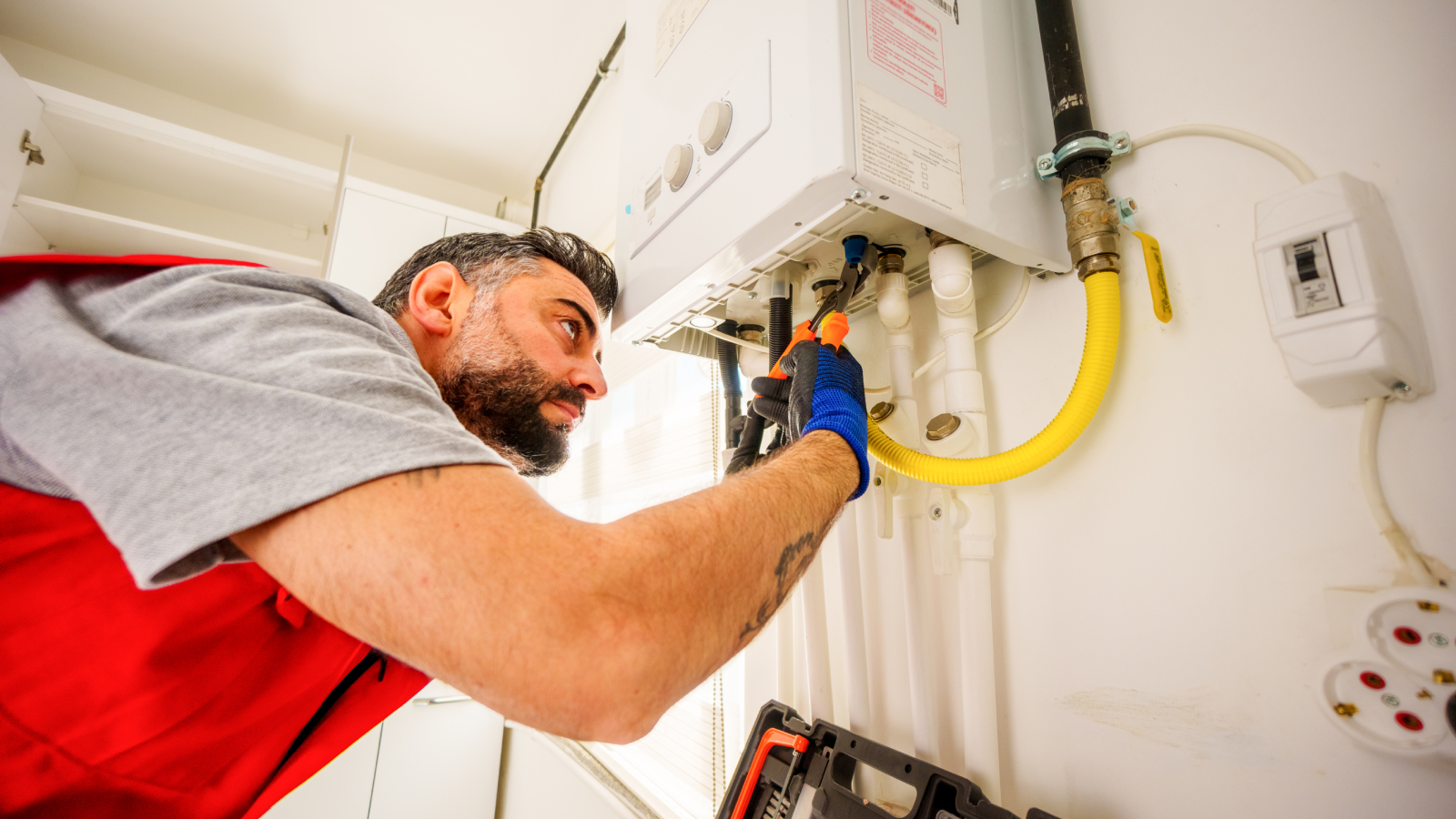
A sudden loss of hot water is one of the most disruptive problems a London homeowner or landlord can face, and the cause is not always obvious. This guide covers the most common faults — from boiler lockouts and diverter valve failures to immersion heater faults — and explains what you can safely check yourself before calling a Gas Safe engineer. Understanding the likely cause early can reduce downtime and, for landlords, help meet your duty to provide adequate hot water under the Landlord and Tenant Act 1985.
Losing hot water in a London property is rarely convenient. Whether you are a homeowner, a private landlord managing a portfolio of flats across multiple boroughs, or a property manager overseeing a block in Islington or Lewisham, the underlying causes are broadly the same — and most can be diagnosed quickly if you know what to look for.
Check the Basics First
Before assuming the boiler or cylinder is at fault, rule out the straightforward explanations:
- Gas supply: Check whether other gas appliances — hobs, fires — are working. If not, contact your supplier or call the National Gas Emergency Service on 0800 111 999. A supply interruption affecting your street or borough is outside your control.
- Boiler pressure: Combi and system boilers will not heat water correctly if the pressure gauge reads below 1 bar. Consult your boiler manual to repressurise via the filling loop. Most manufacturers recommend 1–1.5 bar when cold.
- Programmer and thermostat settings: A timer that has been accidentally reset — often after a power cut — will prevent hot water from running at all. Check both the boiler programmer and any separate cylinder thermostat if you have a conventional system.
- Boiler error code: Modern boilers display fault codes on the panel. Note the code before resetting; it may indicate a specific component failure that an engineer will need to investigate.
Common Causes of No Hot Water
Boiler Lockout
A boiler that has locked out will display a fault code and refuse to fire. Causes range from ignition failure and low gas pressure to frozen condensate pipes — a problem that becomes more frequent in London during cold snaps, particularly in older Victorian terraces where the condensate pipe runs externally along a rear extension. You can attempt to thaw a frozen condensate pipe yourself using warm (not boiling) water, but repeated lockouts indicate an underlying fault requiring a Gas Safe registered engineer.
Faulty Diverter Valve (Combi Boilers)
Combi boilers heat water on demand by diverting hot water either to the central heating circuit or directly to the hot water taps. The diverter valve is a common failure point, particularly in boilers over eight years old. A stuck or worn diverter valve will typically present as hot water available when the heating is off, but cold or lukewarm water when both are running — or vice versa. This is not a DIY repair; the valve must be replaced by a qualified engineer.
Broken Immersion Heater Element
Properties with a hot water cylinder — common in older London housing stock, including many pre-1960s flats and houses across boroughs such as Hackney, Southwark and Lambeth — rely on either a boiler coil or an immersion heater element to heat stored water. If the element burns out, you will have no hot water regardless of whether the boiler is running. Immersion heater elements can be replaced by a qualified electrician; the work does not require a Gas Safe registration but should still be carried out by a competent person to comply with Part P of the Building Regulations.
Motorised Zone Valve Failure
Conventional (heat-only) boiler systems use motorised zone valves to direct flow to either the cylinder or the radiators. If the hot water zone valve fails in the closed position, the cylinder will not receive heat even though the boiler is firing normally. You may notice the heating continues to work while hot water does not — a clear sign the valve rather than the boiler itself is at fault.
Thermostat or Cylinder Stat Failure
The cylinder thermostat on a conventional system controls when the immersion or boiler coil heats the stored water. If it fails in an open position, the cylinder will never reach temperature. If it fails closed, the element or coil may overheat. The cylinder stat should be set to 60°C to prevent Legionella proliferation — a legal requirement for landlords under the Health and Safety at Work Act and associated L8 Approved Code of Practice.
Landlord Obligations
Under the Landlord and Tenant Act 1985, landlords in England are legally required to maintain installations for the supply of hot water in working order. Failure to do so can result in a formal complaint to the local housing authority, a hazard assessment under the Housing Health and Safety Rating System (HHSRS), and in serious cases, improvement notices or emergency remedial action by the council. Landlords operating in licensed HMO boroughs — including Tower Hamlets, Newham and Camden — face additional scrutiny, and a persistent hot water failure could put a licence renewal at risk.
For properties with gas boilers, any repair or inspection work must be carried out by an engineer registered on the Gas Safe Register. You can verify any engineer's registration at gassaferegister.co.uk.
When to Call an Engineer
If you have checked the pressure, programmer settings and gas supply and the boiler is still not producing hot water, the fault is likely mechanical or electronic. Do not continue resetting a locked-out boiler without understanding the cause — repeated resets on a boiler with a gas or combustion fault can be dangerous. Contact a Gas Safe registered engineer who can carry out a proper diagnosis, issue the appropriate certificate where required, and restore the system safely.
Frequently asked questions
Can I repressurise my combi boiler myself to restore hot water?
Yes — repressurising a combi boiler via the filling loop is a simple task most homeowners can carry out safely using the boiler manual. Top up to between 1 and 1.5 bar when the system is cold. If pressure drops repeatedly, there is likely a leak somewhere in the system that requires a qualified engineer to trace and repair.
My heating works but I have no hot water — what does this usually mean on a combi boiler?
On a combi boiler, this symptom most commonly points to a faulty diverter valve that is stuck in the central heating position. It can also indicate a problem with the domestic hot water sensor or heat exchanger. A Gas Safe registered engineer can diagnose and replace the faulty component, typically within a single visit.
As a London landlord, how quickly must I restore hot water after a fault is reported?
There is no fixed statutory timescale in legislation, but case law and local authority guidance generally treat hot water as an urgent repair requiring attention within 24 hours. In licensed HMOs, your licence conditions may specify response times explicitly. Delayed repairs can result in HHSRS hazard assessments and formal notices from the borough.
Does a no hot water fault always require a Gas Safe engineer, or can an electrician fix it?
It depends on the system. Faults with gas boilers, flues or gas pipework must be addressed by a Gas Safe registered engineer by law. However, immersion heater element replacements, cylinder thermostat swaps and wiring faults on electric hot water systems fall under electrical work and require a qualified electrician working to Part P of the Building Regulations rather than Gas Safe registration.