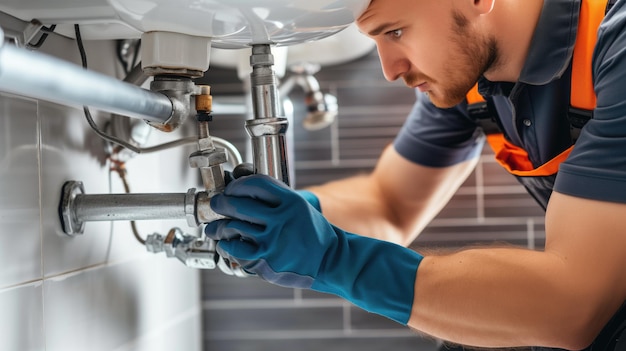
New build properties are not immune to plumbing problems — in fact, several issues are specific to brand-new systems that have never been commissioned and flushed properly. London buyers accepting a new build should know what to check before the snagging period closes and the developer's obligations end.
Common New Build Plumbing Problems
New build plumbing failures in London typically fall into two categories: installation defects — things done incorrectly during construction — and commissioning failures — things that were not properly completed or tested before handover. Both categories are the developer's responsibility during the snagging period, but they need to be identified within that window.
Poorly Soldered or Compressed Joints
Speed of construction in new build programmes creates pressure on the tradespeople completing the plumbing rough-in. Joints that are not fully soldered, compression fittings that are slightly undertightened, or push-fit fittings that are not fully seated will leak — sometimes immediately, sometimes only once the system is pressurised and thermal cycling begins. These leaks may be small (a slow seep from behind a wall or under a floor) that only becomes apparent as damp staining weeks or months after occupation. Check for any damp patches on ceilings below upstairs bathrooms, around the base of the kitchen sink unit, and at the base of the boiler.
Insufficient Pipe Clips and Noise
Pipework that is not adequately clipped at the required intervals will move as water flows through it — producing knocking, ticking, or water-hammer sounds when taps are opened or closed. Pipes that expand with hot water and contract with cold require clips that allow controlled linear movement — incorrectly fitted clips can cause pipework to clunk against the structure. These noises are a snagging issue, not a feature of new plumbing.
Undersized Boiler for the Property
Boiler sizing in new builds should be calculated by the design engineer based on the property's heat loss and hot water demand. However, cost pressures sometimes result in the smallest boiler that will technically pass system commissioning being specified — rather than the correctly sized unit. Signs of an undersized boiler include long delays for hot water at remote outlets, inadequate heating on cold days, or the boiler running almost continuously in winter. Check the boiler's kW output against the number of bathrooms and radiators when reviewing your specification.
Missing Scale Inhibitor for London's Hard Water
London's water supply is extremely hard — 200–400 mg/L calcium carbonate in many parts of the city. Without a scale inhibitor or water softener on the incoming mains, limescale will accumulate on boiler heat exchangers, shower heads, and taps within months. New build properties should have a scale inhibitor fitted on the incoming cold main as standard for London — a simple inline inhibitor cartridge costing £50–£100. If yours has not been fitted, this is a snagging item. Left unfitted, heat exchanger scale can cause the boiler warranty to be invalidated and shorten component life significantly.
Inadequate Water Pressure to Upper Floors
In taller new build apartment blocks, water pressure at upper floor outlets may be lower than expected if the building's booster pump system is incorrectly sized or configured. Check the cold water flow rate at the highest bathroom in the property by timing how long it takes to fill a 1-litre container — it should fill in under 6 seconds (roughly 10 litres per minute). If pressure is noticeably lower than at lower levels, this is a building services issue to raise with the developer.
The Snagging Period: Your Opportunity and Timeline
The snagging period for new build homes in the UK is typically the two-year period following legal completion, during which the developer is obliged to rectify defects in the build that were not apparent at handover. For structural defects, the NHBC Buildmark warranty (or equivalent — Premier Guarantee, LABC, etc.) provides cover for ten years.
The first six months are the most important window for identifying and reporting defects. Developers are contractually obliged to attend to snagging items reported in writing. After two years, the standard developer obligation period ends — defects discovered after this point are the owner's cost unless they qualify as latent structural defects under the ten-year warranty.
Appoint a professional snagging inspector before or shortly after occupation. A qualified inspector will identify defects that a non-specialist homeowner would miss — including plumbing issues that only manifest once the system has been in use for a few weeks. The cost of a professional snagging survey (£300–£500) is small relative to the defects it may identify within the developer's repair period.
Flushing the System Before Full Use
New build heating systems contain flux residue from soldering, construction debris, and manufacturing swarf from new pipe fittings. Before the system is run normally, it should be chemically cleansed — a process where a cleaning chemical is circulated through the system at operating temperature to dissolve and flush out this initial contamination. This is specified in BSRIA BG 29/2012 (Pre-Commission Cleaning of Pipework Systems) and most boiler manufacturers require it as a warranty condition.
Ask your developer to provide a commissioning certificate confirming the system has been pre-commission cleaned and that inhibitor has been added. If this has not been done, have it carried out within the first few months — before scale from London's hard water starts to accumulate in a system already contaminated with construction debris.
Boiler Warranty Registration
Most boiler manufacturers offer extended warranty periods (five to twelve years, depending on brand) for boilers installed in new builds — provided the warranty is registered with the manufacturer within a specified period (typically 30–60 days from installation). The developer may or may not register the warranty on the buyer's behalf. Confirm with the developer whether registration has been completed, and if not, register directly with the boiler manufacturer using the boiler's serial number as soon as possible. A boiler costing £1,500–£2,000 is not adequately protected by the standard 2-year warranty when a ten-year extension is available at no extra cost if registered in time.
Commissioning Documentation
Request from your developer a complete set of commissioning documentation, including:
- Gas Safety Certificate (CP12) for the boiler and any gas appliances
- Boiler commissioning sheet (showing commissioning date, gas pressure readings, flue analysis, and engineer details)
- Heating system commissioning certificate (confirming pre-commission cleaning, inhibitor addition, and system pressure test)
- Building Regulations completion certificate for the property
- Any Thames Water build-over agreement or connection approval if the property is built near a sewer
Smart Meter Installation and Plumbing
New builds in London are increasingly delivered with smart meters for gas and electricity pre-installed. The smart meter installation itself does not affect plumbing, but confirm that the gas meter location is accessible and that the emergency control valve (ECV) — the isolation valve on the gas supply entering the property — is clearly identified and accessible. The ECV must be reachable without tools and not obstructed by kitchen cabinetry or stored items.
Thames Water Build-Over Agreements
If the new build property or development was constructed over or in close proximity to a public sewer, Thames Water requires a Build-Over Agreement before construction. This agreement specifies what inspection access Thames Water retains and what constraints apply to the construction above or near the sewer. As a buyer, confirm with the developer that any required Build-Over Agreement has been obtained and that inspection chambers and sewer access points within or adjacent to the property remain accessible. An unapproved build-over is a liability that transfers to the buyer on completion.
Frequently asked questions
What plumbing problems should I look for when snagging a new build in London?
Key plumbing snagging items in London new builds: check for damp patches on ceilings below bathrooms (indicating joint leaks); test water pressure at all outlets including upper floors; run the heating and check all radiators reach temperature; confirm a scale inhibitor is fitted on the incoming cold main; check the boiler commissioning documentation shows pre-commission cleaning was carried out; and verify the boiler warranty has been registered with the manufacturer within the required timeframe.
Does a new build boiler need to be serviced in the first year?
Yes — most boiler manufacturers require an annual service to maintain the extended warranty. For a new build, the first service is typically due 12 months after installation. The developer should provide the commissioning date on the Gas Safety Certificate. The first service is the buyer's responsibility unless the developer provides a service package. Missing the first annual service can invalidate the extended warranty — check the warranty terms for the specific boiler brand installed.
Why is there no scale inhibitor in my new build in London?
Scale inhibitor is not a universal new build standard — some developers fit it and some do not, despite London's extreme water hardness. If your new build does not have a scale inhibitor on the cold main supply, raise it as a snagging item during the snagging period. If the developer does not act on it, have one fitted independently — a simple inline inhibitor cartridge costs £50–£100 installed. Without it, limescale accumulation on the boiler heat exchanger and shower fittings will begin within months.
What is a Thames Water build-over agreement and why does it matter for buyers?
A Build-Over Agreement is required by Thames Water when a building is constructed over or within 3 metres of a public sewer. It sets out the conditions of construction and confirms Thames Water's ongoing access rights for sewer inspection and maintenance. If a new build property has been constructed without the required agreement, or if the agreement has not been transferred to the buyer at completion, it represents a legal liability. Ask the developer's solicitors to confirm any Build-Over Agreement as part of the pre-completion enquiries.