London has some of the hardest water in England, with Thames Water supplying water with hardness levels of 250 to 350 milligrams per litre as calcium carbonate across most of the supply area. This level of hardness causes visible limescale deposits on taps, showers, and appliances and accelerates wear in boilers, hot water cylinders, and heating systems. This guide analyses the costs and benefits of installing a whole-house water softener in a London property.
Understanding London Water Hardness
Water hardness is caused by dissolved calcium and magnesium salts that are picked up as water percolates through chalk and limestone rock. The Thames Water supply area overlies some of the most extensive chalk deposits in England, and as a result the water supplied to London properties contains very high levels of dissolved calcium carbonate. The Water Research Foundation classifies water with more than 200 milligrams per litre of calcium carbonate as very hard; Thames Water delivers water at between 250 and 350 milligrams per litre across most of London, placing it firmly in the very hard category.
The practical effects of very hard water in a London property are well known to most London homeowners and landlords: white scale deposits accumulate on taps, showerheads, glass shower screens, kettle elements, and washing machine drum seals; boiler heat exchangers and hot water cylinders accumulate scale internally, reducing efficiency and increasing the risk of component failure; dishwashers and washing machines require more detergent and softener to perform effectively; and skin and hair may feel dry after bathing due to the interaction of hard water with soaps and shampoos.
How a Water Softener Works
A whole-house water softener uses an ion exchange process to remove calcium and magnesium ions from the incoming mains water before it is distributed to all outlets in the property. The softener contains a bed of ion exchange resin beads that attract and hold calcium and magnesium ions as the water passes through, replacing them with sodium ions that do not cause scale. Over time, the resin becomes saturated with calcium and magnesium and must be regenerated by passing a brine solution through it, which displaces the calcium and magnesium and flushes them to drain while recharging the resin with sodium from the brine.
Most modern domestic water softeners are fully automatic and regenerate on a pre-set schedule or on a demand basis triggered by the volume of water processed. The softener is connected to the incoming cold water main at the point where it enters the property, typically in the kitchen, utility room, or under-stairs cupboard, and processes all the water before it is distributed to the cold water outlets, the boiler, the hot water cylinder, and the hot taps. A separate unsoftened cold water supply is usually maintained at the kitchen cold water tap to provide drinking water, as softened water has a slightly elevated sodium content that some people prefer not to drink.
Installation Costs for a Water Softener in a London Home
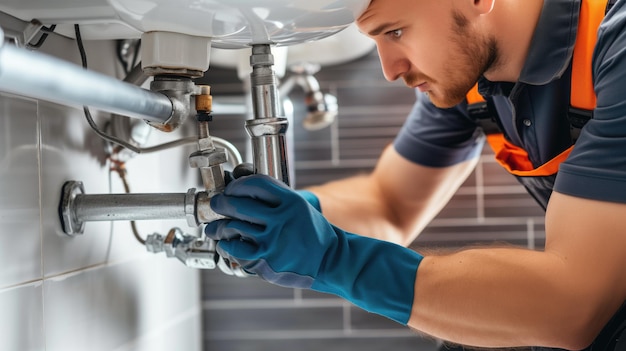
The cost of a water softener installation in a London property depends on the size of the softener required, the complexity of the installation, and the location of the connection point on the incoming cold water main. A domestic water softener suitable for a two to four-person household typically costs between five hundred and one thousand two hundred pounds for the unit itself, from brands including Kinetico, Harvey Water Softeners, BWT, and Monarch Water. Installation labour in London adds approximately two hundred to four hundred pounds, bringing the total installed cost to between seven hundred and one thousand six hundred pounds for a complete installation.
The softener requires a space approximately 450 mm wide by 400 mm deep by 800 mm tall in a utility room, garage, or under-stairs cupboard, a connection to the incoming cold water main, a connection to a wastewater drain for the regeneration discharge, and an electrical supply for the timer on electric models. Twin-tank demand-operated softeners such as those supplied by Harvey Water Softeners are non-electric and operate on water pressure alone, eliminating the need for an electrical supply but typically costing more than electric timer-controlled models.
Running Costs: Salt and Maintenance
The ongoing cost of operating a water softener consists primarily of the cost of salt, which must be added to the brine reservoir periodically to enable regeneration. The salt consumption of a typical domestic softener in London is between three and five kilograms per week, depending on the water hardness, the volume of water processed, and the efficiency of the softener design. Block salt, which is the most common form used in domestic softeners in the UK, costs approximately two pounds per kilogram when purchased in boxes of twelve two-kilogram blocks, making the annual salt cost approximately three hundred to five hundred pounds per year.
Additionally, a water softener should be serviced every twelve to twenty-four months by a qualified water treatment engineer to check the resin condition, inspect the brine valve and control mechanism, and verify the regeneration efficiency. Service costs are typically between eighty and one hundred and fifty pounds per visit. The total annual running cost of a domestic water softener in London, including salt and service, is therefore approximately four hundred to six hundred and fifty pounds per year.
Financial and Non-Financial Benefits of a Water Softener
The financial benefits of a water softener in a London property are distributed across several areas. Boiler efficiency: scale accumulation in a boiler heat exchanger reduces thermal efficiency by approximately 2 percent for every millimetre of scale. In a London property without a softener, scale builds at a rate that can reduce boiler efficiency by 10 to 15 percent over ten years, adding approximately one hundred to two hundred pounds per year to gas bills. With a softener, scale does not accumulate in the boiler or hot water cylinder.
Appliance longevity: washing machines, dishwashers, and electric showers in hard water areas fail significantly earlier than the same appliances in soft water areas, with scale being the primary cause of element failure in electric showers and pump seal failure in washing machines. Replacing an electric shower element costs between sixty and one hundred and fifty pounds in London; replacing a washing machine heating element costs similar amounts. Extending appliance life by two to five years across the range of appliances in a property is a meaningful financial benefit.
Cleaning product savings: a softened water supply requires significantly less soap, shampoo, washing-up liquid, and dishwasher salt and tablets to achieve equivalent cleaning results, as soft water lathers more effectively than hard water. Household cleaning product savings are estimated at between one hundred and two hundred pounds per year for a typical London family of four. Taking all financial benefits into account, the annual net financial benefit of a water softener in a London property is typically between two hundred and four hundred pounds, giving a payback period of two to six years on the installed cost, after which the softener generates a net annual saving.