Trace and Access Insurance Cover for London Property Leaks: What You Need to Know
Trace and access cover pays for locating a hidden leak in your London property but not for repairing it. This guide explains what the clause covers, how to claim, and what documentation your insurer needs.
What Is Trace and Access Cover?
Trace and access is a clause found in most standard buildings insurance policies that covers the reasonable cost of locating a hidden water leak in a property. The clause pays for the investigation work required to find where a leak is — whether that involves acoustic leak detection, thermal imaging, exploratory lifting of floorboards, or opening a wall — but it does not pay for the repair of the pipe or the reinstatement of the surface that was disturbed to find it.
The distinction between trace and access (covered) and repair (not covered under this clause) is important. Trace and access pays for the detective work. The cost of fixing the leaking pipe and making good the floor, wall, or ceiling is a separate claim under the escape of water section of your buildings insurance, and the conditions and excesses that apply are different.
What Trace and Access Typically Covers in London Properties
A trace and access claim in a London property typically covers the following types of investigation costs.
Acoustic leak detection survey: Specialist equipment to locate leaks in buried supply pipes, underfloor heating circuits, or pipes concealed within the structure of the building. The survey is non-invasive and leaves the property undamaged. The cost in London is typically £150 to £350 depending on the complexity of the survey.
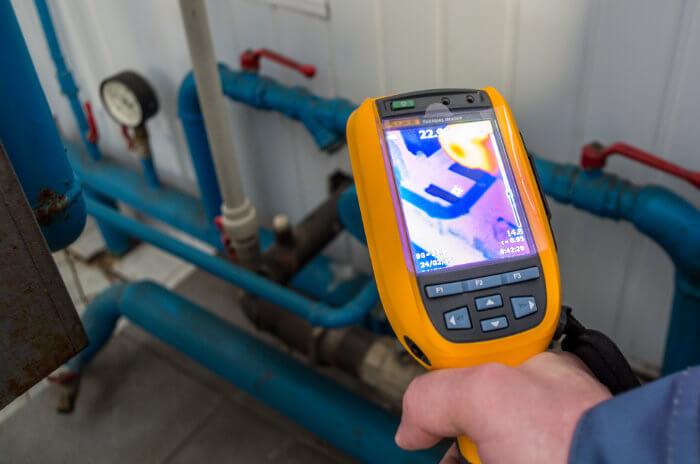
Thermal imaging survey: Thermal cameras used to identify temperature differentials caused by water behind walls, under floors, or within ceiling voids. Used to direct investigation to the most likely area before any opening up is carried out.
Exploratory lifting of floor coverings and floorboards: Where non-invasive methods have identified a probable leak location, the floor covering and boards above the suspect area are lifted to gain access to the pipework. The cost of lifting and temporarily replacing boards is typically covered.
Opening up of walls and ceilings: Where a leak is within a wall or ceiling cavity, the claim may cover the cost of cutting an inspection opening to confirm the leak location before repair.
What Trace and Access Does Not Cover
The trace and access clause has limits that many London homeowners do not discover until they make a claim. The following are commonly excluded.
The cost of repairing the leaking pipe is not covered under trace and access — it falls under the escape of water section of the policy with its own excess and conditions. The cost of reinstating floors, walls, or ceilings to their pre-investigation condition is often excluded or subject to a separate limit. Some policies require that the leak is from a permanent fixed installation and exclude leaks from flexible hoses to appliances. Some policies set a maximum claim limit under trace and access — commonly £5,000 — which may be insufficient for a complex investigation in a large or old London property.
How to Make a Trace and Access Claim in London
Report the suspected leak to your buildings insurer as soon as you discover it. Provide evidence of the leak — photographs of damp patches, a water meter reading taken with all taps off, or a boiler pressure log showing repeated pressure drops. The insurer will either appoint a loss adjuster to manage the claim or authorise you to appoint a specialist directly.
Prestige Engineers produces a detailed written leak location report after every acoustic and thermal imaging survey. The report records the survey date and location, the equipment used, the method of detection, and the confirmed or probable leak position with a dimensioned site plan. This report is the primary document your insurer requires to settle a trace and access claim. A well-produced report that clearly demonstrates where the leak is and how it was found will materially speed up the claims process.
Common Scenarios in London Properties
The most common trace and access scenarios in London are underground supply pipe leaks — typically in Victorian lead or copper supply pipes running under driveways, patios, or garden paths. These are frequently discovered when the water meter reading shows consumption at night with no appliances in use. Underfloor heating circuit leaks in modern London properties with screed-embedded underfloor heating are also a common claim type, as a minor leak in a circuit embedded in screed can be impossible to find without specialist thermal or tracer gas detection. Leaks from concealed hot water pipes in Victorian properties with complex pipe routes through wall cavities and floor voids are a third common type.
In all these cases, Prestige Engineers can carry out the trace and access survey, produce the insurance report, and quote for the repair work independently so that you have a clear picture of the full cost before proceeding. Contact us to arrange a survey across any London borough, typically within 24 to 48 hours of enquiry.