A smell from the kitchen sink drain is one of the most common plumbing complaints in London properties. This guide explains the main causes — from dried-out traps to partial blockages — and what fixes work.
How Kitchen Sink Drains Produce Smell
A smell from the kitchen sink drain in a London property has one of several causes, each requiring a different fix. The most important distinction to make is whether the smell is a sewer gas odour — the distinctive rotten egg smell of hydrogen sulphide from the drain system — or a food decomposition smell coming from partial blockages in the trap or pipework. Both are unpleasant but require different responses.
Sewer gas smell indicates that the water seal in the trap has either dried out, been siphoned away, or is allowing gas to pass — possibly because the trap design is inadequate or damaged. Food smell indicates organic material decomposing in the pipework, usually in the trap chamber or the first section of horizontal waste pipe beyond the trap.
Dried-Out Trap
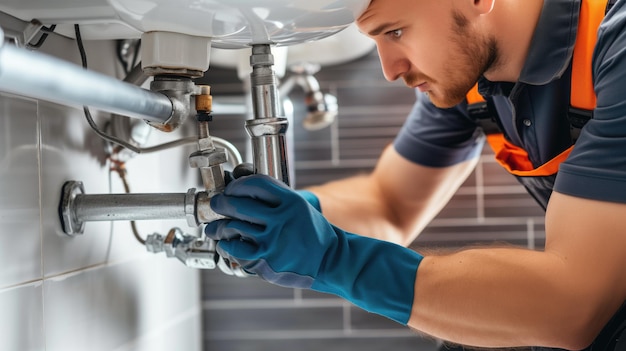
The P-trap or bottle trap beneath a kitchen sink maintains a water seal that blocks sewer gases from rising back into the kitchen through the waste pipe. If a kitchen is not used for an extended period — a common situation in London rental properties between tenancies, or in second homes and Airbnb properties — the water in the trap evaporates. Without the water seal, drain gases pass freely through the waste pipe and into the kitchen. The fix is simply to run cold water into the sink for 30 seconds to refill the trap water seal. If the smell recurs rapidly, the trap may have a fault that is causing the seal to siphon out faster than normal.
Grease and Food Debris in the Trap
The trap chamber collects grease, food particles, and soap residue that pass through the drain. In London kitchens where fats and oils are regularly poured down the drain — a common practice despite advice to the contrary — this accumulation builds up rapidly and begins to decompose, producing a food or rancid smell. The fix is to remove, disassemble, and clean the trap. The trap body unscrews from the waste outlet above and the outlet pipe below. The trap is emptied into a bag, scrubbed clean with a bottle brush and washing-up liquid, rinsed thoroughly, and refitted with fresh sealant if needed. This is a DIY task requiring no tools beyond a pair of rubber gloves.
Biofilm in the Waste Pipe
Beyond the trap, a layer of biofilm — a combination of grease, food particles, and bacteria — builds up on the inside walls of the waste pipe over time. This biofilm ferments and produces sulphur compounds that smell strongly. In London Victorian terrace properties with horizontal waste pipe runs of 1 to 2 metres from the trap to the soil stack, the biofilm accumulates in the lower half of the pipe where it is not continuously flushed by the drainage flow. Regular treatment with a biological drain cleaner that contains live enzyme cultures — rather than a caustic chemical unblocker — digests the biofilm progressively over several weeks.
Inadequate Waste Pipe Fall
Waste pipes from kitchen sinks should fall at a minimum of 1 in 40 (25mm fall per metre of run) to ensure wastewater flows cleanly and does not stagnate. In London kitchen extensions and basement renovations, waste pipes are sometimes installed with insufficient fall — or even running level — which causes wastewater to sit in the pipe rather than draining cleanly. Stagnant wastewater in a waste pipe decomposes rapidly and produces persistent drain smells that do not respond to cleaning or drain treatments. Correcting the pipe fall is the only durable fix, which requires lifting the pipe and re-routing it with adequate gradient. Contact Prestige Engineers for kitchen drain inspection, trap replacement, and waste pipe rerouting across all London boroughs.