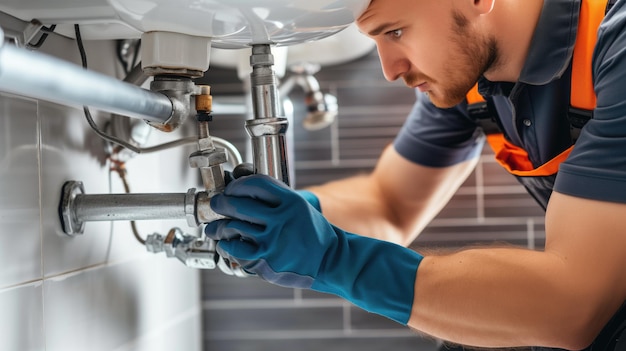
Getting the plumbing right in a London kitchen renovation is critical to the success of the project. Poor planning leads to costly changes mid-build. This guide covers everything a homeowner needs to think through before the first tiles come off the wall.
Why Plumbing Planning Comes First in a Kitchen Renovation
A kitchen renovation in a London home involves multiple trades working in a defined sequence — typically demolition, structural works if required, first fix plumbing, first fix electrical, plastering and flooring, unit installation, second fix plumbing, second fix electrical, and tiling. Plumbing work falls into both the first fix stage (laying new pipes under floors and in walls before they are enclosed) and the second fix stage (connecting appliances and fittings once units are installed). Because first fix plumbing must be completed before walls and floors are closed up, any changes to the plumbing layout after this stage are expensive and disruptive. Getting the plumbing design right before work starts avoids the single most common and costly cause of kitchen renovation delays in London.
The starting point for plumbing planning is to establish the current positions of the supply pipes, waste pipes, and soil stack or drain connection, and to decide whether any of these need to move. Moving the sink to the opposite side of the kitchen, for example, requires running new supply and waste pipes and may require cutting into floors or walls that have already been plastered and tiled. A plumber should be involved in the design stage — ideally before the kitchen company produces its final layout — so that any practical constraints or cost implications of the proposed layout are understood before the design is finalised.
Hot and Cold Water Supply
Most London kitchens are supplied by a single cold water supply pipe that feeds the sink and, where a dishwasher or fridge-freezer is installed, additional branch connections. The hot water supply to the kitchen sink comes either directly from the boiler (in combi boiler systems) or from the hot water cylinder (in system or heat-only boiler installations). In a kitchen renovation, the cold water supply should be assessed for pipe size and condition. In older London properties, the cold water supply may be in older copper or even lead pipework, and a renovation is an ideal time to replace any lead pipework entirely.
If the kitchen layout is changing and the sink is moving, the supply pipes must be rerouted to reach the new sink position. Running new supply pipes through a kitchen floor is significantly easier while the existing floor is being lifted for other works than as a separate operation. Coordinating the plumber with the floor and unit installation programme ensures that pipe runs are completed at the right stage.
Waste and Drainage
The kitchen sink waste connects to the drainage system, typically via a 40mm waste pipe running under the floor or through a wall to an external soil stack, gully, or the main drain. When planning a kitchen renovation, confirm with your plumber where the existing waste connection exits the property and whether the proposed new sink position can be served by the existing waste route or requires a new route to be cut. A waste pipe needs a fall of approximately 18 to 45mm per metre to drain freely; a sink positioned too far from the drainage connection may result in a waste run that is too flat to drain reliably.
Dishwashers and washing machines — if located in the kitchen — require waste connections. These are typically served by a spigot on the sink trap or a separate standpipe connection in the waste run. Planning these connections at the design stage prevents the need to break into completed waste runs after unit installation.
Gas Connections in the Kitchen
If the kitchen includes a gas hob or gas range cooker, the gas supply must be assessed and in many cases upgraded or extended as part of the renovation. Gas work must be carried out by a Gas Safe registered engineer. In older London properties, the gas supply to the kitchen may be in smaller-bore pipework that was originally designed for a single appliance and may not adequately supply a modern high-output range cooker or hob with multiple burners. A Gas Safe engineer should check the gas supply pressure and pipe size before any new cooker or hob is connected to confirm that the existing supply is adequate.
If the kitchen layout is changing and the cooker or hob is moving, a new gas connection must be run to the new position. Gas pipe runs should be installed by a Gas Safe registered engineer and pressure-tested before walls and units are closed up. Prestige Engineers carry out kitchen renovation plumbing and gas work for London homeowners, coordinating with kitchen fitters and other trades to ensure the plumbing and gas stages are completed at the right point in the build programme.