Legionella Water Safety for London Hotels: Compliance Requirements and Control Measures
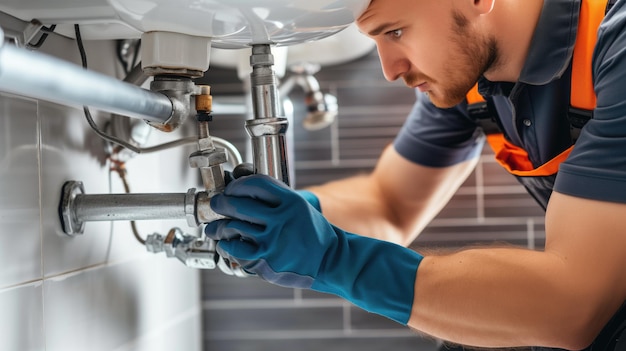
London hotels have significant Legionella risk management obligations due to their complex water systems and high guest turnover. This guide explains the legal requirements, risk assessment process, and control measures.
Why London Hotels Face Significant Legionella Risk
Legionella bacteria are naturally present in water sources and can multiply in water systems where conditions are favourable: water temperatures between 20 and 45 degrees Celsius, the presence of nutrients such as scale, sediment, or biofilm, and stagnation of water in pipework or storage tanks. When water contaminated with high concentrations of Legionella is atomised into fine droplets, such as in a shower, a spa bath, or a cooling tower, those droplets can be inhaled and in susceptible individuals can cause Legionnaires disease, a serious and potentially fatal form of pneumonia. London hotels present a combination of risk factors that makes Legionella management a significant priority.
A large London hotel has an extensive hot and cold water distribution system serving hundreds of guest rooms, multiple restaurants and bars, leisure facilities including pools and spas, and staff facilities. The system may include large hot water storage calorifiers, extensive pipework networks with many low-use branches, thermostatic mixing valves at each shower to prevent scalding, and recirculation loops to maintain hot water temperature throughout the building. Guest rooms that are infrequently occupied create stagnation points in the distribution system. The combination of size, complexity, and variable occupancy makes the London hotel water system one of the more challenging environments for Legionella risk management.
Legal Requirements: The Approved Code of Practice L8
The legal framework for Legionella risk management in London hotels is provided by the Health and Safety at Work etc. Act 1974, the Control of Substances Hazardous to Health Regulations 2002, and the associated Approved Code of Practice and Guidance L8 published by the Health and Safety Executive. The L8 ACOP requires that all employers and persons in control of premises identify and assess the risk of Legionella from their water systems, and that where a risk is identified they implement a written control scheme to manage that risk. For a London hotel, where the risk will almost invariably be identified as significant, this means producing and implementing a comprehensive Legionella risk assessment, a written control scheme, and a programme of monitoring and testing.
The responsible person appointed by the London hotel operator must ensure that the Legionella risk assessment is carried out by a competent person, that the control scheme is implemented and monitored, and that all Legionella-related activities including temperature monitoring, water sampling, and system maintenance are recorded in the written log. The risk assessment should be reviewed whenever there are significant changes to the water system, and in any case at least every two years. A London hotel that has not carried out a formal Legionella risk assessment, or that cannot produce a current risk assessment and control scheme on request from a Health and Safety Executive inspector, is in breach of the L8 ACOP.
Control Measures for Legionella in London Hotel Water Systems
The primary control measures for Legionella in a London hotel water system are temperature control, system design, and monitoring. Hot water should be stored at a minimum of 60 degrees Celsius in the calorifier and should reach 50 degrees Celsius within one minute at all draw-off points. Cold water should be stored and distributed below 20 degrees Celsius. Water temperatures in the distribution system should be monitored and logged monthly at a representative selection of outlets. Any thermostatic mixing valve used to prevent scalding at showers must be set and maintained to minimise the risk of Legionella growth in the mixed water zone, and must be regularly cleaned and descaled.
London hotel water systems should be subjected to microbiological sampling for Legionella on a regular basis, with the frequency determined by the risk assessment. Systems that are assessed as higher risk, for example those serving guest rooms with frequent low-occupancy periods or those with a history of Legionella detection, should be sampled more frequently than lower-risk systems. Where Legionella is detected at significant concentrations in sampling, a disinfection programme must be implemented promptly and the system must be resampled to confirm that the disinfection has been effective before the affected outlets are returned to service. Prestige Engineers carry out Legionella risk assessments for London hotels and can design and implement water treatment and monitoring programmes for complex hotel water systems.
Spa, Pool, and Cooling Tower Legionella Risks in London Hotels
London hotels with spa facilities, swimming pools, or air conditioning cooling towers face additional Legionella risks beyond those of the general domestic hot and cold water system. Spa baths and hot tubs that generate water droplets at temperatures within the Legionella growth range are a particularly high-risk source if the water treatment and disinfection are not managed correctly. The Legionella risk assessment for a London hotel must specifically cover all spa and pool facilities, and the written control scheme must include the disinfection regime, the monitoring programme, and the action levels for corrective intervention when water quality parameters fall outside the acceptable range. Cooling towers, if present, must be registered with the local authority and must be maintained and managed in accordance with the HSE guidance on cooling systems.
Keep reading