London Hard Water and Your Plumbing: Effects, Damage, and Practical Solutions
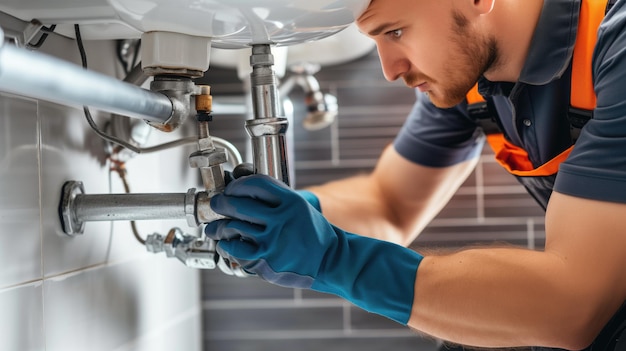
London has some of the hardest tap water in the UK. The high mineral content that makes London water hard causes progressive damage to boilers, pipes, heating systems, and domestic appliances. Understanding the effects and the solutions helps London homeowners protect their plumbing investment.
Why London Water Is So Hard
Water hardness is caused by dissolved calcium and magnesium salts, primarily calcium carbonate and calcium sulphate. London water is drawn from the chalk aquifers of the Thames Valley and the Chilterns, where groundwater percolates through chalk and limestone rock formations and dissolves significant quantities of calcium carbonate before reaching the water supply. The water hardness across most of Greater London is classified as very hard, typically measuring between 250 and 350 milligrams of calcium carbonate per litre. By comparison, water in Manchester and Liverpool typically measures below 50 milligrams per litre, making London water five to seven times harder than in many other UK cities.
This extremely high mineral content is the source of the white scale deposits that accumulate in kettles, showerheads, tap aerators, and on any surface in regular contact with London tap water. The same scale deposits form inside the pipes, heat exchangers, and components of every plumbing and heating system in the capital. The rate of scale accumulation in London is substantially faster than anywhere else in the UK, and the cumulative damage over years and decades is a significant factor in the maintenance costs and replacement cycles of London plumbing systems.
How Hard Water Damages London Boilers
The most economically significant effect of London hard water on domestic plumbing is the damage caused to boiler heat exchangers. When water is heated, calcium carbonate comes out of solution and deposits as a hard, white scale on the internal surfaces of heat exchangers, pipes, and cylinders. The thermal conductivity of limestone scale is approximately forty times lower than that of copper, meaning that a relatively thin layer of scale dramatically reduces the efficiency with which the heat exchanger transfers heat from the burner to the water.
A boiler with significant scale build-up in the heat exchanger must burn more gas to produce the same heating effect, increasing running costs and accelerating wear on the burner and heat exchanger. Scale build-up also creates localised hot spots in the heat exchanger where the heat cannot dissipate efficiently through the scale layer. These hot spots accelerate corrosion and can cause premature heat exchanger failure. A heat exchanger replacement is one of the most expensive boiler repairs, typically costing between four hundred and eight hundred pounds including labour, and is significantly more common in London properties than in areas with softer water.
Effects on Hot Water Cylinders and Pipes
Unvented hot water cylinders and thermal store units are particularly susceptible to scale damage in London. The heating coil inside an indirect cylinder, and the internal surfaces of a direct cylinder, accumulate scale deposits at the same rate as a boiler heat exchanger. A cylinder that has not been descaled or treated accumulates scale that reduces its effective capacity and heating efficiency. In severe cases, scale deposits can block the coil connections or the outlet pipework, causing pressure problems and reduced hot water flow.
Copper pipes carrying hot water develop internal scale deposits over time, progressively reducing the bore of the pipe and increasing flow resistance. In older London properties where original copper pipework has never been replaced, significant bore reduction can occur in the hot water distribution pipes serving bathrooms and kitchens, resulting in noticeably reduced hot water flow rates. Cold water pipes in London are less affected by scale because calcium carbonate is far less soluble at cold temperatures and does not deposit as aggressively.
Protecting Your London Plumbing from Hard Water Damage
The most effective long-term solution is a whole-house water softener, which uses an ion exchange resin to replace calcium and magnesium ions with sodium ions, producing genuinely soft water throughout the property. Softened water does not deposit scale, does not cause the associated damage to boilers and cylinders, and is significantly gentler on skin and hair. A domestic water softener for a London property typically costs between six hundred and fifteen hundred pounds supplied and installed, with ongoing salt and maintenance costs of around one hundred to two hundred pounds per year. The long-term saving in reduced boiler maintenance, reduced appliance replacement, and reduced cleaning product use makes a softener cost-effective for most London properties within three to five years.
Where a water softener is not practical, scale inhibitor devices fitted to the cold water supply entering the property can reduce the rate of scale deposition without fully eliminating it. Prestige Engineers supply and install water softeners and scale inhibitor systems across London, with advice on the most appropriate solution for your property type, water usage, and budget.