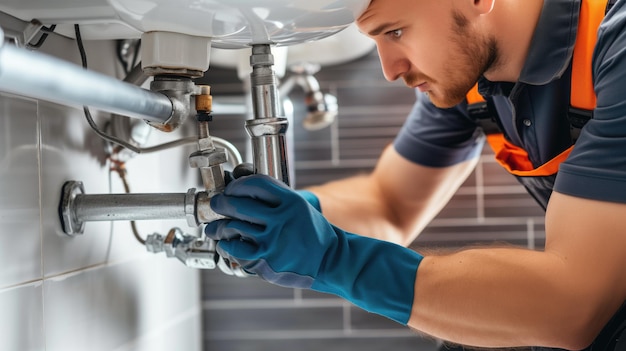
A leaking radiator valve can cause significant water damage if not dealt with quickly. This guide explains how to stop a radiator valve leak immediately, what the common causes are, and when to call a plumber for a permanent repair.
Identifying the Source of the Leak
Before taking any action, confirm exactly where the water is coming from. Radiator valves connect the radiator to the pipework and there are typically two per radiator: a thermostatic radiator valve on the flow pipe and a lockshield valve on the return pipe. Leaks from radiator valves commonly occur at two points: the gland nut just below the valve head where the spindle passes through, and the compression fitting where the valve body connects to the copper pipe. A leak from the gland nut typically produces a small drip from around the valve stem that worsens when the valve is turned. A leak from the compression fitting produces water running down the pipe or pooling at the base of the valve.
Some apparent radiator valve leaks are actually radiator body pinhole leaks, where corrosion has created a small hole in the steel radiator panel. This produces water that drips from the radiator itself rather than from the valve connections. The repair for a pinhole leak is radiator replacement rather than valve repair.
Immediate Steps to Stop or Contain the Leak
If the leak is dripping or flowing faster than a drip, place a towel or container under the valve immediately to protect the floor and any nearby skirting boards. Turn off the central heating at the boiler or programmer to stop the pump circulating water and to allow the system to cool slightly, which reduces the water pressure at the leak point.
To stop the flow at the valve itself, close the lockshield valve on the return side of the radiator if it is the thermostatic valve leaking, or close the thermostatic valve if it is the lockshield that is leaking. Most lockshield valves require a flat-headed screwdriver or lockshield key to close — remove the plastic cap to access the valve head and turn it clockwise until it stops. Closing one valve will prevent most of the flow through that radiator. If the valve body or compression fitting is the source, closing the valve may not fully stop the drip, but it will reduce flow significantly.
If the compression fitting is leaking, you can try gently tightening the compression nut by approximately a quarter turn with an adjustable spanner — but do not overtighten, as this can crack the olive inside and worsen the leak. Wrap PTFE tape around the nut and refit if tightening does not resolve the issue; this is a temporary measure until a plumber can replace the fitting properly.
Temporary Fixes vs Permanent Repair
Tightening the gland nut slightly can sometimes stop a weeping gland seal, though this provides a temporary fix. The correct permanent repair is to replace the gland seal or packing inside the valve. For a compression fitting leak, the olive may have deformed or the pipe may have been cut at a slight angle, causing the joint to weep. The correct repair is to drain the system down to below the level of the radiator, cut the pipe back, refit with a new compression fitting, and refill and repressurise the system.
When to Call a Plumber
Call a plumber if: the leak does not slow when the valve is closed; the valve body or compression fitting is visibly split or corroded; the leak is near electrical sockets or has already caused water to reach a ceiling below; or you are not confident working with the valve yourself. Attempting to dismantle a valve that is under pressure can cause a sudden large release of system water. A plumber can drain down the relevant section of the system, replace the valve or fitting with a new component, refill and repressurise, and check for any related issues such as magnetite contamination in the system that may be contributing to valve corrosion. Prestige Engineers carry out radiator valve replacements and emergency plumbing repairs across all London boroughs.