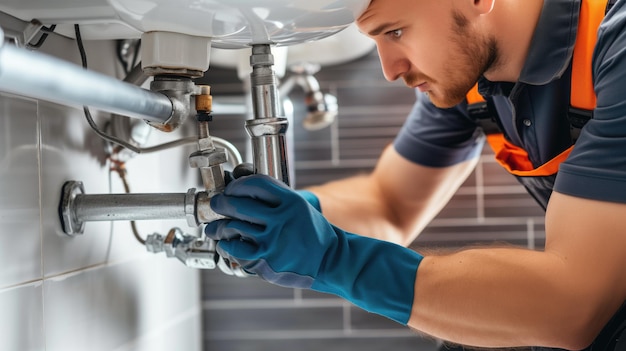
London kitchens face specific plumbing challenges driven by hard water, older waste configurations in Victorian and Edwardian properties, and the cumulative effect of years of cooking fat disposal. Blocked sinks, dripping mixer taps, and leaking under-sink connections are among the most common issues that can often be resolved quickly — but knowing when a problem requires professional attention prevents small faults becoming expensive repairs.
The kitchen sink is the busiest plumbing fixture in most homes — used multiple times daily and exposed to food debris, cooking fat, and in London properties, extremely hard water that leaves limescale deposits on every surface it contacts. The problems below represent the most frequent kitchen plumbing callouts across London, with a practical guide to what you can address yourself and when a plumber is the right call.
Blocked Kitchen Sink
Kitchen sink blockages are predominantly caused by cooking fat and food debris accumulating in the waste trap and the first section of the waste pipe. In London, hard water compounds the problem — fat bonds more firmly to limescale deposits inside the pipework, creating blockages that are more resistant to standard drain unblockers than they would be in soft-water areas.
Self-fix approach:
- Boiling water poured directly down the drain will dissolve fresh fat deposits in many cases. Do not use boiling water if the drain is completely blocked, as it can back up and cause burns.
- A drain unblocker gel (caustic soda-based or enzyme-based) left for 30 minutes will dissolve organic matter in most partial blockages.
- Removing and cleaning the P-trap under the sink is the most reliable manual method — place a bucket underneath, unscrew the trap fittings by hand (no tools required on most modern plastic traps), remove and clean the trap, and refit. This resolves the majority of kitchen sink blockages within five minutes.
- A kitchen plunger — a flat-cupped plunger rather than the ball-type toilet plunger — can dislodge blockages further along the waste run.
When to call a plumber: If clearing the trap does not resolve the problem and the blockage is clearly further along the waste run, or if you share a drainage stack with other flats and other outlets are also draining slowly, professional drain jetting will clear the pipe far more effectively than chemical treatments.
Dripping Kitchen Mixer Tap
A dripping tap is not a trivial annoyance — a tap dripping once per second wastes around 10,000 litres of water per year, and at metered rates in London, this adds approximately £12–£15 to an annual water bill. More significantly, water dripping onto ceramic or steel sinks over months creates persistent staining from London's mineral-rich water that can be difficult to remove.
Modern single-lever kitchen mixer taps use a ceramic cartridge that can seize, crack or wear due to limescale, causing a continuous drip from the spout or from the base of the spout when the tap is turned off. Replacing the cartridge resolves the issue permanently:
- Isolate the hot and cold supplies using the isolation valves under the sink (flat-head screwdriver, turn 90 degrees to close)
- Remove the tap handle — typically a grub screw behind the handle cap
- Extract the cartridge — usually a quarter-turn mechanism held by a retaining nut
- Take the old cartridge to a plumbing merchant or photograph the brand name to match the replacement
This is a manageable DIY repair for a methodical person. If the isolation valves themselves are corroded or will not operate, call a plumber — forcing a stiff isolation valve can cause it to fail completely, leaving you with no water supply until a more extensive repair is carried out.
Leaking Under-Sink Connections
Leaks from the waste pipe connections under a kitchen sink are common and often go unnoticed until water damage to the cabinet interior becomes apparent. The usual causes are:
- Loose or dried-out compression fittings on the trap or waste pipe — hand-tightening (plus a quarter turn with pliers) and, if needed, replacing the rubber or fibre washer inside the fitting will usually seal these.
- Cracked or perished plastic trap — standard kitchen traps are inexpensive and can be replaced without tools in most cases.
- Leaking hot or cold supply pipe connections at the tap tails — these involve the pressurised supply rather than the waste, so water will run continuously when the leak is present. Isolate and call a plumber if tightening the compression fitting does not resolve it.
Limescale on Kitchen Taps and Sink
White or grey deposits on tap surfaces, around the base of the tap and on the sink surface are calcium carbonate from London's hard water. Regular descaling with white vinegar or a proprietary limescale remover prevents cosmetic damage and, more importantly, prevents scale from penetrating into the tap cartridge or spray head and causing premature failure.
A soaked cloth wrapped around a scaled tap and left for two hours is more effective than spray-and-wipe for heavy deposits. For aerators on tap spouts — the mesh screen in the end of the spout — remove and soak overnight in vinegar, as partial scaling of the aerator can create an uneven or reduced flow that is often mistaken for a pressure problem.
Low Hot Water Pressure at the Kitchen Tap
In properties with a combi boiler, both hot and cold water are delivered at mains pressure, so consistently low hot water pressure usually indicates either a scaled or faulty diverter valve within the boiler (which controls whether hot water goes to the taps or the heating circuit), or a scaled or failing hot water cartridge within the tap itself.
In properties with a vented hot water cylinder, low hot water pressure at the kitchen tap is common and results from the height difference between the cistern in the loft and the ground floor — particularly in properties where the loft conversion has reduced the effective head of water. A plumber can diagnose whether the issue is systemic or specific to the tap.
Waste Disposal Unit Problems
Waste disposal units fitted under kitchen sinks — more common in higher-specification London rentals and conversions — have a separate set of failure modes:
- Jammed unit (humming motor, not spinning): Most units have a manual reset button on the underside and a hex key socket for manual rotation to free a jam. Use the hex key first to free the grind plate, then press the reset button before switching back on.
- Leaking from the unit body: Indicates a failed internal seal — units are rarely economical to repair and should be replaced by a plumber who can also disconnect the waste run correctly.
- Blocked waste run downstream of the unit: Disposal units do not eliminate the risk of blocked drain runs — in fact, they increase it if non-food items or fibrous vegetables are processed. A plumber with drain jetting equipment is needed for cleared runs beyond the trap.
Frequently asked questions
Can I pour boiling water down a London kitchen sink to clear a grease blockage?
Yes, for partial blockages caused by fresh cooking fat, boiling water poured directly down the drain is often effective. Do not do this if the drain is fully blocked and water is standing in the sink, as the boiling water will back up and could cause burns. For a fully blocked drain, remove and clean the P-trap first.
Why does my London kitchen tap drip even when it is fully turned off?
The most common cause in modern single-lever mixer taps is a worn or limescale-damaged ceramic cartridge. London's hard water accelerates cartridge degradation. Replacing the cartridge — available from plumbing merchants for £10 to £30 depending on the tap brand — will permanently resolve the drip and is a manageable DIY repair if the isolation valves under the sink are operational.
What should I do if the under-sink area in my kitchen has evidence of a slow leak?
Identify whether the leak is from the waste pipe connections (drainage side, only leaks when the sink is used) or from the supply pipe connections (pressurised side, leaks continuously). Waste leaks are often resolved by tightening connections or replacing a trap washer. Supply leaks require isolating the water and replacing the fitting — if the isolation valves are corroded or do not operate, call a plumber.
Is it normal to have lower hot water pressure than cold in a London kitchen?
In properties with a combi boiler, hot and cold should be delivered at similar mains pressure. A significant difference suggests a faulty diverter valve inside the boiler or a failing hot water cartridge in the tap. In properties with a vented gravity-fed hot water cylinder, lower hot water pressure is normal — the pressure depends on the height of the cold water storage tank above the tap, which is often limited in London conversions.