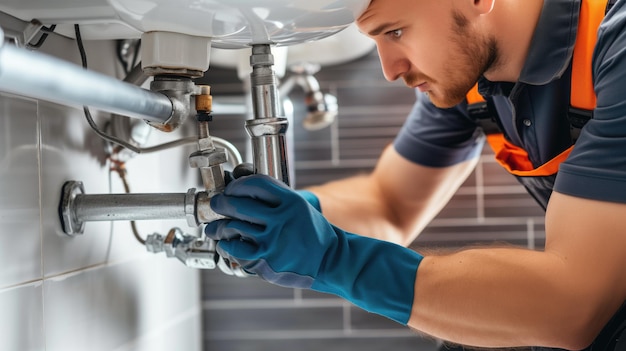
Gas work is safety-critical and legally regulated. Choosing the wrong gas engineer — or one who is not properly registered — exposes you to risks ranging from substandard work to dangerous gas installations. This guide covers how to verify credentials, what good practice looks like, and the red flags that should make you look elsewhere.
Gas Safe Register: The Non-Negotiable Starting Point
Every individual who works on gas appliances or gas installations in the UK must be registered with the Gas Safe Register. This is a legal requirement under the Gas Safety (Installation and Use) Regulations 1998 — not a voluntary accreditation. An unregistered individual carrying out gas work is breaking the law, and any work they complete is technically unlawful and almost certainly uninsured.
You can verify any gas engineer's registration at gassaferegister.co.uk using either the engineer's name or their Gas Safe Register ID number. The search confirms whether the engineer is registered and — crucially — what type of gas work they are registered to do. Gas Safe registration covers specific categories of work: natural gas, LPG, domestic boilers, commercial catering equipment, and others. An engineer registered for natural gas domestic appliances is not automatically qualified to work on LPG or commercial equipment.
Every registered gas engineer carries a Gas Safe ID card that shows their registration details and the categories they are qualified for on the reverse. Before allowing any gas engineer to start work on your property, ask to see their ID card. A legitimate engineer will produce it without hesitation — it is standard practice. An engineer who is reluctant or unable to show their ID card is a red flag requiring immediate investigation before work proceeds.
The Difference Between Gas Safe and CORGI
CORGI (Council for Registered Gas Installers) was the gas safety registration body in the UK until April 2009, when it was replaced by the Gas Safe Register. Any reference to CORGI registration as a current credential — a website mentioning CORGI-registered, a verbal claim of being CORGI-certified — indicates either a significantly out-of-date profile or deliberate misrepresentation. CORGI registration has not been a valid gas safety credential since April 2009: more than fifteen years ago. A legitimate gas engineer in 2025 is Gas Safe registered, not CORGI registered.
Checking Reviews: What to Look For
Online reviews are valuable but require careful reading. The most useful platforms for London gas engineers are:
- Checkatrade: Verified reviews — Checkatrade confirms that the reviewer is a genuine customer. Useful for pattern identification — a contractor with fifty consistent reviews over three years is more reliable than one with ten recent reviews.
- Google Business reviews: High-volume and difficult to fake en masse. Look at the distribution of ratings — a business with 200 five-star reviews and no other ratings is less credible than one with 180 five-star, 15 four-star, and 5 three-star reviews. The response to negative reviews is particularly informative — a professional contractor addresses complaints directly and constructively; a disreputable one responds defensively or dismissively.
- MyBuilder and Rated People: Contractor platforms where reviews are posted after verified job completion. Useful for one-off job assessment.
What to look for in reviews: responses that describe specific work done, confirm the engineer showed Gas Safe ID proactively, note that the engineer explained what they were doing, and mention receipt of a written record of the work. Generic "great service, highly recommend" reviews are less informative than detailed job-specific accounts.
Getting Multiple Quotes
For planned gas work — a new boiler installation, a gas cooker installation, or an upgrade to your heating system — obtaining two or three quotes from different Gas Safe registered engineers is good practice. Multiple quotes allow you to:
- Compare the scope of work each engineer is proposing (are they all proposing the same boiler model? The same flue route?)
- Identify anomalies — a quote significantly below the others may indicate corners being cut, a less capable engineer, or an unregistered operator
- Negotiate, if you have a preferred contractor whose quote is slightly higher than alternatives
For emergency gas work — no heating in winter, a suspected gas smell — getting multiple quotes is impractical. Focus on verifying Gas Safe registration and reading a reasonable volume of recent reviews rather than price comparison.
Red Flags: When to Walk Away
These are the indicators that should prompt you to stop, verify more carefully, or choose a different contractor:
- No Gas Safe ID card when asked: There is no legitimate reason for a genuine Gas Safe registered engineer to be without their card on a job. This is the single most important red flag.
- Cash-only payment required: A legitimate gas engineer with a proper business can accept bank transfer or card payment and will provide an invoice. Cash-only work creates no paper trail, makes warranty claims impossible, and is common among unregistered operatives.
- No written quote before work starts: For anything beyond a basic boiler service, a verbal quote is inadequate. A professional contractor provides a written scope of work with a fixed or estimated price before starting. Starting work without a written agreement exposes you to price escalation disputes.
- Pressure to start immediately without inspection: An engineer who arrives, barely looks at the appliance, and immediately begins quoting expensive parts without adequate diagnosis is either incompetent or seeking to sell unnecessary work. A competent engineer diagnoses before quoting.
- No mention of Gas Safe notification: For installation work (new boiler, new gas appliance installation, alterations to gas pipework), the engineer must notify the Gas Safe Register within 48 hours of completing the work. If an engineer does not mention this, ask whether they will be notifying Gas Safe. The answer tells you a great deal about their professional practice.
What Good Practice Looks Like
A professional, legitimate gas engineer in London will routinely:
- Show their Gas Safe ID card proactively on arrival, without being asked
- Confirm in writing what work is to be done and what it will cost before starting
- For boiler installations: conduct a system assessment before recommending a specific boiler model and output
- Notify the Gas Safe Register after any installation or alteration work and provide the customer with a copy of the notification reference
- Issue a Gas Safety Certificate (CP12) after a gas safety check or boiler service, with their Gas Safe Register number on it
- Recommend — or install — a magnetic filter on the heating return when fitting a new boiler
- Advise on inhibitor top-up during a boiler service
Why Cheaper Is Not Always Better for Gas Work
Gas work is not a commodity service where the cheapest option is equivalent to any other. The consequences of substandard gas work range from appliances that are simply inefficient, to carbon monoxide leaks, to gas fires. In London's competitive market, there are always cheap operators — some are genuinely efficient; others cut corners that are not immediately visible.
The correct approach to price is: verify credentials first, read reviews second, then compare prices among contractors who pass the first two tests. Choosing on price alone among unverified contractors is the wrong approach for gas work specifically. An extra £100 to use a Gas Safe engineer with a proven track record is not worth reconsidering.
Frequently asked questions
How do I check if a gas engineer is Gas Safe registered in London?
Search the Gas Safe Register at gassaferegister.co.uk using the engineer's name or their Gas Safe ID number. The search confirms whether they are registered and what categories of gas work they are qualified for. Before work starts, ask to see their physical Gas Safe ID card — the reverse lists their qualifications. A legitimate engineer will show it without hesitation. Any reluctance to provide the card is a serious warning sign.
Is CORGI registration still valid for gas engineers in London?
No — CORGI was replaced by the Gas Safe Register in April 2009. CORGI registration has not been a valid gas safety credential for over fifteen years. Any contractor claiming current CORGI registration is either presenting outdated information or misrepresenting their credentials. All gas work in the UK must be carried out by Gas Safe registered engineers. Do not allow any work to proceed on the basis of a claimed CORGI credential.
What should a gas engineer provide after completing installation work?
After any gas appliance installation or alteration, a Gas Safe registered engineer must notify the Gas Safe Register within 48 hours. You should receive: a written invoice, a Gas Safety Certificate (for boiler services or gas safety checks), and confirmation of the Gas Safe notification reference number. For boiler installations, the commissioning sheet (showing gas pressure readings and flue analysis) should also be provided. Without these documents, the work cannot be verified as compliant and any manufacturer warranty may be affected.
Is it safe to use a cheaper gas engineer in London to save money?
Price comparison among Gas Safe registered engineers with verified reviews is sensible. Choosing an unregistered or unchecked operator primarily on price is not — gas work is safety-critical and the consequences of substandard work include carbon monoxide risk and potential gas fires. Verify registration and read reviews before comparing prices. Among qualified, reviewed engineers, a competitive market in London means quotes should be reasonably consistent — a quote significantly below others warrants investigation of what is being excluded or cut.