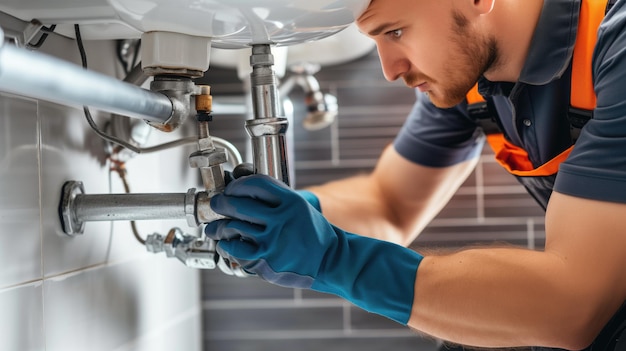
With thousands of plumbers operating across London, finding a reliable and qualified one takes more than a Google search. Here is what to check before you book.
The London Plumbing Market
London has a large and fragmented plumbing market with tens of thousands of registered sole traders, small firms, and larger maintenance companies. The range in quality, pricing, and reliability is enormous. At one end of the spectrum are experienced Gas Safe registered plumbers with decades of London work, genuine independent reviews, and transparent pricing. At the other end are unqualified or lapsed-qualification tradespeople who price aggressively, carry out substandard work, and disappear before callbacks. Navigating this market effectively requires knowing what to check, what to ask, and what to be wary of. The steps below are ordered from most important to least.
Step 1: Verify Gas Safe Registration for Any Gas Work
If your job involves a boiler, gas fire, gas cooker connection, or any other gas appliance, the plumber must be Gas Safe registered. This is not optional — using an unregistered person for gas work is a criminal offence. Ask for the engineer Gas Safe registration number and verify it at GasSafeRegister.co.uk before the work starts. The search will show the engineer name, employer, registration expiry date, and the specific gas categories they are registered for. Confirm that the categories listed match the work you need done — an engineer registered only for domestic natural gas should not be working on LPG appliances. Do not accept verbal reassurance that they are Gas Safe without verifying the card; a surprising number of people misrepresent their qualifications.
Step 2: Check Independent Reviews on Checkatrade or MyBuilder
Independent review platforms provide the most reliable signal of a plumber quality and reliability in London. Checkatrade vets tradespeople before listing them — they verify identity, qualifications, and insurance — and publishes customer reviews that the tradesperson cannot delete or edit. MyBuilder operates a similar verified review system. When evaluating a plumber on either platform, look for: a review count of at least 20 to 30 (low review counts provide insufficient signal); a consistent rating above 9 out of 10 on Checkatrade or an equivalent on MyBuilder; recent reviews (within the last 12 months) that describe the specific type of work you need; and the manner in which the tradesperson responds to any negative reviews. A plumber with 50+ reviews averaging 9.5 or above on Checkatrade has demonstrated sustained performance across a large number of real jobs — this is a meaningful quality signal. Be more cautious with newly listed traders or those whose reviews are all from the same period (which can indicate review gaming).
Step 3: Ask for Public Liability Insurance
Any plumber working in your home should carry public liability insurance with a minimum of £1 million cover, and ideally £2 million or more. This protects you if the plumber causes damage to your property — a water leak that floods the floor below, for example. Ask to see evidence of the insurance certificate before work begins. A sole trader without public liability insurance is not worth the risk; if they cause significant damage, you have no recourse beyond a personal claim that is difficult and expensive to enforce. Most reputable plumbers and all Checkatrade-listed tradespeople are required to carry public liability insurance.
Step 4: Get a Written Quote, Not a Rough Estimate
A verbal estimate or a rough number given over the phone is not a quote. A proper quote specifies: the exact work to be carried out, the parts to be used (by name or specification, not just "a new tap"), the labour rate, the estimated duration, the call-out fee if applicable, and a total or maximum price. For small repairs this level of detail may be impractical before the plumber has seen the job, but you should at minimum agree the hourly rate and call-out fee in writing (email is fine) before attendance. For any job estimated to cost more than £200, a written quote on the plumber letterhead or via email protects both parties. Never pay the full amount upfront for any job — a 25 to 50 percent deposit for materials on larger jobs is reasonable; full payment before work starts is a red flag.
Step 5: Check for Trade Association Membership
Membership of the Association of Plumbing and Heating Contractors (APHC) or the Chartered Institute of Plumbing and Heating Engineering (CIPHE) requires meeting standards of competence, insurance, and conduct. These memberships are voluntary and their absence is not disqualifying, but their presence is an additional quality signal. For specialised work such as unvented cylinder installation, G3 competence registration through APHC or CIPHE is specifically required for self-certification of the building work.
Red Flags to Avoid
Unsolicited door-knock from a plumber claiming to have noticed a problem with your external pipework: almost always a scam or unnecessary upsell. Cash-only pricing with no receipt: no paper trail, no insurance claim possible, no VAT compliance. Unusually low quotes (more than 30 percent below the market rate for the job): often a sign of underqualified labour, inferior parts, or a business model that relies on add-ons once the job has started. Requests for full payment before work starts: standard practice for legitimate tradespeople is payment on completion for small jobs. Pressure to decide immediately or lose the slot: genuine tradespeople do not use sales pressure tactics.