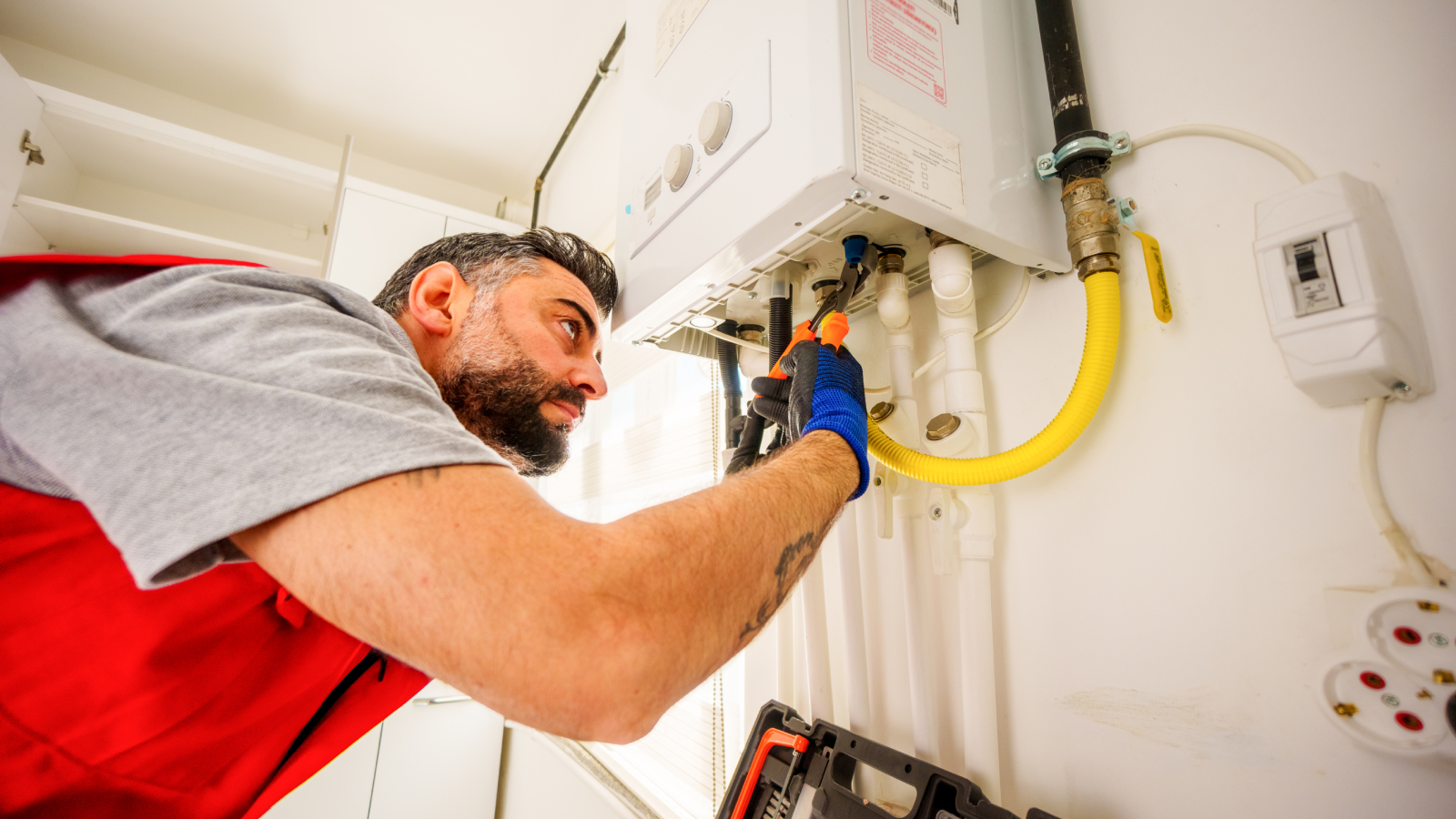
London renters and landlords face some of the highest heating costs in England, driven by older housing stock, hard water that reduces boiler efficiency, and a dense urban environment that creates unpredictable draughts. The fastest improvements are rarely the most expensive — bleeding radiators, adjusting boiler flow temperature and sealing draughts can together cut a heating bill by 15 to 20 percent before any major capital investment.
Heating accounts for around 55% of energy spend in a typical UK home, and in London that figure is often higher due to ageing Victorian and Edwardian housing stock with solid walls, suspended timber floors and minimal original insulation. Whether you are a tenant looking to reduce your bills without making permanent changes, or a landlord trying to improve your EPC score and property value, the options below are ordered by cost-effectiveness — quick wins first.
Bleed the Radiators
Air trapped in a central heating system collects at the highest points in the circuit — usually the top of upstairs radiators. When air is present, the radiator has a cool section at the top while the lower portion is warm, meaning the boiler is working harder than necessary to heat the room. Bleeding radiators — opening the bleed valve with a radiator key until water runs out — removes trapped air and restores full heat output.
This is a two-minute task per radiator, requires no specialist tools, and is universally within a tenant's rights to carry out without landlord permission. After bleeding multiple radiators, re-check the boiler pressure (visible on the pressure gauge on the front panel) and top up via the filling loop if it has fallen below 1.0 bar.
Lower the Boiler Flow Temperature
This is the single most impactful adjustment available on a modern condensing combi boiler and costs nothing to implement. Most combi boilers are installed with the flow temperature set to 70–80°C — a legacy setting from the era of non-condensing boilers. Modern condensing boilers achieve their highest efficiency (over 90%) only when the return water temperature drops below 55°C, triggering condensing mode.
Reducing the flow temperature to 55–60°C on the boiler's dial (the radiator symbol, not the hot water tap symbol) causes the boiler to condense for longer periods, meaningfully reducing gas consumption. The trade-off is that radiators reach the same room temperature more slowly, but in a well-controlled system this has no practical impact on comfort — only on the time taken to warm a room from cold.
This setting is accessible directly on the boiler and can be adjusted by the tenant in a few seconds. Research by the Heating and Hotwater Industry Council suggests this single change can reduce gas consumption by 6–8% in a typical home.
Fit a Smart or Programmable Thermostat
If the property still uses a basic on/off timer, upgrading to a programmable or smart thermostat — devices such as Nest, Hive or Tado — gives precise control over when and to what temperature each zone heats. The average UK household that switches from a basic thermostat to a smart thermostat reduces heating energy use by around 8–12%, according to various independent trials.
For landlords, smart thermostat installation is a relatively low-cost improvement (typically £150–£250 installed) that demonstrably improves EPC scores by improving heating controls and can contribute to MEES compliance. For tenants, many models can be installed without drilling — adhesive backplates are available — making them portable at the end of a tenancy.
Draught-Proof Doors and Windows
Victorian and Edwardian sash windows are common across London and are notorious for draughts — a gap of just 3mm around a sash window is equivalent to a 50mm diameter hole in the wall. Self-adhesive foam or brush draught excluders are available for under £10 per window and take under ten minutes to fit. They are entirely reversible and cause no damage.
Letterboxes and keyholes on external doors are also significant draught sources. Foam-backed letterbox covers and keyhole plates are similarly inexpensive. Under-door draught excluders — either hinged draught stoppers or removable sausage-style excluders — can meaningfully reduce infiltration on cold nights.
Draught-proofing does not require landlord permission in a standard tenancy and has no downside — unlike some insulation measures, it does not risk interstitial condensation.
Balance the Radiator System
An unbalanced heating system — where some radiators get hot quickly while others remain lukewarm — is common in London properties where original pipework has never been adjusted. Balancing involves partially closing the lockshield valve (the non-adjustable end cap) on radiators closest to the boiler, so heat is distributed more evenly around the system. Hot rooms stop being heated unnecessarily while cold rooms receive adequate flow.
Balancing requires a basic understanding of the system layout and a thermometer to check flow and return temperatures, but it is a DIY-accessible task. Alternatively, a plumber can balance a typical system in under two hours. An unbalanced system causes the boiler to cycle on and off more frequently, increasing both wear and fuel consumption.
Insulate the Hot Water Cylinder
Properties with a vented hot water cylinder — common in Victorian conversions that have not switched to a combi boiler — lose a significant amount of heat through an uninsulated or poorly insulated cylinder. A 25mm factory-fitted jacket is the minimum; a proprietary cylinder jacket at 80mm thickness reduces heat loss by around 75% compared to an uninsulated cylinder. At current gas prices, this typically saves £20–£40 annually at a one-off cost of under £20 for the jacket.
For Landlords: Magnetic System Filter
Sludge accumulation in the heating system — the black magnetite that builds up from corrosion of steel radiators — reduces circulation and heat output, forcing the boiler to work harder. A magnetic system filter installed in the return pipe captures this debris before it reaches the heat exchanger. Combined with a system flush and the addition of inhibitor chemical, this can restore heat output and reduce boiler cycling. Filters cost £50–£120 for parts and are typically installed in under an hour by a plumber.
This is not a tenant fix — it requires access to the boiler pipework and is a landlord maintenance item. For properties with older systems showing signs of sludge (discoloured water when radiators are drained, cold spots at the bottom of radiators), this is worth prioritising before the next heating season.
Frequently asked questions
Can a tenant in a London rental bleed radiators without asking the landlord?
Yes. Bleeding radiators is a straightforward maintenance task that tenants can carry out themselves. It does not involve any permanent modification to the property. After bleeding, check the boiler pressure gauge and refill via the filling loop if it has dropped below 1.0 bar.
What boiler flow temperature setting is most efficient for a London flat?
For a modern condensing combi boiler, a flow temperature of 55 to 60 degrees Celsius is the optimal balance between efficiency and comfort in most London flats. At this setting, the boiler operates in condensing mode for longer periods, increasing efficiency to over 90%. The radiator symbol dial on the boiler controls this setting.
How much can draught-proofing Victorian sash windows save on heating bills?
The Energy Saving Trust estimates that draught-proofing windows and doors in a Victorian terraced property can save between £25 and £50 annually at current energy prices. In properties with multiple original sash windows in poor condition, the saving can be higher. The payback period on self-adhesive draught strips is typically under one month.
Is a smart thermostat worth installing in a rented London property?
Yes, both for tenants and landlords. Tenants typically see 8 to 12 percent reductions in heating energy use from improved scheduling and temperature precision. Landlords benefit from improved EPC scores and reduced tenant complaints about heating costs. Models with adhesive installation are available for tenants who wish to take the device when they move out.