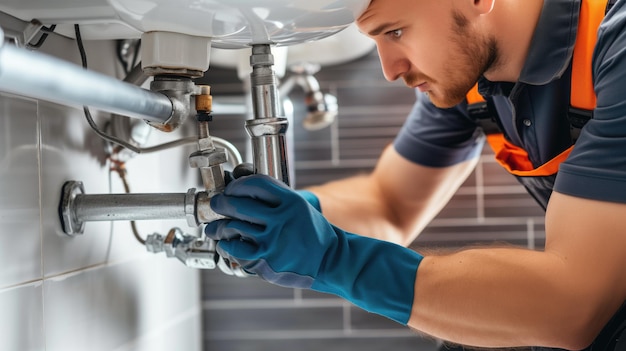
Installing a gas hob in a London kitchen requires a Gas Safe registered engineer, correctly sized pipework, and a worktop cut-out matched to the manufacturer dimensions. This guide covers everything from types of hob to what the engineer does on the day.
Gas Hob versus Gas Cooker
A gas hob is the cooktop element only — it has no oven. It sits in a cut-out in the kitchen worktop with its underside below the worktop surface. An electric oven is commonly paired with a gas hob to create what the trade calls a dual fuel kitchen. The hob connects to the gas supply beneath the counter via copper pipework running from the nearest gas manifold or gas cock. A gas cooker, by contrast, is a freestanding unit that combines both hob and oven, connects to a wall-mounted bayonet point via a flexible hose, and can be moved out from its position. The installation requirements for the two types are different — a built-in gas hob requires a permanent hard pipe connection, while a freestanding gas cooker uses a flexible approved connector.
Types of Gas Hob Available in London
The built-in gas hob is the most common type installed in London kitchen renovations. It drops into a cut-out in the worktop and sits flush, with the underside below the worktop surface. Manufacturers specify the exact cut-out dimensions for each model — these must be followed to within approximately one millimetre to ensure the hob seats correctly on its rebate and the sealing flanges make proper contact with the worktop surface. The exposed cut edge of the worktop is sealed with silicone to prevent water ingress into the substrate.
The freestanding gas range combines gas hob and oven in a single unit, typically 60cm or 90cm wide. It connects to the gas supply via a wall-mounted bayonet point using an approved flexible connector to BS 669 Part 1. The flexible connector must not exceed 1.5 metres in length and must not run through walls or enclosed spaces. A wok burner is a high-BTU single burner designed for stir-fry cooking — it installs as a standalone worktop cut-out unit or as part of a domino hob combination. A domino hob is a 30cm module that pairs with another domino unit to create a 60cm hob with mixed cooking technologies — for example gas plus induction.
Gas Supply Requirements
A built-in gas hob connects to the gas supply via 15mm or 22mm copper pipework from the gas manifold or a gas cock (service valve) installed at or near the hob position. The gas cock must remain accessible when the hob is installed in the worktop — typically it is positioned inside the kitchen cabinet immediately below the hob. A rigid copper pipe connection is used where the hob is fixed in place. Where some movement is required for removal or servicing, an approved flexible gas connector to BS 669 Part 1 may be used between the rigid pipework and the hob connection point. The maximum length of any flexible gas connector is 1.5 metres. Flexible gas hoses must not run through walls, enclosed spaces, or behind permanent panels — they must remain visible and accessible.
If the existing kitchen has no gas supply at the hob position — as is common in kitchen island installations or where a gas hob is replacing an induction hob — new copper pipework must be run from the nearest gas manifold or service tee. The routing of new pipework depends on the kitchen layout and may involve running pipe under the floor, inside base unit plinths, or through a kitchen island structure. This additional work adds cost and time to the installation but is standard work for a Gas Safe registered engineer.
Ventilation and Building Regulations
Building Regulations Part J requires adequate ventilation for gas appliances. The purpose of ventilation is to provide sufficient air for combustion and to prevent the build-up of combustion products in the kitchen. A kitchen with an extractor hood positioned above the hob — the standard arrangement in most London kitchens — is normally sufficient for ventilation compliance. The engineer checks that the extractor system does not create excessive negative pressure in the room, which could affect combustion on the hob burners.
If a gas hob is being installed in a room that has no existing mechanical or natural ventilation, an additional permanent air vent may be required to meet Part J requirements. The engineer assesses this at the time of installation. Where an air vent is required, it must be sized according to the total heat input of the gas appliance and positioned to avoid draughts directly onto the hob burners.
The Gas Safe Registration Requirement
Every connection of a gas hob to the mains gas supply must be made by a Gas Safe registered engineer. This requirement is not advisory — it is a legal obligation under the Gas Safety (Installation and Use) Regulations 1998. Connecting a gas appliance without Gas Safe registration is a criminal offence, not merely a safety risk. Even a competent and experienced DIYer cannot legally make this connection. The Gas Safe register can be checked at GasSafeRegister.co.uk — every registered engineer has a unique licence card with their registration number, name, and the appliance categories they are qualified to work on.
On completion of the installation, the Gas Safe registered engineer carries out a gas tightness test. This involves pressurising the installation with gas and observing the pressure gauge for a set period — typically two minutes — to confirm there is no pressure drop that would indicate a gas escape. If the tightness test passes, the engineer records the installation on the Gas Safe register, issues commissioning paperwork, and confirms the hob is safe to use. If existing pipework is found to be unsafe, the engineer issues a warning notice — either At Risk or Immediately Dangerous — and the unsafe element must be repaired before the hob is commissioned.
Pricing for Gas Hob Installation in London
Gas hob installation in London where the customer supplies the hob starts from approximately £150 for a straightforward built-in hob with existing pipework at the hob position. If new copper pipework needs to be run from the gas manifold to the hob position, the cost increases to £200 to £350 depending on the routing required. Supply and fit of a built-in gas hob starts from approximately £350 including the hob. A new gas connection to a kitchen island — where no gas supply currently exists — starts from £250 in addition to the hob installation cost. All installations include a full gas tightness test and Gas Safe certificate.