A full electrical rewire is one of the most significant property investments a London homeowner or landlord can make. This guide covers all the costs involved.
Full Rewire Costs in London: The Numbers
A full electrical rewire in London is priced by the size and complexity of the property rather than by a simple per-room rate, because the number of circuits, the condition of the existing wiring, and the extent of plastering required all affect the total cost significantly. As a guide for 2025 market rates in London: a two-bedroom flat typically costs £3,000 to £5,000 for a full rewire; a three-bedroom house costs £4,500 to £8,000; a four-bedroom house costs £6,000 to £12,000; and a five-bedroom or larger property, or a large Victorian terraced house with high ceilings and complex original fabric, can cost £10,000 to £18,000 or more. These price ranges assume a property that is either vacated or largely vacated during the work, NICEIC or NAPIT registered electricians, and a standard consumer unit specification. They do not include the cost of re-decoration following the work.
What Drives the Price of a Rewire?
The primary driver of rewire cost is the number of circuits and the number of outlets being installed. A basic rewire to replace deteriorated wiring with the same number of circuits and the same socket positions is faster and less expensive than a rewire that significantly increases the number of socket outlets, adds USB charging sockets, installs data cabling, or reconfigures the circuit layout. Most London homeowners take the opportunity of a full rewire to upgrade the number of double sockets in every room — typically from two to four per room — which adds material and labour cost but is significantly cheaper to do as part of a rewire than as a standalone job later.
The property age and condition also drive price. In London Victorian and Edwardian properties with original lathe-and-plaster walls and tight floor voids, running new cable is significantly more labour-intensive than in a modern property with plasterboard walls and accessible floor spaces. Where the existing wiring is rubber-insulated or uses cloth-insulated conductors, it cannot be left in place or reused, increasing the scope of removal. Properties with any history of DIY electrical work — which are common in the London housing stock — may require additional investigation and correction of non-compliant previous work.
When Is a Full Rewire Needed?
An EICR is the usual trigger for a rewire decision. An EICR that identifies multiple C2 observations on the condition of the wiring insulation, widespread absence of RCD protection across socket circuits, an unsafe consumer unit (metal-clad older boards without modern RCD or RCBO protection), or evidence of rubber or cloth insulated wiring throughout the property is a clear signal that a partial or full rewire is required. Properties built before 1970 that have not been rewired since the original installation almost always require a full rewire, because the rubber-insulated wiring used in that era has a service life of approximately 25 to 35 years and will now be well beyond its safe operational life. Buying a London property built before 1970 without a current EICR is a significant financial risk — an undisclosed rewire requirement can add £5,000 to £15,000 to the cost of ownership.
Part Rewire vs Full Rewire
Where the EICR identifies specific circuits that are unsafe but the majority of the installation is in acceptable condition, a part rewire may be appropriate. A part rewire addresses specific circuits or areas — for example, rewiring the upstairs lighting circuit that uses deteriorated rubber insulation, or replacing the kitchen ring main to add adequate RCD protection. Part rewires typically cost £800 to £2,500 depending on scope, and carry the same Building Regulations notification and testing requirements as a full rewire. The risk of a part rewire is that the remaining original wiring continues to deteriorate, and a subsequent EICR may identify further circuits requiring work within a relatively short period. For a London property where the wiring is original and over 40 years old, a part rewire is often a short-term deferral rather than a long-term solution.
Consumer Unit Upgrade as a Standalone Job
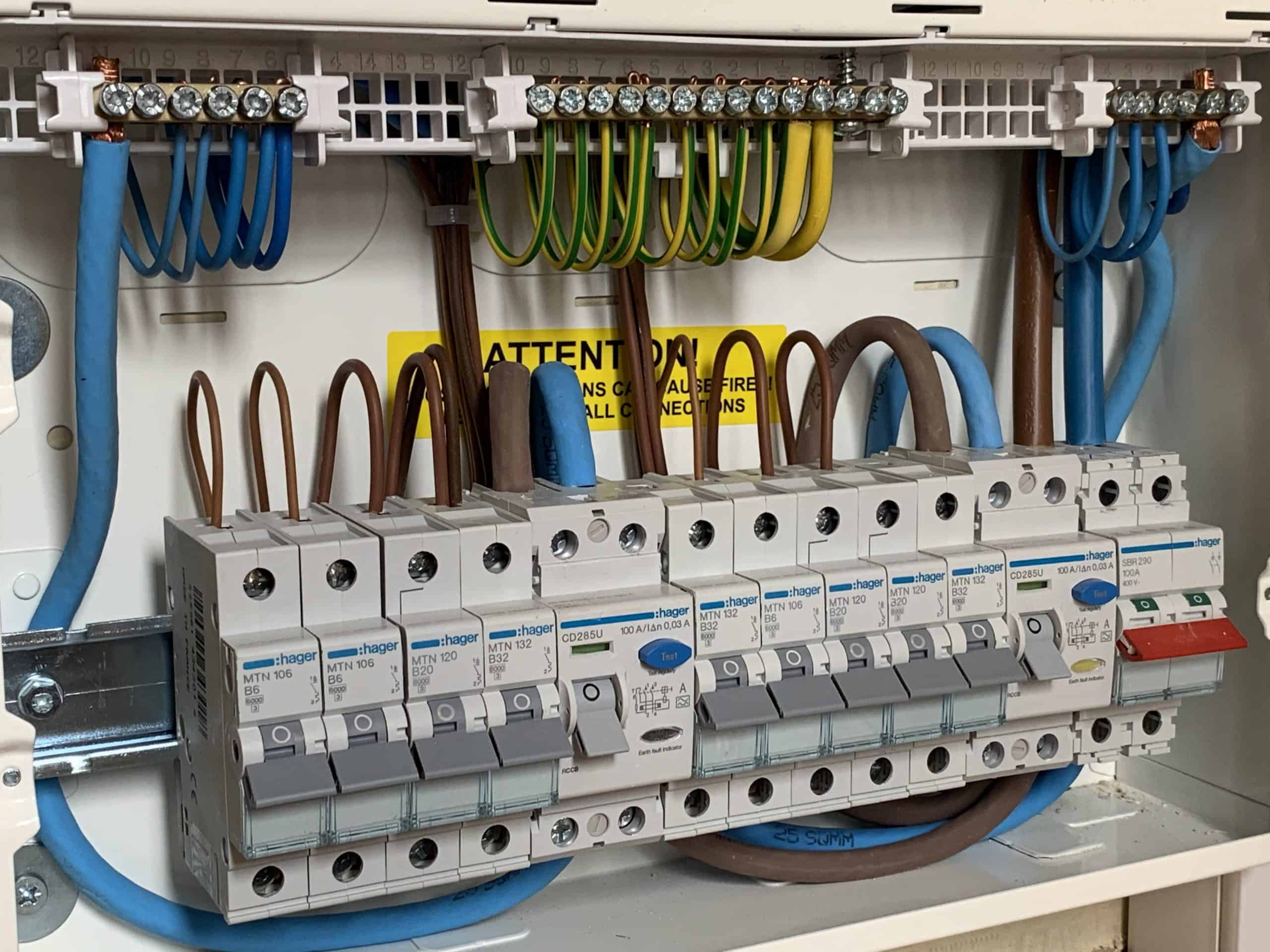
Where the wiring circuits themselves are in acceptable condition but the consumer unit is an older metal-clad or plastic-clad unit without RCD or RCBO protection, a consumer unit upgrade may resolve the EICR observations without a full rewire. A consumer unit upgrade — replacing the old board with a modern split-load unit or full RCBO board — typically costs £400 to £700 in London including the board, installation, and Building Regulations notification. This will not resolve observations about wiring condition, but it can upgrade the system's protection level significantly where the wiring is otherwise acceptable.
Duration and Disruption
A full rewire of a two-bedroom flat typically takes 2 to 3 days. A four-bedroom house typically takes 5 to 7 days. The property is largely unliveable during the rewire because power is off and walls are chased for new cable runs; most households vacate for the duration. For London landlords, this means the property needs to be vacant between tenancies, or the work must be scheduled within a planned void period. After the wiring is completed, the electrician will test and certify the installation, but the property will require replastering of all chased cable runs before decoration. This replastering cost — typically £500 to £2,000 for a complete rewire depending on property size — must be factored into the total project budget.
NICEIC and NAPIT Registration: Why It Matters
A full rewire is a notifiable building work under Part P of the Building Regulations. It must be carried out by an electrician registered with an approved competent person scheme — NICEIC, NAPIT, or ELECSA for electrical work. Registration means the electrician is assessed as competent to self-certify the work to Building Regulations without requiring a local authority inspection, and that they are insured for the work they carry out. An unregistered electrician cannot self-certify a rewire; the work would require a separate Building Regulations application and local authority inspection. More critically, a rewire carried out by an unregistered person cannot be certified as compliant with current standards, creating problems on any future property sale or insurance claim. Always verify NICEIC or NAPIT registration before instructing any electrician for rewire work in London.
Getting Quotes for a London Rewire
Obtain a minimum of three quotes for any rewire project. Provide each electrician with the same brief: property address and size, number of rooms, number of socket outlets required in each room, and whether existing kitchen and bathroom fittings are to be retained. Ask specifically whether the quote includes: all cable, consumer unit, and accessories; testing and Building Regulations notification; and plastering after cable chasing. A quote that does not specify whether plastering is included is not a complete quote. Verify that each quoting electrician is currently NICEIC or NAPIT registered by checking their registration number at niceic.com or napit.org.uk before accepting any quote or making any payment.