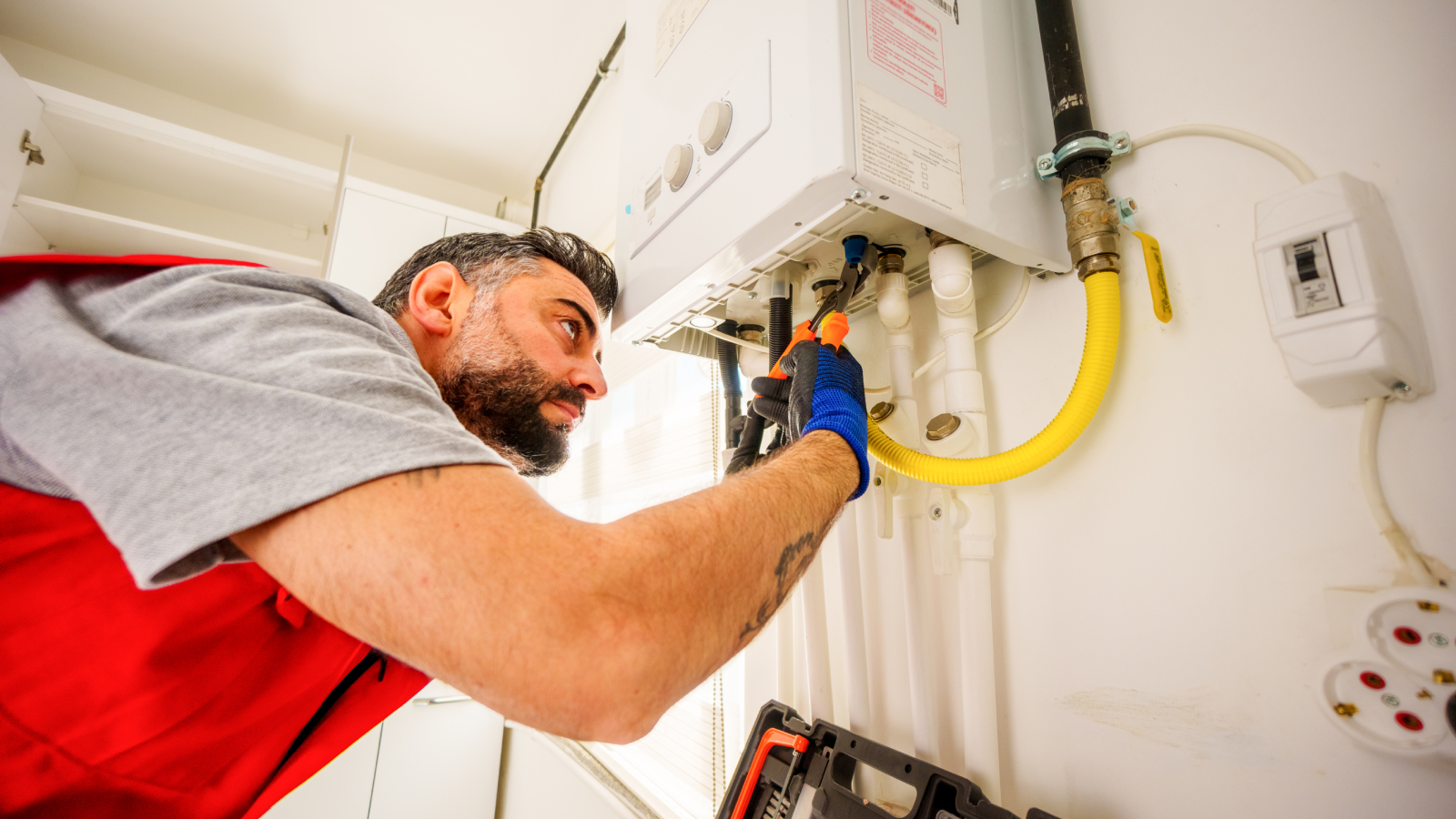
With gas boilers facing a long-term phase-out under UK government climate policy, and electricity prices structurally changing, more London homeowners are asking whether an electric boiler makes sense now. The answer depends heavily on your property, your usage, and your time horizon. Here is a full comparison.
Electric Boilers: How They Work
An electric boiler operates on the same principle as an immersion heater — it uses an electrical heating element to heat water, which is then circulated through radiators and delivered to hot water outlets in the same way as a gas boiler. The critical difference from a gas boiler is the energy source: electricity rather than natural gas.
Electric boilers are compact (often smaller than gas combis), require no flue (combustion produces no exhaust gases), require no gas connection, and have fewer moving parts — no burner, no heat exchanger in the traditional sense, no condensate drain. Installation is simpler and the unit cost is typically lower than a comparable gas boiler. Maintenance requirements are reduced.
Electric boilers are rated as 100% efficient at point of use — all the electrical energy consumed is converted to heat. In contrast, even the best condensing gas boilers operate at 90–94% efficiency. However, efficiency at point of use is only one part of the energy cost equation — the cost per unit of energy is the other, and electricity costs approximately four times as much as gas per kilowatt-hour in the UK.
Gas Boilers: The Current Reality
Gas central heating remains by far the dominant heating technology in UK homes, present in over 80% of properties. In London, where the gas grid is comprehensive and gas supply infrastructure is well established, almost all heated properties use gas boilers. Modern condensing combi and system boilers operate at 90–94% efficiency and have proven reliability track records across a wide range of London property types.
Gas is currently the cheapest fuel per kilowatt-hour for domestic heating in the UK. The unit cost differential between gas and electricity means that even an electric boiler's 100% efficiency cannot overcome the running cost disadvantage against a 90%-efficient gas boiler.
Running Cost Comparison
This is where the practical case against electric boilers is strongest in the current energy market. Using 2025 energy tariff figures:
- Natural gas: Approximately 6–7p per kWh under the current energy price cap (variable; confirm current rates)
- Electricity: Approximately 24–28p per kWh
For a typical London flat or small house, annual gas central heating and hot water costs run approximately £800–£1,200 per year. The same property heated by an electric boiler would cost approximately £2,400–£3,600 per year at 2025 electricity rates — a difference of £1,600–£2,400 per year.
Over a ten-year boiler life, the running cost differential between gas and electric is £16,000–£24,000. This overwhelms the lower purchase and installation cost of the electric boiler by a very large margin for any property with meaningful heating demand.
When an Electric Boiler Makes Sense in London
Despite the running cost disadvantage, there are specific London scenarios where an electric boiler is the most practical choice:
Properties with No Gas Supply
Some London properties — particularly certain flats in converted buildings that were not originally connected to the gas network, or some modern purpose-built blocks — have no gas supply. Connecting to the gas network is possible in principle but involves significant costs (potentially £1,000–£3,000 or more for the connection alone, plus all internal pipework), a lengthy process with Cadent Gas Network, and is not always physically possible in a basement flat or a building with a complex shared structure. For these properties, an electric boiler may be the only viable heating option short of a heat pump.
Very Small Properties with Low Heating Demand
A studio flat with very good insulation and a small overall heating load presents a different economics calculation than a four-bedroom house. The absolute annual cost difference between gas and electric narrows significantly as the heating demand decreases. For a very well-insulated studio with minimal heating requirement, the running cost difference may be £200–£400 per year — a less compelling argument against electricity. In these cases, the simplicity and low maintenance of an electric boiler may be worth the modest running cost premium.
Properties Being Future-Proofed
The UK government's Future Homes Standard prohibits gas boiler installation in newly built homes from 2025 onwards. While this does not affect existing properties, it signals the long-term direction of UK energy policy. Some London homeowners in properties that are being comprehensively renovated and insulated are opting for electric heating now on the basis that gas boiler replacement will become increasingly difficult or expensive in the future. This is a forward-looking decision that accepts higher running costs now in anticipation of eventual grid decarbonisation bringing electricity costs closer to gas.
The Heat Pump Alternative
A heat pump — specifically an air source heat pump — occupies a middle position between electric boilers and gas boilers. Like a gas boiler, it uses electricity, but it does not convert electricity directly to heat; instead, it moves heat from the outside air into the building using a refrigerant circuit (similar in principle to a refrigerator running in reverse). This allows it to deliver 2.5–4 units of heat for every unit of electricity consumed — a coefficient of performance of 2.5–4, compared to a straight electric boiler's coefficient of 1.0.
At a COP of 3, a heat pump's effective running cost per unit of heat is approximately 8–9p per kWh — roughly comparable to gas, eliminating the running cost disadvantage of straight electric heating. However, heat pumps have a higher installation cost (£8,000–£15,000 installed versus £1,500–£3,000 for an electric boiler), require external space for the air unit, and perform best with underfloor heating or oversized radiators rather than standard-sized radiators.
For London properties undergoing significant renovation — particularly those in Victorian terraces being fully insulated and updated — a heat pump is increasingly worth evaluating. The UK government's Boiler Upgrade Scheme provides grants of £7,500 toward air source heat pump installation, materially improving the upfront economics.
Government Direction: The Future Homes Standard
The UK government's Future Homes Standard, introduced in 2025, requires all new residential buildings to be built without fossil fuel heating. New builds in England can no longer be connected to the gas grid for heating purposes. Replacement of existing gas boilers in existing homes is not currently banned — the government's most recent position is that existing gas boilers can continue to be replaced on a like-for-like basis. However, the long-term direction is clear: heat pumps and other low-carbon heating systems will be progressively supported and incentivised, while gas boiler installation will become increasingly difficult to justify in new-build or heavily renovated properties.
The Verdict for Existing London Properties
For the majority of existing London properties that have a gas supply and a working gas heating system:
- Replacing a gas boiler with an electric boiler is not recommended — the running cost penalty is substantial and cannot be justified for properties with normal heating demand
- If considering a heat pump, assess the property's insulation level and radiator sizing first — a poorly insulated property with standard radiators will not benefit adequately from a heat pump to justify the investment
- For properties without a gas connection, an electric boiler is a practical solution if a heat pump is not viable (insufficient external space, budget constraints)
- Monitor government incentive schemes — the economics of heat pump installation can change materially with grant support
Frequently asked questions
How much more does it cost to run an electric boiler vs a gas boiler in London?
At 2025 energy tariffs, electricity costs approximately four times as much per kWh as gas. A typical London flat or small house spending £800–£1,200 per year on gas heating and hot water would spend approximately £2,400–£3,600 per year for equivalent electric heating — a difference of £1,600–£2,400 per year. Over a ten-year boiler life, this represents £16,000–£24,000 in additional running costs, which overwhelms the electric boiler's lower purchase price and installation cost.
Should I get an electric boiler if my London flat has no gas supply?
If your property has no gas supply and connecting to the gas network is not practical or affordable, an electric boiler is a viable solution. Connecting to the gas network involves a connection fee from Cadent, internal pipework costs, and is not always possible in basement flats or some flat conversions. For these properties, an electric boiler provides reliable, straightforward heating without the running cost arithmetic applying — there is no alternative at a comparable installation cost. A heat pump is also worth evaluating if external space permits, as it delivers more heat per unit of electricity and has better long-term running costs.
Will gas boilers be banned in existing London homes?
Not imminently. The UK Future Homes Standard from 2025 prohibits gas heating in new builds, but existing homes with gas heating can still have gas boilers replaced on a like-for-like basis. There is no current confirmed date for banning gas boiler replacement in existing homes, though the government has indicated that heat pump deployment will be prioritised and incentivised through the Boiler Upgrade Scheme. For existing London properties with working gas systems, replacing like-for-like with a gas boiler remains the most cost-effective short-term option.
Is a heat pump a better alternative to an electric boiler for London properties?
For properties where heat pump installation is feasible, yes — a heat pump delivers 2.5–4 units of heat per unit of electricity, reducing running costs to roughly comparable with gas. An electric boiler delivers 1 unit of heat per unit of electricity, making running costs 3–4 times higher than gas. The trade-off is installation cost: heat pumps cost £8,000–£15,000 installed versus £1,500–£2,500 for an electric boiler. The government's Boiler Upgrade Scheme offers £7,500 grants for air source heat pump installation, significantly improving the economics. Heat pumps work best in well-insulated properties with underfloor heating or oversized radiators.