Commercial Plumbing Inspection Checklist for London Businesses: What Engineers Look For
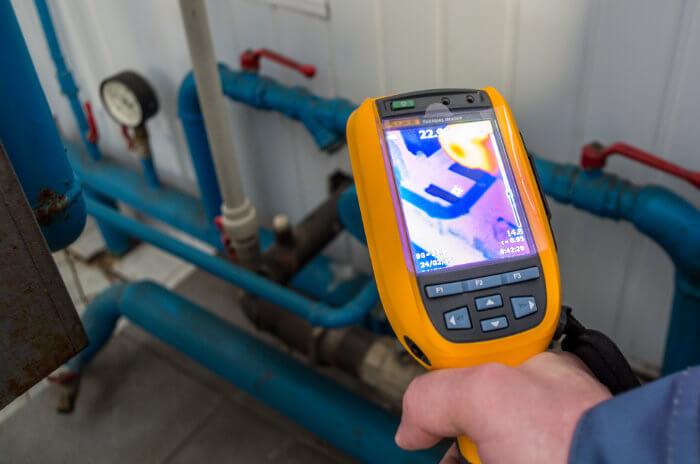
What a thorough commercial plumbing inspection covers in London — from legionella risk assessments to backflow prevention, grease traps, and TMV testing.
A commercial plumbing inspection is considerably more involved than a domestic survey. London businesses — from restaurants and hotels to offices and healthcare facilities — face a range of statutory and insurance-driven compliance requirements that a residential inspection simply does not address. Here is what a thorough commercial plumbing inspection should cover.
Legionella Risk Assessment and Water Temperature Checks
Legionella bacteria proliferate in stored hot and cold water systems where water temperatures fall within the danger zone of 20–45°C. The Health and Safety Executive's ACOP L8 requires all commercial premises to have a current Legionella Risk Assessment and a written Legionella Control Scheme maintained by a responsible person.
During inspection, engineers will:
- Check hot water storage temperature (must be stored at ≥60°C)
- Check cold water supply temperature at point of use (must reach outlets at ≤20°C after running for 2 minutes)
- Inspect cold water storage tanks for covers, insulation, and contamination risk
- Check for dead legs — sections of pipework with no flow — where stagnant water allows bacterial growth
- Inspect and test thermostatic mixing valves (TMVs) at sanitaryware to confirm safe outlet temperatures (typically 38–41°C at wash hand basins)
Backflow Prevention
The Water Industry Act 1991 and Water Supply (Water Fittings) Regulations 1999 require protection against backflow at any point where mains water connects to a system that could contaminate the supply. In commercial premises, this typically includes:
- Commercial dishwashers and glasswashers (Type A air gap or check valve required)
- Irrigation systems and hose union taps (double check valve or RPZ valve depending on fluid risk category)
- Dental surgeries, healthcare facilities, and laboratories (higher fluid risk categories requiring reduced pressure zone valves, tested annually)
- Chemical dosing systems
In London, Thames Water enforces backflow prevention requirements and can issue notices requiring immediate rectification if unprotected connections are identified. RPZ valves must be tested annually by a competent person and the results logged.
Grease Trap Inspection (Food Service Premises)
Any London restaurant, café, hotel kitchen, or food production facility discharging to the public sewer is required by Thames Water's trade effluent regulations to prevent fats, oils, and grease (FOG) from entering the drainage system. A grease trap — either passive (gravity-fed, requiring frequent emptying) or automatic (mechanically skimmed) — must be:
- Correctly sized for the kitchen's peak output
- Maintained on a documented emptying schedule (typically weekly to monthly depending on kitchen volume)
- Accessible for inspection
- Producing effluent within Thames Water's consented limits (typically <150mg/l FOG at the boundary)
FOG blockages in London's sewers are a major operational problem for Thames Water, and enforcement against non-compliant food service premises has increased significantly in recent years.
Commercial Boiler and Plant Room Inspection
- Pressure vessel inspection records — commercial calorifiers and pressurised vessels require periodic inspection under the Pressure Systems Safety Regulations 2000
- Water treatment records for closed heating and cooling circuits
- Condition of expansion vessels and pressure relief valve discharge pipework
- Gas pipework integrity and Gas Safe compliance records for commercial gas appliances
General Plumbing Condition Assessment
- Visible pipework for corrosion, joint failure, and lagging condition
- Condition of sanitary ware, flush valves, and urinal cisterns (significant water wastage risk in commercial buildings)
- Water meter sub-metering where required under MEES regulations or Green lease obligations
- Drain access point locations and condition
A comprehensive commercial plumbing inspection report from a qualified engineer provides a documented baseline for compliance, insurance renewal, and planned maintenance budgeting — all of which are increasingly required by London commercial landlords and managing agents as part of lease renewal and property transaction processes.